
Almost everything comes from nothing. — Henri Matisse
—What lingers after this line?
Matisse’s Insight into the Creative Process
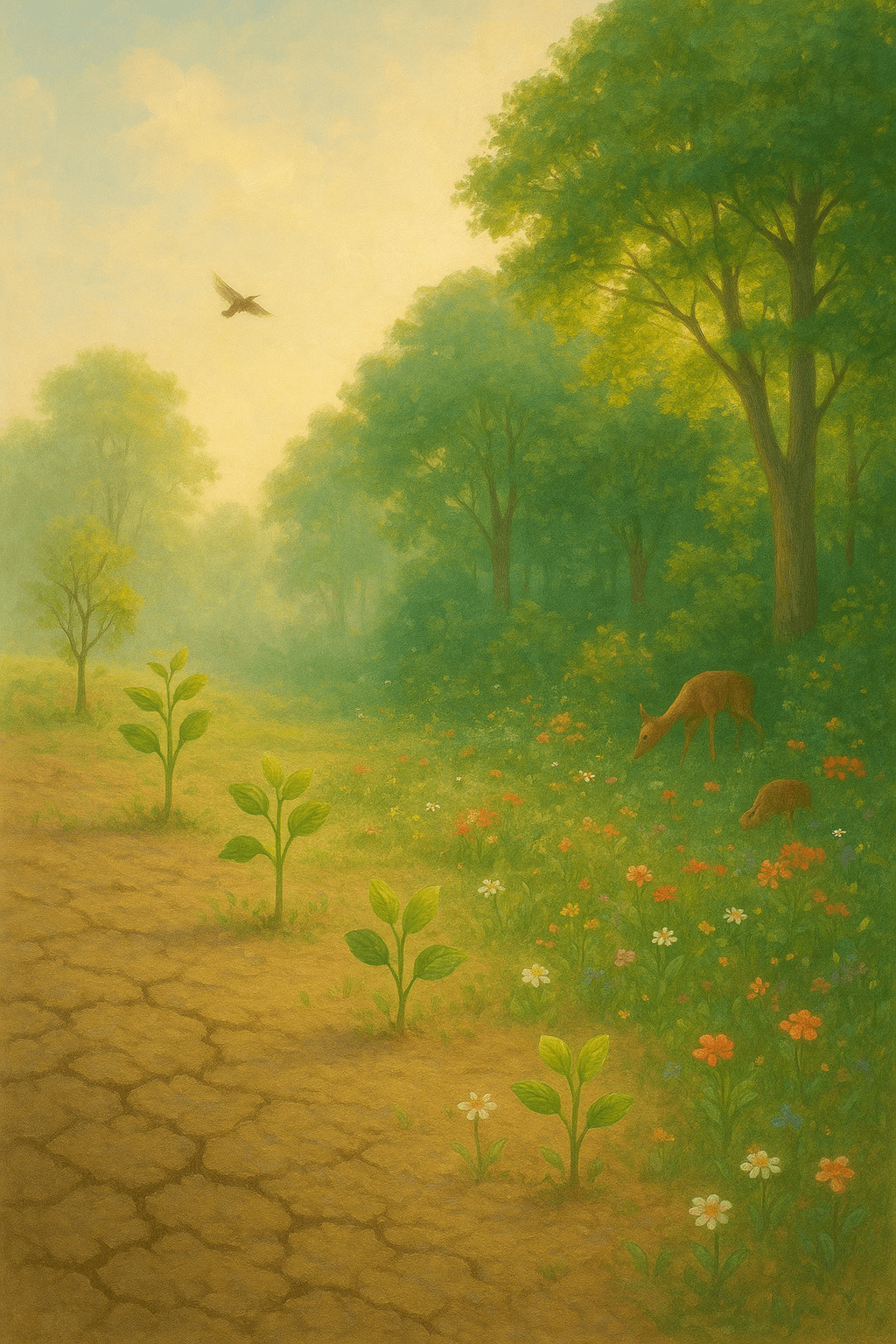
Henri Matisse’s assertion that ‘almost everything comes from nothing’ invites us to consider the mystery at the heart of creation. He alludes to the artist’s unique ability to generate meaning, beauty, and substance from apparent emptiness—a blank canvas, a silent room, a fleeting idea. This process echoes through Matisse’s own artistic evolution, where simplicity and boldness often emerged from the absence of preconceived structure or form.
The Blank Canvas as Origin
Building on this, the image of the blank canvas is not merely symbolic; it represents potential. For countless artists, writers, and inventors, creation starts from a space devoid of content but ripe with possibility. In art history, this can be seen in Malevich’s ‘Black Square’ (1915), where the absence of traditional subject matter challenges viewers to confront their own interpretations, giving rise to new meaning from apparent void.
Philosophical Notions of Nothingness
The theme of something arising from nothing resonates beyond the arts and finds roots in philosophy. The ancient Greeks wrestled with the paradox of creation ex nihilo—how being could spring from non-being. Meanwhile, Eastern philosophies like Daoism celebrate the fertile potential of emptiness; Laozi’s *Daodejing* (c. 4th century BC) states, ‘We mold clay into a pot, but it is the emptiness inside that makes the vessel useful.’ Thus, both West and East recognize emptiness as a source of innovation.
Science and the Origins of Everything
Transitioning to the sciences, the concept that ‘everything comes from nothing’ finds surprising support. Modern cosmology suggests that our universe began from a point of near-nothingness—the Big Bang—giving rise to all matter and energy. Physicist Lawrence Krauss, in his book ‘A Universe from Nothing’ (2012), explores how quantum fluctuations in a vacuum can seed entire universes, echoing Matisse’s artistic point on a cosmic scale.
Embracing Emptiness for Innovation
Finally, this perspective offers a powerful lesson for creators in any discipline. Rather than fearing the void—be it creative block, uncertainty, or silence—we are encouraged to view it as the wellspring of innovation. By accepting that beginnings often emerge from nothingness, we allow ourselves to imagine, invent, and grow. It is through embracing emptiness that we truly open the door to everything that can be.
One-minute reflection
What feeling does this quote bring up for you?
Related Quotes
6 selectedYou cannot afford to live in potential for the rest of your life; at some point, you have to unleash it. — Eric Thomas
Eric Thomas
Eric Thomas’s quote begins with a stark warning: potential is not a place to live, only a promise of what might be. In other words, talent, intelligence, or ambition mean very little if they remain dormant.
Read full interpretation →If you have passed through life without an opponent, no one can ever know what you are capable of, not even you. — Seneca
Seneca
At its core, Seneca’s remark argues that ability remains largely invisible until it meets resistance. A life without opponents may feel peaceful, yet it offers few occasions to prove courage, discipline, or endurance.
Read full interpretation →To be creative is to participate in the great process of creation — and participating in creativity is participating in life. — Rajneesh
Rajneesh
Rajneesh frames creativity not as a rare talent but as an act of joining something larger than oneself. At once, the quote shifts attention away from finished masterpieces and toward participation in an ongoing process o...
Read full interpretation →We know what we are, but know not what we may be. — William Shakespeare
William Shakespeare
Shakespeare’s line captures a striking human tension: we feel certain about who we are now, yet remain unable to fully imagine who we might become. At first glance, the statement sounds simple, but it opens a profound ga...
Read full interpretation →The oak sleeps in the acorn. — Aesop
Aesop
At first glance, Aesop’s line turns our attention to something easy to overlook: enormous potential often arrives in humble form. The acorn appears slight and ordinary, yet within it rests the future shape of a towering...
Read full interpretation →We don't have to be ashamed of what we are. We have soil good enough to cultivate; we can plant anything in it. — Chögyam Trungpa
Chögyam Trungpa
At its heart, Chögyam Trungpa’s line rejects the reflex of shame and replaces it with a more generous view of human nature. To say we need not be ashamed of what we are is not to deny weakness, confusion, or contradictio...
Read full interpretation →More From Author
More from Henri Matisse →The spring that keeps running is more valuable than the jug which bottoms out each day. We unlock that spring by patiently working at our task and giving our best effort every time. — Henri Matisse
Matisse’s image contrasts two kinds of value: the jug that must be refilled each day and the spring that continues to flow from within. At first glance, the jug seems useful, but its usefulness is limited by its emptines...
Read full interpretation →Consistency is the sum that equals what we become. — Henri Matisse
At its core, Matisse’s remark suggests that identity is not formed in a single dramatic moment but accumulated through repeated actions. What we do regularly—how we think, practice, respond, and persist—gradually adds up...
Read full interpretation →The secret to a life of significance is not in the grand gesture, but in the quiet, unrelenting consistency of your daily practice. — Henri Matisse
At first glance, Matisse overturns the common belief that meaningful lives are built through dramatic turning points. Instead, he locates significance in repetition: the small actions done faithfully when no audience is...
Read full interpretation →The artist must be a craftsman; he must know his materials, his tools, and his methods. — Henri Matisse
Henri Matisse’s statement immediately shifts attention from inspiration to discipline. Rather than treating art as a purely mysterious gift, he insists that the artist is first a craftsman—someone who understands how thi...
Read full interpretation →