
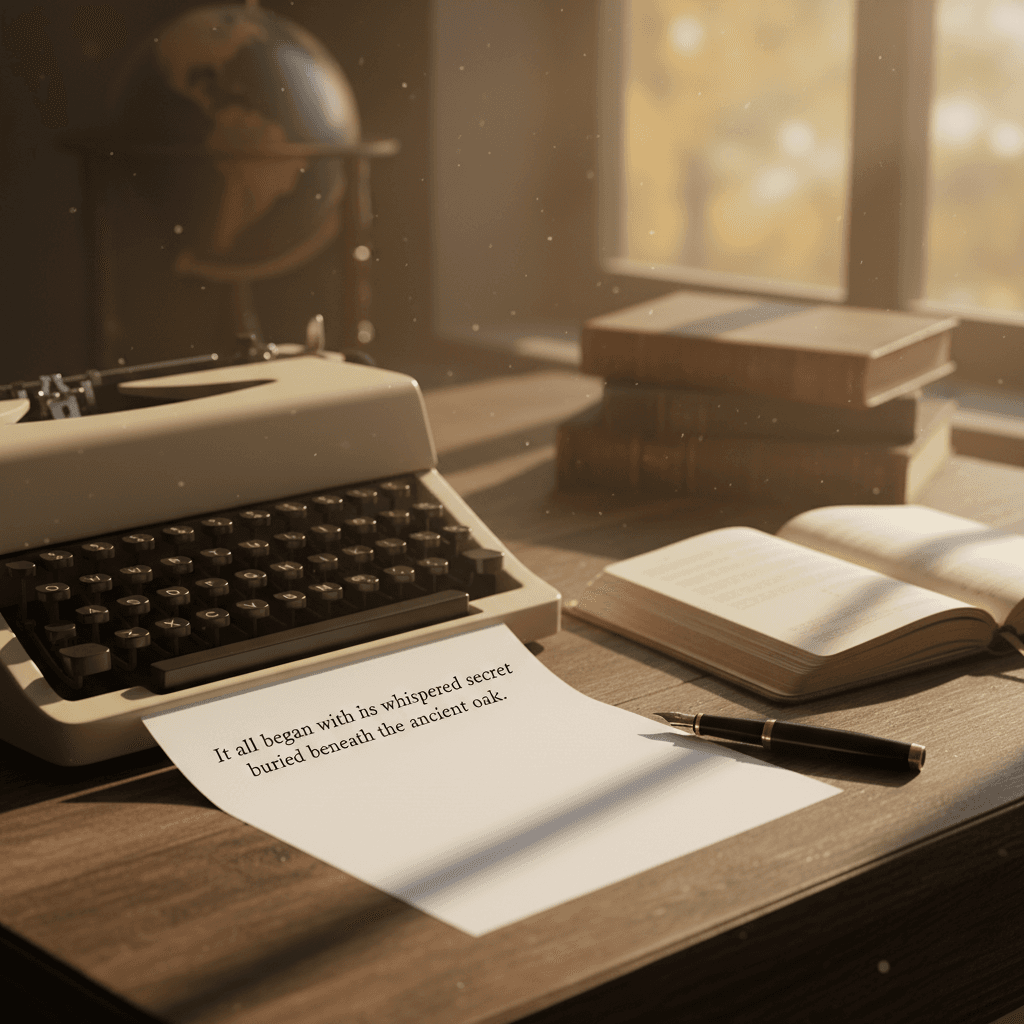
Begin with one honest sentence and the rest of the book will follow. — Fyodor Dostoevsky
—What lingers after this line?
Honesty as the First Brick
Dostoevsky’s line treats writing less as decoration and more as construction: if the first brick is true, the structure can rise with integrity. “One honest sentence” suggests a unit small enough to be achievable on any day, yet solid enough to carry everything that comes after. From there, the promise is almost architectural—once a truthful statement is placed, it becomes a reference point for tone, character, and theme. The writer no longer has to force coherence; the next sentences can align themselves to that initial moral and emotional accuracy.
Why One Sentence Changes Momentum
A blank page often defeats writers by demanding too much at once: voice, plot, and meaning. By narrowing the task to a single honest sentence, Dostoevsky reframes the beginning as a modest act of clarity rather than a grand performance. Then momentum takes over. A truthful sentence naturally implies context—who is speaking, what hurts, what is desired—so it quietly invites the next line to answer it. In practice, many drafts begin to move only when the author stops trying to sound “literary” and instead states what is real, even if plainly.
Truth Versus Style: The Priority Order
Dostoevsky is not dismissing craft; he is ranking it. Style can be refined later, but honesty is harder to retrofit, because a false beginning tends to demand more falseness to support it. This is why the sentence is a threshold. Once the writer commits to truth—about a character’s fear, a narrator’s shame, a memory’s texture—technique becomes a tool rather than a disguise. The work may still be edited extensively, yet its core direction stays anchored in something that doesn’t need to be defended.
The Psychological Courage Behind the Quote
Calling for an “honest sentence” is also calling for bravery. Honesty in art often means admitting what we would rather soften: pettiness, envy, tenderness, contradiction. Dostoevsky’s own novels repeatedly show characters unraveling when they lie to themselves, as in *Notes from Underground* (1864), where self-deception becomes both shield and prison. So the quote doubles as an inner ethic. When a writer tells the truth at the outset, they signal a willingness to look directly at experience, not to manage impressions. That willingness is what sustains a long project when inspiration fades.
How an Honest Sentence Generates a World
An honest sentence is not merely confession; it can be observation. For example: “I was relieved when he didn’t call.” That single truth immediately raises narrative questions—who is “he,” why relief, what history makes absence feel safer than contact? As those questions accumulate, the book “follows” almost the way a conversation follows a frank remark. The writer is no longer inventing arbitrarily; they are uncovering implications. In this sense, Dostoevsky’s advice is practical: truth is generative, because it contains hidden causes and consequences.
A Working Method Hidden in a Maxim
Read as instruction, the quote suggests a repeatable method: start each session by producing one sentence you believe. Not the cleverest line, but the truest—about the scene, the character, or your own uncertainty about what comes next. After that, the rest can be built with patience. Even if the draft later changes, the practice trains a reliable compass: when stuck, return to what is honest. Dostoevsky implies that books are not primarily born from grand plans, but from a chain reaction set off by a single moment of truth.
One-minute reflection
What's one small action this suggests?
Related Quotes
6 selectedBe who you are and say what you feel, because those who mind don't matter, and those who matter don't mind. — Bernard M. Baruch
Bernard M. Baruch
Baruch’s quote begins with a simple but demanding instruction: be yourself and speak honestly. At its core, the line argues that authenticity is not merely a personality trait but an act of courage, especially in a world...
Read full interpretation →I don't like to write, but I take great pleasure in having written. — William Zinsser
William Zinsser
At first glance, William Zinsser’s remark captures a familiar contradiction: the act of writing can feel slow, frustrating, and mentally taxing, yet the state of having finished often brings deep pleasure. In that tensio...
Read full interpretation →You're born an original—don't die a copy. — John Mason
John Mason
At its core, John Mason’s line is a sharp reminder that every person begins life with a distinct combination of temperament, talent, and perspective. To be “born an original” suggests that individuality is not something...
Read full interpretation →Authenticity is a habit. It is a road we are comfortable with. — Ai Weiwei
Ai Weiwei
At first glance, Ai Weiwei’s statement shifts authenticity away from dramatic self-revelation and toward repetition. By calling it a habit, he suggests that being genuine is not an occasional act of courage but a pattern...
Read full interpretation →Quietly persist. The world is loud, but your work only needs to be true. — Anne Lamott
Anne Lamott
Anne Lamott’s line begins with a simple imperative: “Quietly persist.” At once, it rejects the idea that meaningful work must announce itself to be real. Instead, she points toward a steadier form of effort, one rooted i...
Read full interpretation →Fitting in is one of the greatest barriers to belonging. Belonging doesn't require us to change who we are; it requires us to be who we are. — Brené Brown
Brené Brown
At the heart of Brené Brown’s statement is a crucial distinction: fitting in is about adaptation, while belonging is about acceptance. When people try to fit in, they often study the room, edit themselves, and perform wh...
Read full interpretation →More From Author
More from Fyodor Dostoevsky →If you want to overcome the whole world, overcome yourself. — Fyodor Dostoevsky
Dostoevsky’s line reframes ambition by shifting the arena of struggle from the public world to the private self. Instead of measuring strength by dominance over others, he implies that the most consequential victories ha...
Read full interpretation →You will burn and you will burn out; you will be healed and come back again. — Fyodor Dostoevsky
Dostoevsky’s line treats suffering not as a single dramatic episode but as a recurring rhythm: intensity, collapse, recovery, and return. Instead of promising a smooth ascent toward improvement, he describes a life that...
Read full interpretation →You will burn and you will burn out; you will be healed and come back again. — Fyodor Dostoevsky
Dostoevsky’s line frames suffering as rhythmic rather than final: first the blaze of effort or emotion, then the collapse, then the slow work of recovery, and finally the return. Instead of treating burnout as a personal...
Read full interpretation →You will burn and you will burn out; you will be healed and come back again. — Fyodor Dostoevsky
Dostoevsky’s line frames suffering as rhythmic: first the blaze of intensity, then the inevitability of burnout, and finally the possibility of renewal. Instead of treating exhaustion as a final verdict, he suggests it i...
Read full interpretation →