
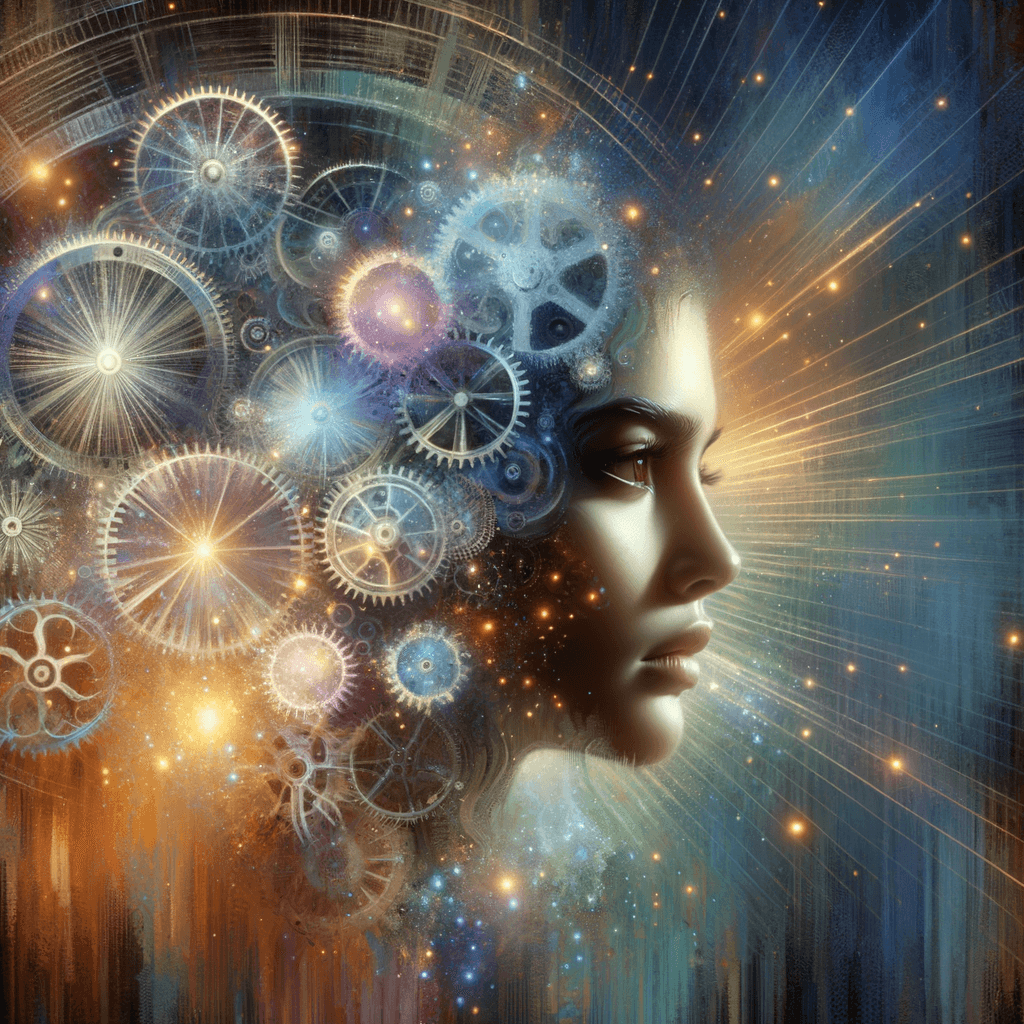
Inspiration is some mysterious blessing that happens when the wheels are turning. — Elia Kazan
—What lingers after this line?
Definition of Inspiration
The quote highlights how inspiration isn’t a predictable or controlled process. Rather, it is described as a 'mysterious blessing,' something that comes unannounced and cannot be forced. It's a gift that appears unexpectedly.
The Importance of Action
By saying 'when the wheels are turning,' Kazan suggests that inspiration tends to strike during the process of working or when progress is being made. It’s in motion, during action, that creativity flows, rather than during idle moments.
Creative Process
In this quote, Kazan also implies that pushing yourself through work, even when inspiration is lacking, can eventually unlock creativity. The act of 'turning the wheels'—or persisting through effort—leads to moments of breakthrough and inspiration.
The Role of Persistence
This quote can be seen as an encouragement to keep moving forward, even in times when inspiration seems absent. By continuing the process, the 'mysterious blessing' of inspiration will eventually arrive.
Elia Kazan's Background
Elia Kazan was an influential film and theater director, known for his deep understanding of human emotion and creativity. This quote may reflect his personal experiences with the artistic process, where perseverance often led to his creative breakthroughs.
One-minute reflection
What feeling does this quote bring up for you?
Related Quotes
6 selectedThe painting has a life of its own. I try to let it come through. — Jackson Pollock
Jackson Pollock
At first glance, Jackson Pollock’s remark gives the painting an almost independent existence, as though the canvas carries its own pulse before the artist fully understands it. Rather than describing painting as pure con...
Read full interpretation →The creative process is not a straight line, but a labyrinth. To get lost in it is not a failure; it is the only way to find the hidden things worth saying. — M.C. Richards
M.C. Richards
At its core, M.C. Richards rejects the comforting myth that creative work unfolds through orderly steps.
Read full interpretation →To create something new, one must first learn to be comfortable with the mess of the process. — Yayoi Kusama
Yayoi Kusama
At first glance, Yayoi Kusama’s insight reframes creativity as something far less polished than people often imagine. To create something truly new, she suggests, one must stop fearing confusion, failed attempts, and unf...
Read full interpretation →The creative process is a sanctuary for healing, a space where resilience is transformed into art that speaks to our shared humanity. — Ben Okri
Ben Okri
At its heart, Ben Okri’s statement imagines the creative process as more than production; it becomes a refuge. A sanctuary is a place of shelter, and by choosing that word, Okri suggests that making art offers protection...
Read full interpretation →It is through the process of creating that we discover who we are, not by waiting for a finished masterpiece to tell us. — Twyla Tharp
Twyla Tharp
Twyla Tharp’s insight begins with a reversal of a common assumption: we often imagine that identity arrives fully formed and then expresses itself through art, work, or achievement. Instead, she argues that we come to kn...
Read full interpretation →The craft is not in holding tight, but in release: letting the work reveal its own nature. — Lloyd Alexander
Lloyd Alexander
At first glance, Lloyd Alexander’s line reframes craftsmanship in a surprising way: the maker’s skill does not lie in controlling every outcome, but in knowing when to loosen the grip. Rather than forcing a work into a p...
Read full interpretation →More From Author
More from Elia Kazan →