
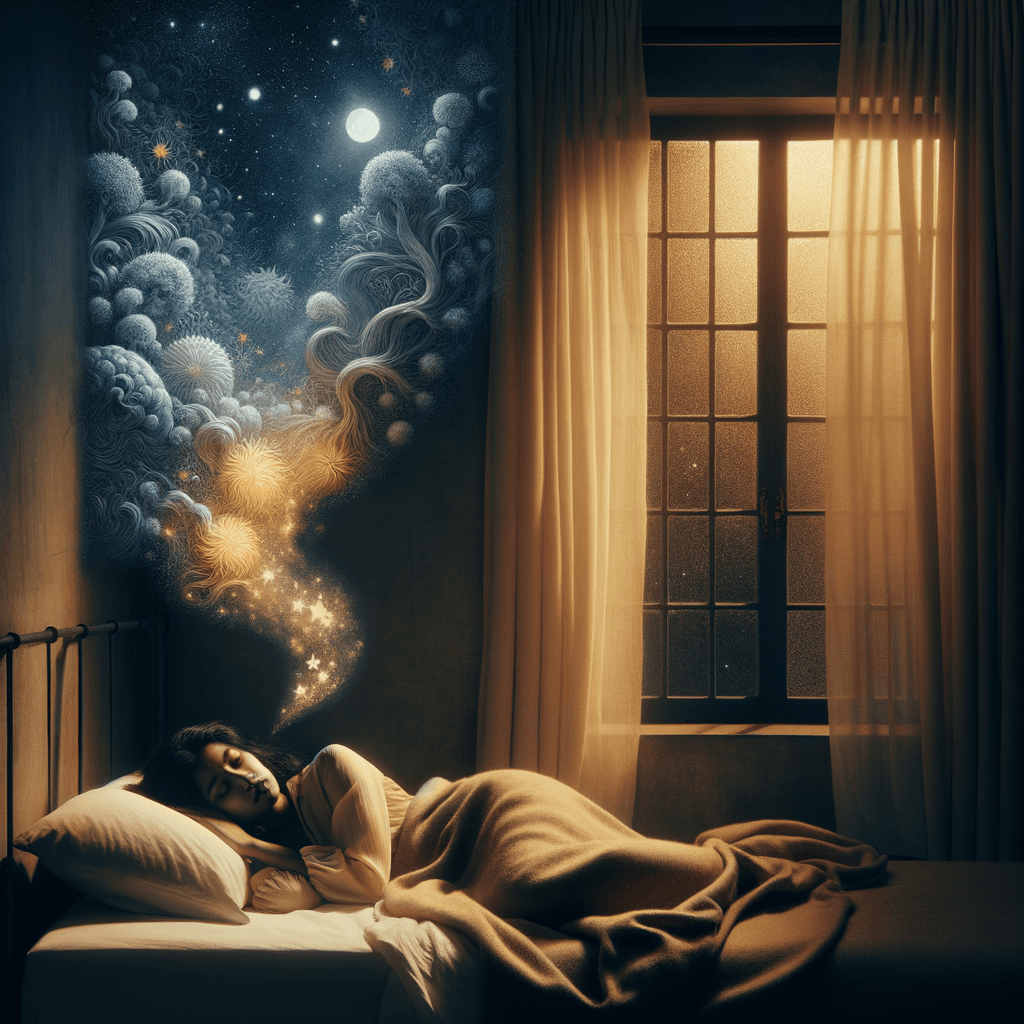
Sometimes the most productive thing you can do is rest and let your dreams be born. — Vincent van Gogh
—What lingers after this line?
The Importance of Rest
This quote emphasizes that taking time to rest is not a waste but an essential part of growth and creativity. Rest allows the mind and body to recharge, enabling greater productivity in the long run.
Creativity and Dreams
Van Gogh suggests that dreams and inspiration often emerge during periods of rest. When the mind is relaxed, it can process ideas more freely and give birth to new creative visions.
Avoiding Burnout
Constant work without breaks can lead to exhaustion and reduced efficiency. This quote serves as a reminder that productivity is not just about action but also about knowing when to pause and recover.
Philosophical Perspective on Work and Life
The quote reflects a balance between effort and relaxation. It encourages individuals to acknowledge the value of rest as a fundamental part of any meaningful endeavor.
Van Gogh’s Artistic Struggles
As an artist who faced mental and emotional challenges, Van Gogh understood the need for rest. His words highlight how stepping back can play a crucial role in personal and artistic growth.
Recommended Reading
As an Amazon Associate, we earn from qualifying purchases.
One-minute reflection
What feeling does this quote bring up for you?
Related Quotes
6 selectedThe most productive thing you can do is often the very thing you feel most guilty for: resting. — Etty Hillesum
Etty Hillesum
At first glance, Etty Hillesum’s remark sounds contradictory: how can doing less become the most productive choice? Yet that tension is exactly her point.
Read full interpretation →Sometimes the most productive thing you can do is relax. — Mark Black
Mark Black
This quote highlights the importance of rest in maintaining productivity. It suggests that taking time to relax can rejuvenate the mind and body, ultimately leading to better performance.
Read full interpretation →Rest is a fine medicine. Let your brain rest, you wearied and worried men of business. — Thomas Carlyle
Thomas Carlyle
Thomas Carlyle’s remark frames rest not as laziness, but as treatment. By calling it “a fine medicine,” he shifts the discussion from moral judgment to human necessity, especially for those worn down by constant demands.
Read full interpretation →Rest is not a retreat; it is a reset. It is the necessary pause that allows us to show up grounded rather than reactive. — Sophia A. Nelson
Sophia A. Nelson
At first glance, Sophia A. Nelson’s statement challenges a common assumption: that rest is somehow equivalent to stepping back, giving up, or retreating from responsibility.
Read full interpretation →Rest is not laziness; it is the essential fuel that allows your creativity to ignite once more. — Arianna Huffington
Arianna Huffington
At first glance, Arianna Huffington’s statement challenges a deep cultural bias: the tendency to equate nonstop activity with virtue and rest with weakness. By insisting that rest is not laziness, she reframes it as a ne...
Read full interpretation →It is not a sign that you are doing something wrong to need a break; it is a sign that you are human. — Nedra Glover Tawwab
Nedra Glover Tawwab
At its core, Nedra Glover Tawwab’s quote rejects the harsh belief that constant productivity is the measure of worth. Instead, it reframes the need for a break as evidence of our basic humanity: bodies tire, minds overlo...
Read full interpretation →More From Author
More from Vincent van Gogh →Learning technique is a way to make your soul grow. So do it. — Vincent van Gogh
Van Gogh’s brief statement turns learning into more than a practical task; it becomes an ethical and spiritual imperative. By saying that learning technique helps the soul grow, he suggests that disciplined study does no...
Read full interpretation →A great fire burns within me, but no one stops to warm themselves at it, and passers-by only see a wisp of smoke. — Vincent van Gogh
Van Gogh’s image begins with a painful contrast: immense inner warmth exists, yet it goes unreceived. The “great fire” suggests passion, generosity, and creative force, while the absence of anyone who “stops to warm them...
Read full interpretation →I cannot rest, I must draw, however poor the result, and when I have a bad time come over me it is a stronger desire than ever. — Vincent van Gogh
Van Gogh’s words present drawing not as a hobby or even a disciplined profession, but as an inner command he cannot silence. The phrase “I must draw” carries the force of survival, suggesting that artistic creation answe...
Read full interpretation →As we advance in life it becomes more and more difficult, but in fighting the difficulties the inmost strength of the heart is developed. — Vincent van Gogh
Van Gogh’s sentence begins with a sober observation: life does not necessarily become simpler as we grow older. Instead, responsibilities deepen, losses accumulate, and choices carry heavier consequences.
Read full interpretation →