
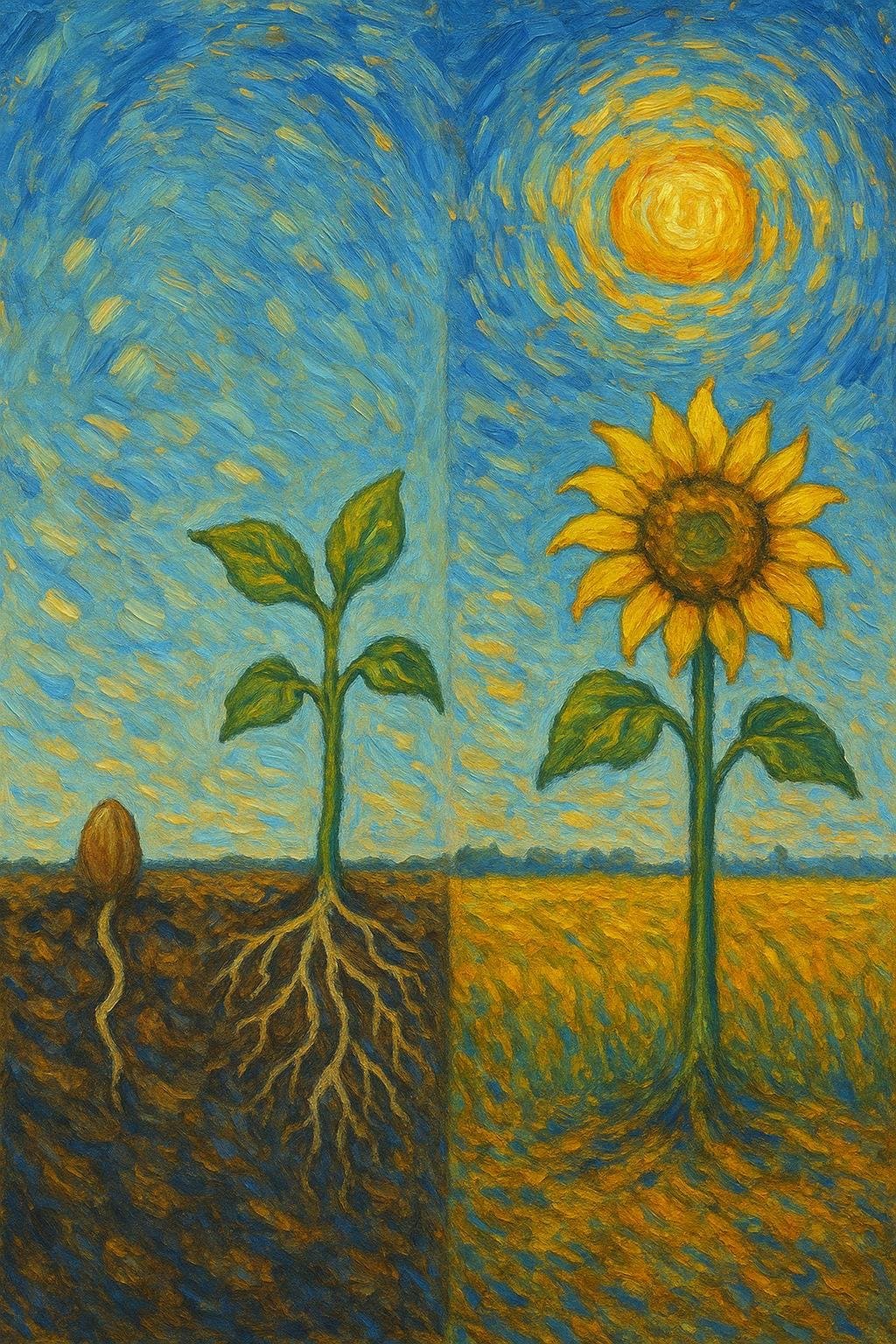
Success demands singleness of purpose. — Vincent van Gogh
—What lingers after this line?
Van Gogh’s Unwavering Dedication
Vincent van Gogh’s statement, 'Success demands singleness of purpose,' is not only a maxim but a reflection of his own artistic journey. Despite facing personal hardships and public indifference, Van Gogh poured his entire being into painting, illustrating how unwavering focus can ignite creative genius. His intense commitment, evident in more than 2,000 artworks produced in less than a decade, continues to inspire those who seek success in any discipline.
The Essence of Focused Purpose
Building on Van Gogh’s example, singleness of purpose refers to directing one’s mental and emotional resources toward a single, clearly defined goal. Without the distraction of competing aims, individuals often experience greater clarity, discipline, and productivity. This notion echoes in modern productivity principles such as Gary Keller’s 'The ONE Thing,' which asserts that focusing on what matters most accelerates meaningful progress.
Historical Examples of Laser-Sharp Focus
Throughout history, great achievements often trace back to singular focus. For instance, Thomas Edison worked obsessively on perfecting the electric light bulb, carrying out thousands of experiments before succeeding. Similarly, Olympic athletes routinely forgo leisure and social opportunities to devote themselves entirely to their sport. Such stories underscore how transformative singleness of purpose can be across diverse fields.
The Challenge of Distraction in Modern Life
In today’s hyper-connected world, distractions are everywhere, pulling our attention in many directions at once. Social media notifications, multitasking, and constant information flow threaten to erode our sense of purpose. This makes Van Gogh’s insight more relevant than ever, reminding us of the value found in deliberate focus. Cal Newport’s 'Deep Work' reinforces this idea, arguing that true mastery in any field demands periods of concentrated, undistracted effort.
Nurturing Purposeful Commitment
Ultimately, cultivating singleness of purpose requires conscious intention and self-discipline. Setting specific goals, minimizing distractions, and periodically reassessing priorities allow individuals to stay aligned with their central objective. Much like Van Gogh, who remained steadfast in his vision despite external obstacles, anyone can harness the power of focused dedication to achieve lasting success.
One-minute reflection
What's one small action this suggests?
Related Quotes
6 selectedYour destiny is to fulfill those things upon which you focus most intently. So choose to keep your focus on that which is truly magnificent, beautiful, uplifting, and joyful. Your life is always moving toward something. — Ralph Marston
Ralph Marston
This quote highlights the importance of focus in shaping destiny. Whatever you concentrate on the most will ultimately manifest in your life, guiding you toward a specific path.
Read full interpretation →Definiteness of purpose is the starting point of all achievement. — W. Clement Stone
W. Clement Stone
This quote highlights the importance of having a clear, definite purpose in life. A well-defined goal acts as a guiding light that directs one's efforts and decisions towards success.
Read full interpretation →To ignite your life you must focus on one thing long enough for it to catch fire. — Gary Keller
Gary Keller
Gary Keller’s quote begins with a simple but demanding idea: transformation rarely comes from scattered effort. To “ignite your life” is to create momentum, meaning, and visible progress, yet that spark needs sustained a...
Read full interpretation →Whatever you are doing, do it with a sense of purpose, not merely to pass the time. — Seneca
Seneca
Seneca’s counsel begins with a simple but demanding idea: life should not be treated as something to be spent carelessly. For the Stoics, time was not a disposable background to action but the very material of character.
Read full interpretation →Our plans miscarry because they have no aim. When a man doesn't know what harbor he's making for, no wind is the right wind. — Seneca
Seneca
Seneca’s remark begins with a simple but severe diagnosis: plans fail not merely from bad luck, but from the absence of a clear aim. In his view, activity alone is not progress.
Read full interpretation →Complexity means distracted effort. Simplicity means focused effort. — Edward De Bono
Edward de Bono
At its heart, Edward de Bono’s remark draws a sharp distinction between motion and direction. Complexity, in this sense, is not merely having many parts; rather, it is effort scattered across too many priorities, decisio...
Read full interpretation →More From Author
More from Vincent van Gogh →Learning technique is a way to make your soul grow. So do it. — Vincent van Gogh
Van Gogh’s brief statement turns learning into more than a practical task; it becomes an ethical and spiritual imperative. By saying that learning technique helps the soul grow, he suggests that disciplined study does no...
Read full interpretation →A great fire burns within me, but no one stops to warm themselves at it, and passers-by only see a wisp of smoke. — Vincent van Gogh
Van Gogh’s image begins with a painful contrast: immense inner warmth exists, yet it goes unreceived. The “great fire” suggests passion, generosity, and creative force, while the absence of anyone who “stops to warm them...
Read full interpretation →I cannot rest, I must draw, however poor the result, and when I have a bad time come over me it is a stronger desire than ever. — Vincent van Gogh
Van Gogh’s words present drawing not as a hobby or even a disciplined profession, but as an inner command he cannot silence. The phrase “I must draw” carries the force of survival, suggesting that artistic creation answe...
Read full interpretation →As we advance in life it becomes more and more difficult, but in fighting the difficulties the inmost strength of the heart is developed. — Vincent van Gogh
Van Gogh’s sentence begins with a sober observation: life does not necessarily become simpler as we grow older. Instead, responsibilities deepen, losses accumulate, and choices carry heavier consequences.
Read full interpretation →