
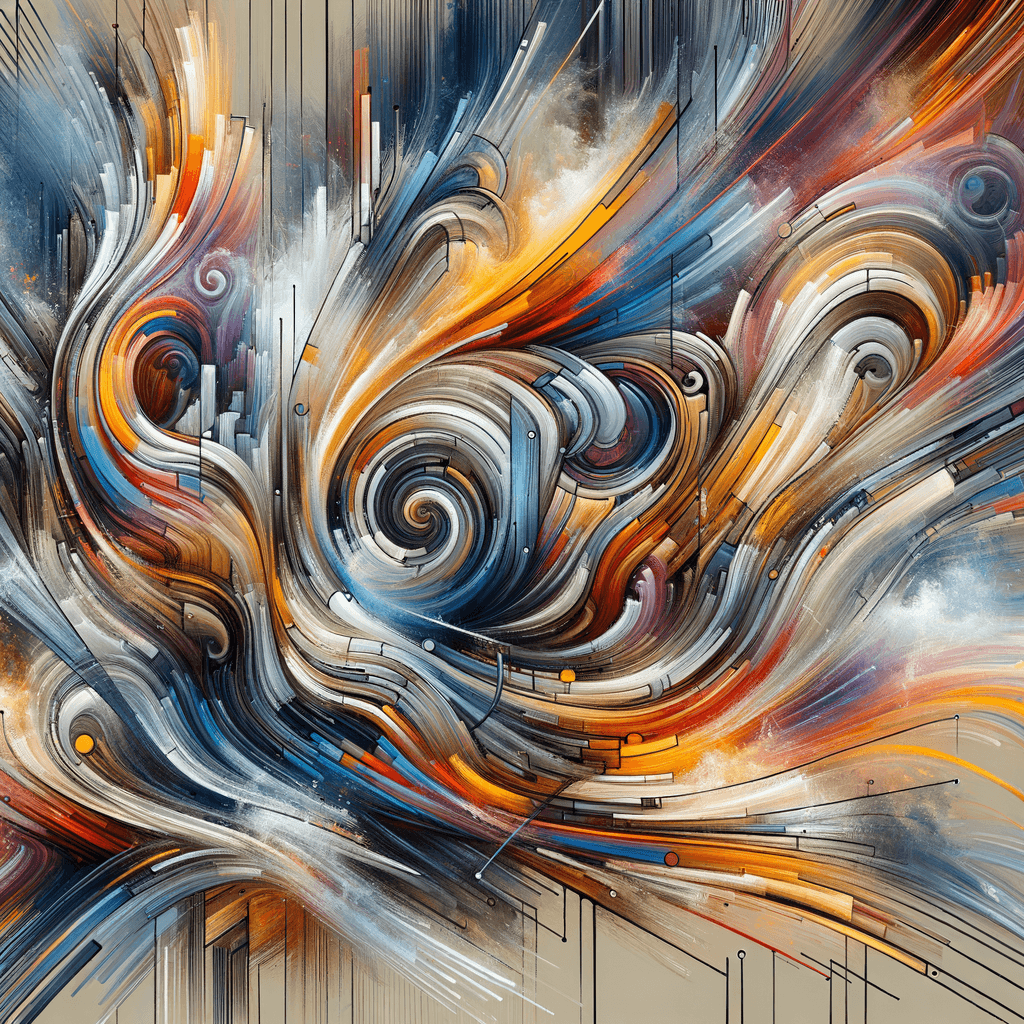
In every work of art the spirit of freedom prevails. — Paul Gauguin
—What lingers after this line?
Creative Freedom
This quote highlights the fundamental aspect of freedom in the process of artistic creation. True art arises from an unbound spirit, giving the artist liberty to express thoughts, emotions, and ideas unconstrained by societal rules or expectations.
Expression of Individuality
Gauguin suggests that art is an expression of the individual’s inner world, free from external pressures. This freedom allows artists to reveal their authentic self, making each work of art unique to the creator.
Art as Rebellion
The 'spirit of freedom' in this statement may also refer to art’s ability to challenge conventional beliefs, social norms, or political conditions. Art has often been a form of rebellion—granting artists a method of freely protesting against oppression or injustice.
Transcendence of Boundaries
Art transcends conventional limitations, providing an escape from the confines of everyday life. The spirit of freedom described by Gauguin reflects how art allows both creators and viewers to explore realms beyond reality, diving into imagination and emotions.
Personal Philosophy and Style
Paul Gauguin, a post-impressionist artist, often sought creative freedom and broke away from traditional European artistic styles. He ventured to explore symbolic and emotional depths in his works, exemplifying the boundless, liberated spirit he believed in. His sentiments regarding freedom reflect his own journey as an innovator who rejected artistic norms.
One-minute reflection
What feeling does this quote bring up for you?
Related Quotes
6 selectedYou don't need a formal license to be an artist; you only need the courage to claim your own perspective. — Ai Weiwei
Ai Weiwei
Ai Weiwei’s statement immediately dismantles the idea that artistic legitimacy must be granted by institutions, critics, or official credentials. Instead, he shifts the center of gravity inward: what makes someone an art...
Read full interpretation →Everything begins from an idea. — Paul Gauguin
Paul Gauguin
This quote highlights the transformative role of imagination. Every creation, innovation, or achievement starts as a simple thought or idea in someone's mind.
Read full interpretation →There is no must in art because art is free. — Wassily Kandinsky
Wassily Kandinsky
At its core, Kandinsky’s statement rejects the idea that art must obey fixed obligations. By saying there is no ‘must’ in art, he frees creation from rigid formulas, academic demands, and social expectation.
Read full interpretation →Often what the artist expresses is unconscious, but we can learn to decode the story by collaboratively finding the pieces to the puzzle that create new possibilities for innovation. — Ben Okri
Ben Okri
At the heart of Ben Okri’s statement is the idea that art often says more than the artist consciously intends. A poem, painting, or song may carry hidden fears, cultural memories, or emotional truths that emerge without...
Read full interpretation →I think that when you create something, you leave a part of yourself in it. — Henri Matisse
Henri Matisse
At its core, Matisse’s reflection suggests that making anything—a painting, a poem, a song, even a room—inevitably transfers something inward into outward form. Creation is not merely the arrangement of materials; rather...
Read full interpretation →There is a deep peace that comes from creating something that didn't exist before. It is your way of telling the universe that you were here, and you felt something. — Maya Angelou
Maya Angelou
At its heart, Maya Angelou’s reflection suggests that creation is not merely productive but restorative. To make something that did not exist before—a poem, a garden, a melody, even a repaired room—is to experience a rar...
Read full interpretation →More From Author
More from Paul Gauguin →Everything begins from an idea. — Paul Gauguin
This quote highlights the transformative role of imagination. Every creation, innovation, or achievement starts as a simple thought or idea in someone's mind.
Read full interpretation →I shut my eyes in order to see. — Paul Gauguin
Paul Gauguin’s enigmatic statement, 'I shut my eyes in order to see,' challenges our basic assumptions about sight and awareness. At first glance, vision is associated purely with the physical act of looking, but Gauguin...
Read full interpretation →