
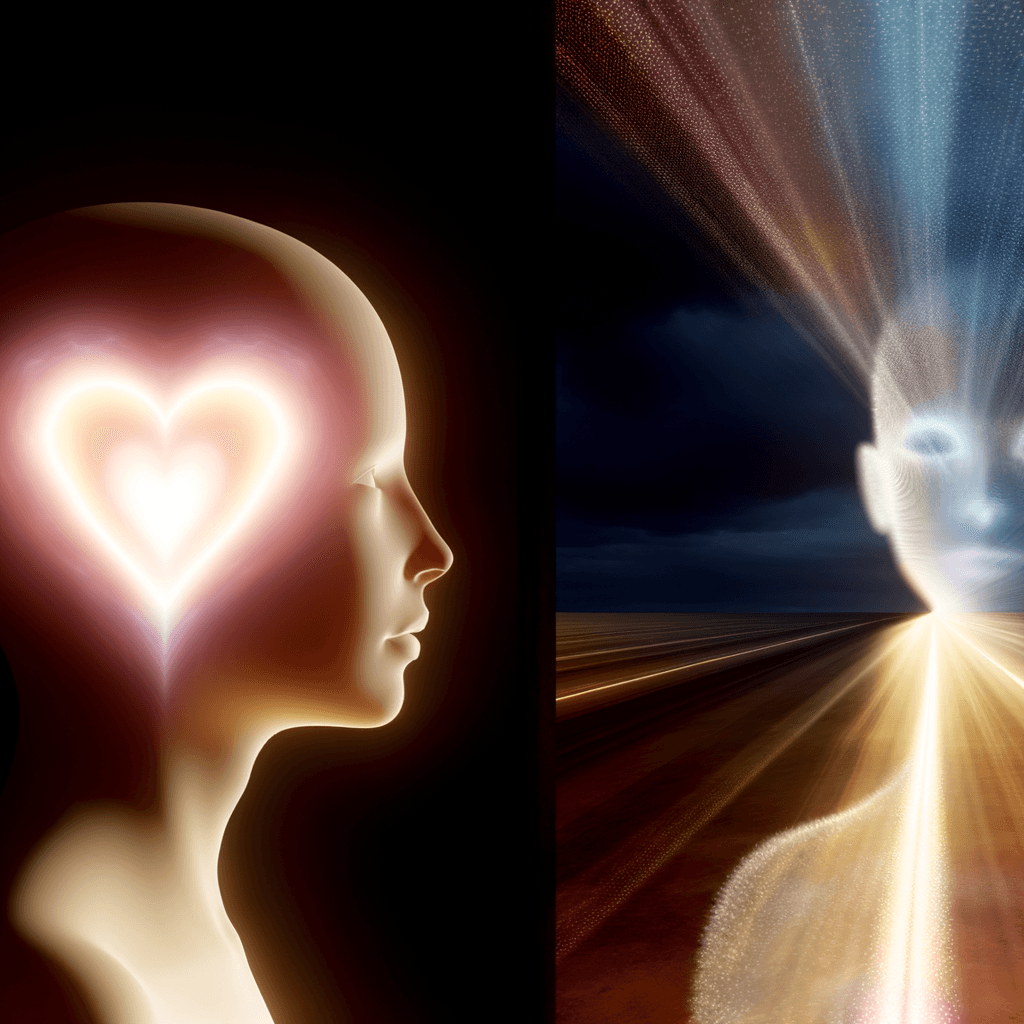
The thing that lies at the bottom of your heart, is the thing that can make you free. — Rainer Maria Rilke
—What lingers after this line?
Inner Truth and Self-Discovery
This quote suggests that the deepest desires and truths within a person are the key to their freedom. Recognizing and embracing these truths leads to personal liberation.
Emotional and Spiritual Freedom
Rilke implies that understanding and accepting one's deepest emotions and convictions can free an individual from self-doubt, fear, and societal expectations.
Authenticity and Personal Growth
By acknowledging what truly matters to us, we can live authentically and make choices that align with our core being, leading to fulfillment and growth.
The Power of Introspection
The quote encourages introspection, suggesting that looking inward and understanding what resides at the heart of our being can help us navigate life with clarity and purpose.
Rainer Maria Rilke’s Philosophy
As a poet who often explored themes of self-exploration, love, and existentialism, Rilke believed that true freedom comes from within, resonating with his broader philosophical and literary works.
One-minute reflection
Why might this line matter today, not tomorrow?
Related Quotes
6 selectedYou will never be able to experience everything. So, please, do poetical justice to your soul and simply experience yourself. — Albert Camus
Albert Camus
Camus begins from a humbling truth: no person can live every possible life, see every landscape, or test every path. Because existence is finite, the dream of total experience becomes a source of restlessness rather than...
Read full interpretation →True freedom is being without anxiety about imperfection. — Seng-tsan
tsan
Seng-tsan’s line shifts freedom away from external conditions and toward an internal posture: a mind no longer bullied by the fear of being flawed. In this framing, you can have choices, status, or even safety and still...
Read full interpretation →Freedom is not given to us by anyone; we have to cultivate it within ourselves. — Thich Nhat Hanh
Thich Nhat Hanh
Thich Nhat Hanh reframes freedom as something more intimate than laws, leaders, or circumstances. Rather than waiting for a benefactor to grant it, he points to a lived capacity—an inner steadiness that can be developed...
Read full interpretation →If you bring forth what is within you, what you bring forth will save you. If you do not, it will destroy you. — Proverb
Proverb
The proverb frames self-expression as a decisive fork in the road: what lies within us is not neutral, and it will shape our fate one way or another. In this view, inner fears, desires, convictions, and gifts resemble a...
Read full interpretation →Flow with whatever may happen and let your mind be free. — Zhuangzi
Zhuangzi
Zhuangzi’s line reads like a gentle instruction: stop tightening your grip on how things should go, and meet life as it actually arrives. In Daoist thought, insisting on control often creates the very tension we hope to...
Read full interpretation →Sketch your days with daring strokes; intimacy with yourself paints freedom. — Anaïs Nin
Anaïs Nin
Anaïs Nin frames daily living as an artistic act: to “sketch your days” suggests that life is not merely endured or recorded, but deliberately composed. The phrase “daring strokes” implies risk—choices made without waiti...
Read full interpretation →More From Author
More from Rainer Maria Rilke →To love is not about merging. It is a noble calling for the individual to ripen, to differentiate, to become a world in oneself in response to another. — Rainer Maria Rilke
At first glance, Rilke challenges one of romance’s most familiar ideals: the desire to ‘become one.’ Instead, he argues that genuine love is not a collapse of boundaries but a deepened encounter between two distinct peop...
Read full interpretation →Everything is blooming most recklessly; if it were voices instead of colors, there would be an unbelievable shrieking into the heart of the night. — Rainer Maria Rilke
At first glance, Rilke turns a peaceful image of blooming nature into something almost overwhelming. Flowers do not merely open; they burst forth “most recklessly,” suggesting a vitality so abundant that it exceeds calm...
Read full interpretation →And now let us believe in a long year that is given to us, new, untouched, full of things that have never been. — Rainer Maria Rilke
Rilke opens by shifting the tone from planning to believing: the year is “given to us,” implying something received rather than conquered. This framing matters because it replaces the pressure of achievement with the hum...
Read full interpretation →The purpose of life is to be defeated by greater and greater things. — Rainer Maria Rilke
Rainer Maria Rilke’s line treats “defeat” not as failure to avoid, but as a destination worth moving toward. The purpose of life, in this view, is measured by what can humble us—truths, beauties, responsibilities, or ide...
Read full interpretation →