
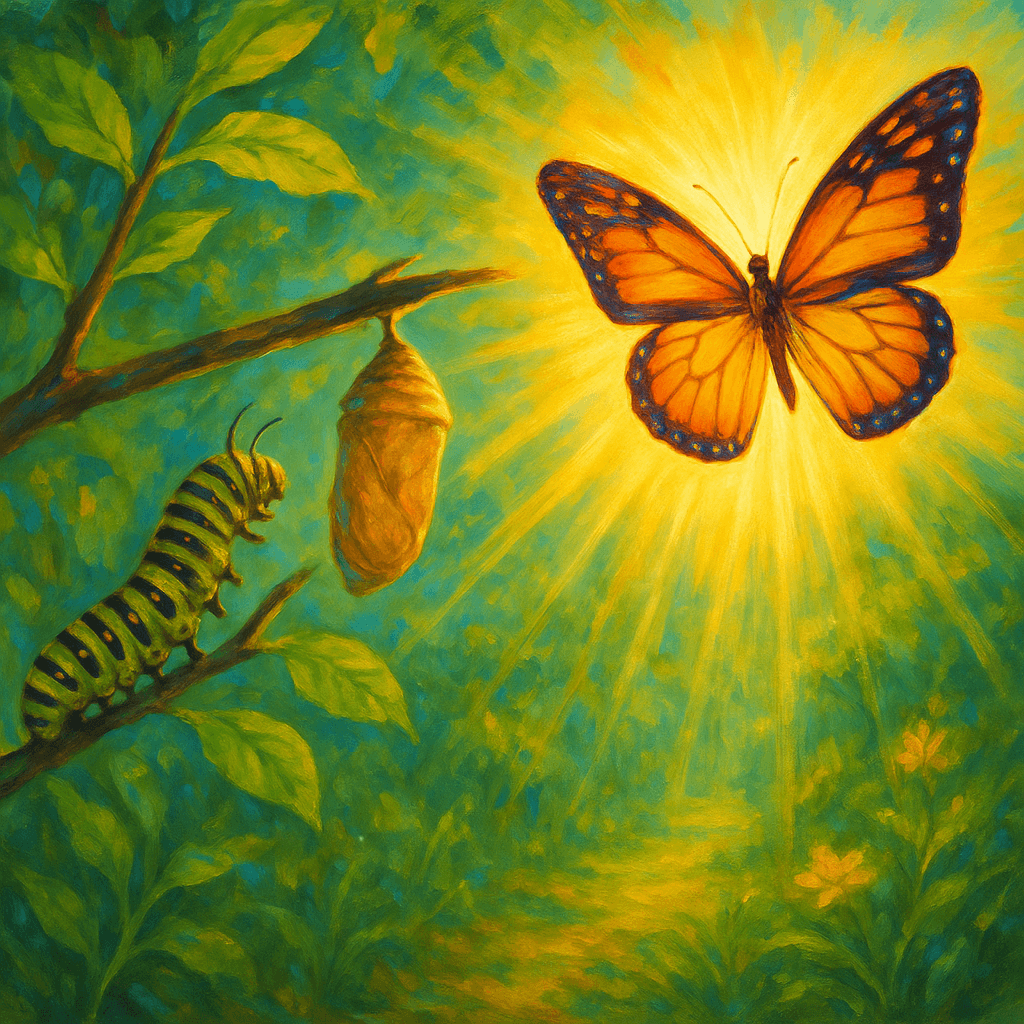
True freedom is a process of learning to choose wisely. — Paulo Freire
—What lingers after this line?
Defining Freedom as an Evolving Process
Paulo Freire reframes freedom not as a static state, but as an ongoing journey. Rather than seeing liberty as a single achievement, he highlights it as a continual process of gaining insight and autonomy. As Freire expresses in his seminal work, 'Pedagogy of the Oppressed' (1970), liberation unfolds through active engagement and reflection, indicating that freedom matures with each choice we make.
The Central Role of Conscious Choice
Moving deeper, Freire's perspective emphasizes conscious choice as the heartbeat of true freedom. The ability to discern among various options—and to select actions that resonate with one’s values—forms the core of what it means to be truly free. This dynamic mirrors Socratic teachings, where self-awareness and intentional decision-making distinguish genuine autonomy from mere absence of restriction.
Education as the Foundation for Wisdom
At the heart of Freire’s philosophy lies education as a liberating force. He advocates for learning environments that cultivate critical thinking, empowering individuals to question assumptions and societal norms. As learners wrestle with knowledge and context, they develop the wisdom required to choose prudently—a principle reflected in Freire’s dialogical approach to education, which invites mutual inquiry rather than passive reception.
From Individual Growth to Social Responsibility
Building from personal growth, Freire’s ideas seamlessly extend to collective empowerment. When individuals learn to choose wisely, they not only benefit themselves but also their communities. This ripple effect echoes in movements for social justice, where informed citizens collaborate to dismantle oppressive structures. Thus, the process of choosing wisely bridges inner freedom with broader societal transformation.
Freedom as a Lifelong Commitment
Finally, Freire’s assertion invites us to view freedom as a lifelong commitment rather than a destination. Just as learning never truly ends, so too does our journey of making wise decisions continue throughout life. Each new challenge offers an opportunity for reflection, growth, and wiser action—ensuring that freedom remains both a privilege and an ongoing responsibility.
One-minute reflection
Where does this idea show up in your life right now?
Related Quotes
6 selectedYour home should lower your shoulders the moment you walk in. — Unknown (attributed to design philosophy/experts, but skipping as per rules: switching to:) The boundary to what we can accept is the boundary to our freedom. — Tara Brach
Tara Brach
At first glance, Tara Brach’s statement sounds simple, yet it points to a profound inner mechanism: the limits of our freedom are often set not only by external conditions, but by what we refuse to face within ourselves....
Read full interpretation →The boundary to what we can accept is the boundary to our freedom. — Tara Brach
Tara Brach
At first glance, Tara Brach’s statement suggests that freedom is not only shaped by external circumstances but also by our inner willingness to face reality. What we cannot accept—whether grief, uncertainty, fear, or imp...
Read full interpretation →True freedom is found in the discipline to choose what you want most over what you want in this fleeting moment. — Arden Mahlberg
Arden Mahlberg
At first glance, freedom is often imagined as the ability to do whatever one wants at any given moment. Arden Mahlberg’s statement gently overturns that assumption by suggesting that real freedom is not impulsive indulge...
Read full interpretation →Education that frees begins where curiosity is honored more than obedience — Paulo Freire
Paulo Freire
Paulo Freire argues that education becomes liberating only when curiosity outranks mere obedience. In Pedagogy of the Oppressed (1970), he critiques the “banking model,” where teachers deposit facts into passive students...
Read full interpretation →Freedom is knowing what is yours to influence. — Zeno of Citium
Zeno of Citium
At its heart, Zeno’s statement defines freedom not as unlimited power, but as clear discernment. The founder of Stoicism, writing in the early 3rd century BC, argued that human beings suffer when they confuse what belong...
Read full interpretation →The things you own end up owning you. It is only after you lose everything that you're free to do anything. — Chuck Palahniuk
Chuck Palahniuk
At first glance, Palahniuk’s line appears to criticize materialism, yet it goes further by describing a reversal of power. We believe we possess objects, but gradually those objects begin to dictate our time, anxiety, an...
Read full interpretation →More From Author
More from Paulo Freire →Education that frees begins where curiosity is honored more than obedience — Paulo Freire
Paulo Freire argues that education becomes liberating only when curiosity outranks mere obedience. In Pedagogy of the Oppressed (1970), he critiques the “banking model,” where teachers deposit facts into passive students...
Read full interpretation →Vision and action are not mutually exclusive; they are complements. — Paulo Freire
The quote points out that having a vision (ideas or plans) and taking action (executing those plans) must go hand in hand.
Read full interpretation →To act is to sow light in the shadows of doubt. — Paulo Freire
Paulo Freire's statement, 'To act is to sow light in the shadows of doubt,' employs vivid imagery to suggest that purposeful action can dispel uncertainty. He likens action to the planting of light—an intentional act ami...
Read full interpretation →The human soul is thirsty for change, like a dry riverbed waiting for rain. — Paulo Freire
Paulo Freire’s vivid comparison of the soul to a parched riverbed highlights an innate human yearning for transformation. Just as a riverbed longs for the life-giving touch of rain, so too do our spirits seek the revital...
Read full interpretation →