
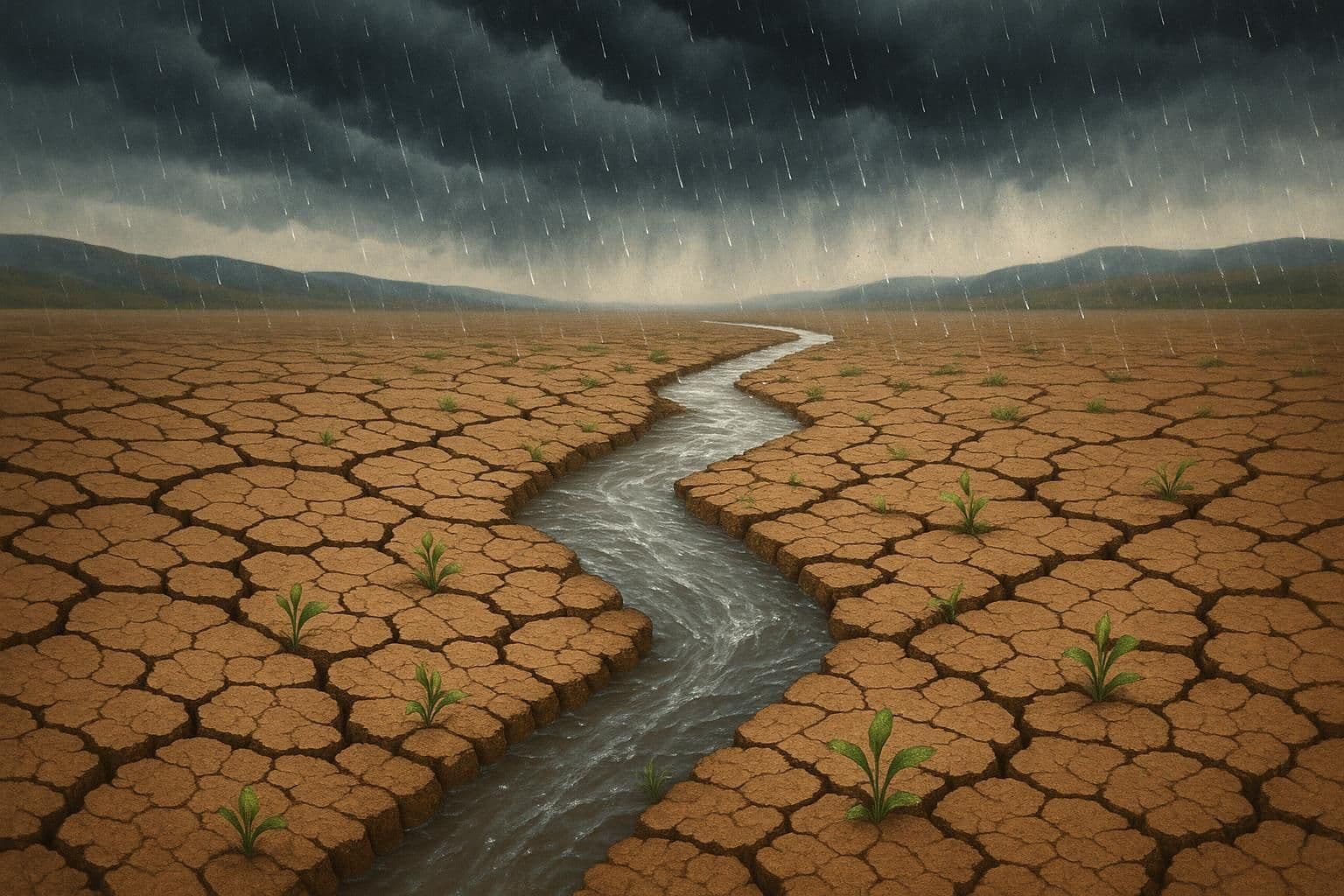
The human soul is thirsty for change, like a dry riverbed waiting for rain. — Paulo Freire
—What lingers after this line?
The Metaphor of Thirst and Renewal
Paulo Freire’s vivid comparison of the soul to a parched riverbed highlights an innate human yearning for transformation. Just as a riverbed longs for the life-giving touch of rain, so too do our spirits seek the revitalization that change brings. This metaphor emphasizes a fundamental truth: stagnation dries the inner landscape, while new experiences and insights serve as life’s essential nourishment.
Freire’s Educational Vision
Expanding on this metaphor, Freire’s work in pedagogical philosophy—especially in 'Pedagogy of the Oppressed' (1970)—positions education as the much-needed rain for human development. For Freire, learning is not a passive absorption but an active engagement that allows individuals to become agents of transformation, quenching their soul’s thirst for renewal and growth.
The Universal Craving for Transformation
Transitioning from theory to lived experience, the craving for change manifests universally throughout history. Movements for civil rights or social justice, like the student protests in Brazil during the 1960s, emerge as collective expressions of this thirst. Societies, much like individuals, often reach points of dryness where only profound change can restore vitality and hope.
Stagnation Versus Growth
Moreover, prolonged absence of change fosters disillusionment and apathy. In literature, consider Charles Dickens’ 'Great Expectations,' where stagnant environments—Miss Havisham’s decaying mansion—mirror the withering of unfulfilled souls. This underscores how transformation is not mere novelty but a fundamental requirement for continued vitality, both personally and collectively.
Cultivating Readiness for Rain
Ultimately, Freire’s observation serves as a call to prepare ourselves for transformation. Just as a riverbed must remain open to receive rain, individuals and communities must cultivate openness to growth and adaptability. By embracing change and seeking continual learning, we channel Freire’s wisdom—allowing our souls to flow freely and abundantly once more.
One-minute reflection
Where does this idea show up in your life right now?
Related Quotes
6 selectedThe old skin has to be shed before the new one can come. — Joseph Campbell
Joseph Campbell
Joseph Campbell’s image of old skin being shed before new skin can appear turns personal growth into something vivid and bodily. At its core, the quote suggests that renewal is not simply about adding better habits or br...
Read full interpretation →Anything that is living must have a rest. If it does not rest, it will lose its strength. — Lao Tzu
Lao Tzu
Lao Tzu’s insight begins with a simple observation: all living things move in cycles, not in endless exertion. By saying that anything alive must rest, he frames rest not as laziness but as a biological and spiritual nec...
Read full interpretation →Rest is not a waste of time; it is the soil from which new life grows. — Thich Nhat Hanh
Thich Nhat Hanh
At first glance, Thich Nhat Hanh’s words challenge a deeply modern assumption that only visible productivity has value. By calling rest “the soil,” he shifts our attention from immediate output to the hidden conditions t...
Read full interpretation →Rest when you're weary. Refresh and renew yourself, your body, your mind, your spirit. Then get back to work. — Ralph Marston
Ralph Marston
Ralph Marston’s quote begins with a simple but often ignored truth: weariness is not a moral failure but a signal. When he says to rest when you’re weary, he reframes pause as part of effort rather than its opposite.
Read full interpretation →When you rest, you catch your breath and it holds you up, like water wings. — Anne Lamott
Anne Lamott
Anne Lamott transforms rest from a passive pause into an active form of care. In her image, catching your breath is not merely stopping; it is discovering that something small and ordinary can hold you up.
Read full interpretation →The trees don't get anxious about shedding their leaves; they trust that spring will return. — Haemin Sunim
Haemin Sunim
Haemin Sunim’s image of trees shedding their leaves offers a gentle lesson in surrender. Rather than resisting change, trees participate in it fully, releasing what they can no longer keep.
Read full interpretation →More From Author
More from Paulo Freire →Education that frees begins where curiosity is honored more than obedience — Paulo Freire
Paulo Freire argues that education becomes liberating only when curiosity outranks mere obedience. In Pedagogy of the Oppressed (1970), he critiques the “banking model,” where teachers deposit facts into passive students...
Read full interpretation →Vision and action are not mutually exclusive; they are complements. — Paulo Freire
The quote points out that having a vision (ideas or plans) and taking action (executing those plans) must go hand in hand.
Read full interpretation →To act is to sow light in the shadows of doubt. — Paulo Freire
Paulo Freire's statement, 'To act is to sow light in the shadows of doubt,' employs vivid imagery to suggest that purposeful action can dispel uncertainty. He likens action to the planting of light—an intentional act ami...
Read full interpretation →Without action, the best intentions are nothing but lost dreams. — Paulo Freire
Paulo Freire’s statement draws attention to the gulf that often exists between our noblest intentions and tangible outcomes. Even the purest desires for change or improvement lose their potency if not acted upon.
Read full interpretation →