
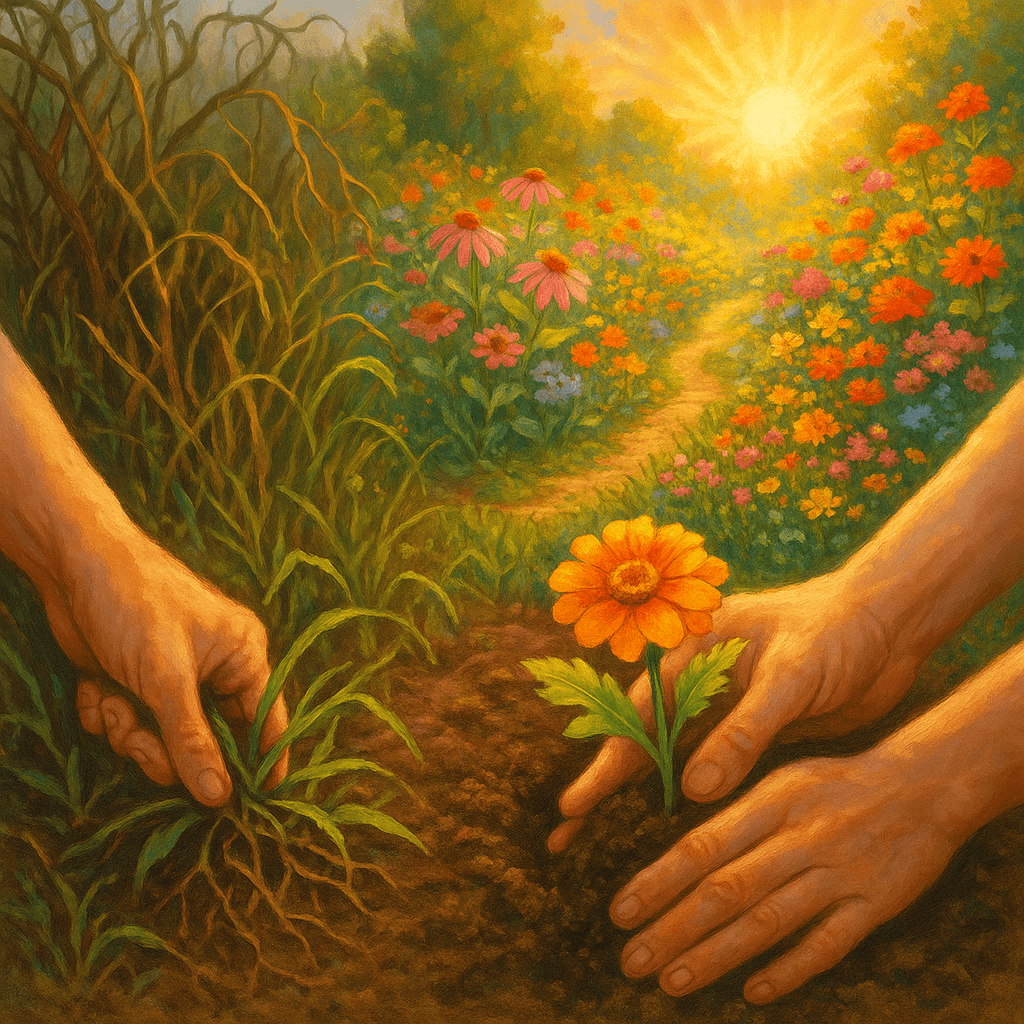
Plant dreams, pull weeds, and grow a happy life. — Lois Cameron
—What lingers after this line?
Sowing the Seeds of Aspiration
Lois Cameron’s words invite us to approach our lives as gardeners tend to their soil, beginning with the planting of dreams. Just as seeds hold the promise of a bountiful harvest, aspirations give direction and hope, sparking our motivation for growth. The act of planting symbolizes intention—deliberately choosing the shapes we wish our future to take. This outlook echoes throughout literature and philosophy; for example, in Ralph Waldo Emerson’s essays, he encourages readers to 'dare to live the life you have dreamed.'
The Importance of Regular Maintenance
Transitioning from aspiration to effort, Cameron underscores the necessity of 'pulling weeds.' In every garden, unwanted plants threaten to choke new growth, serving as a metaphor for unhelpful habits, negative thoughts, or toxic influences in our lives. Ongoing self-reflection, much like the diligent gardener's hand, is required to recognize and remove these obstacles. The Buddhist practice of mindfulness, described in Thich Nhat Hanh’s works, similarly teaches the value of observing and gently uprooting mental clutter to create room for happiness.
Nurturing Growth through Small Acts
With the groundwork laid and distractions minimized, nurturing becomes essential. Just as flowers bloom with water and light, happiness flourishes through consistent acts of kindness, gratitude, and self-care. Positive psychology research, such as that by Martin Seligman, illustrates that small, habitual actions—keeping a journal of thanks or helping others—ultimately nurture a thriving and joyful life. This process is gradual, reminding us that growth is both a journey and a discipline.
Harvesting Joy from Effort
As these cultivated dreams and efforts mature, life’s garden offers moments of harvest. The sense of fulfillment and purpose found in achievements—big or small—reflects the intricate link between intention, diligence, and joy. These moments remind us of the cyclical rewards embedded in persistence, much as a gardener is rewarded with blossoming flowers or fruitful crops. Drawing from Maya Angelou’s wisdom, 'We may encounter many defeats but we must not be defeated,' emphasizing the satisfaction that comes from perseverance.
Embracing Life as a Continual Process
Finally, Cameron’s metaphor highlights that happiness is a process, not a one-time event. Gardens require care across seasons; likewise, life demands ongoing adaptation and hope. This continual tending shapes our perspective, teaching resilience and patience. As the cycle repeats—planting, weeding, nurturing, and harvesting—we come to see happiness not as a destination but as the result of how we engage with the everyday landscape of our lives, ever open to new possibilities and growth.
Recommended Reading
As an Amazon Associate, we earn from qualifying purchases.
One-minute reflection
What does this quote ask you to notice today?
Related Quotes
6 selectedAny significant long-term change requires long-term practice, whether that change has to do with playing the violin or learning to be a more open, loving person. — Michael Pollock
Michael Pollock
Michael Pollock’s insight begins with a simple but demanding truth: meaningful change does not arrive in a sudden burst of inspiration. Instead, whether one is learning the violin or becoming more open-hearted, progress...
Read full interpretation →We are all works in progress. That is actually being alive. — Thomas Oppong
Thomas Oppong
Thomas Oppong’s line begins with a gentle but radical claim: to be human is not to be complete, but to be continually forming. Rather than treating imperfection as a flaw, the quote reframes it as evidence of vitality.
Read full interpretation →Respect yourself enough to walk away from anything that no longer grows you. — Brené Brown
Brené Brown
At its core, Brené Brown’s line frames departure not as failure but as dignity in motion. To respect yourself, in this view, is to recognize when a relationship, job, habit, or environment has stopped contributing to you...
Read full interpretation →Learning technique is a way to make your soul grow. So do it. — Vincent van Gogh
Vincent van Gogh
Van Gogh’s brief statement turns learning into more than a practical task; it becomes an ethical and spiritual imperative. By saying that learning technique helps the soul grow, he suggests that disciplined study does no...
Read full interpretation →The most beautiful discovery true friends make is that they can grow separately without growing apart. — Elisabeth Foley
Elisabeth Foley
Elisabeth Foley’s quote captures a gentle but powerful truth: authentic friendship does not depend on constant proximity or identical life paths. At first glance, distance, change, and personal growth might seem like thr...
Read full interpretation →It is necessary to try to surpass one's self always: this occupation ought to last as long as life. — Queen Christina of Sweden
Queen Christina of Sweden
Queen Christina’s statement frames life not as a static identity but as a continual effort to exceed what one has already become. Rather than competing primarily with others, she turns ambition inward, suggesting that th...
Read full interpretation →More From Author
More from Lois Cameron →