
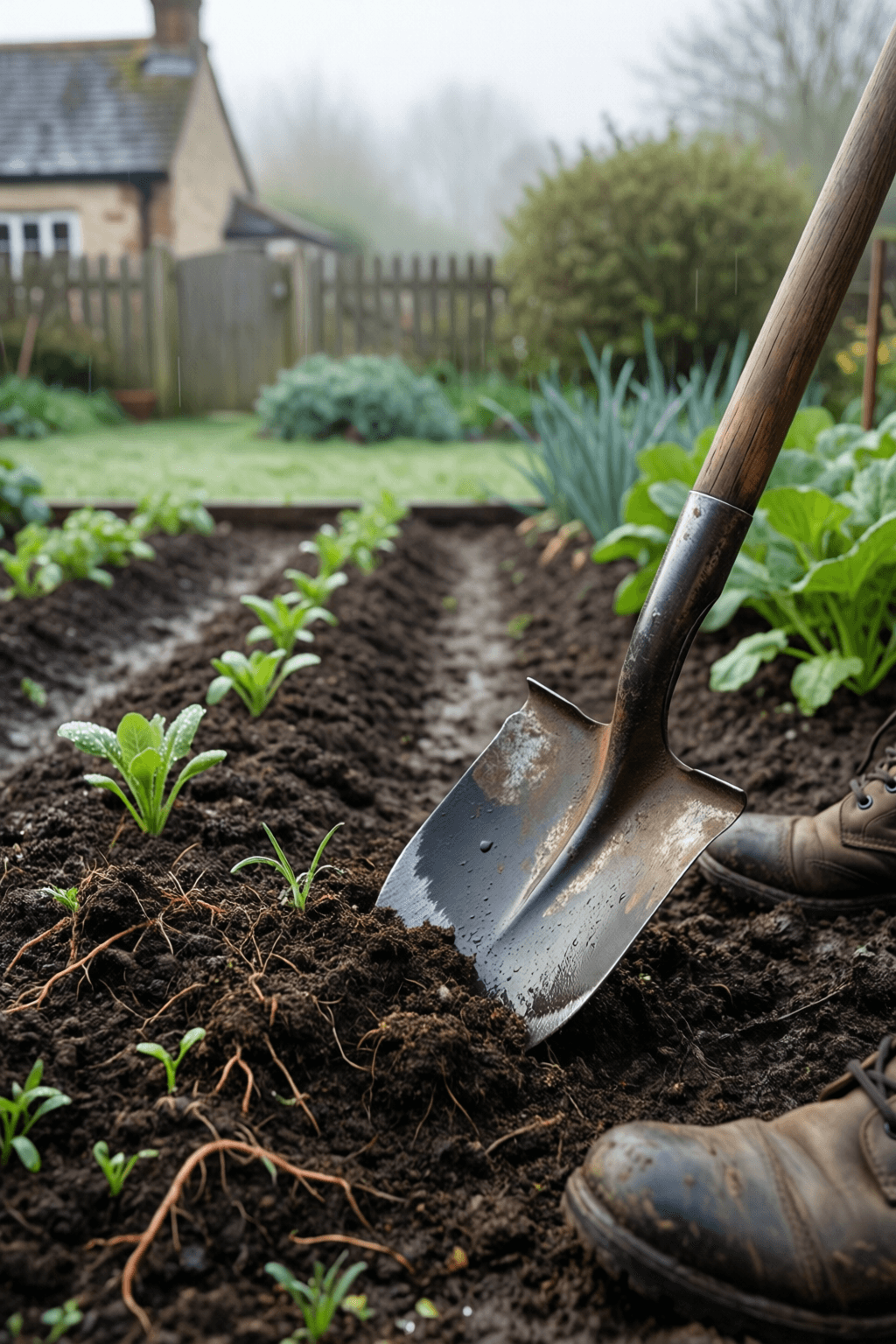
There is nothing pleasanter than spading when the ground is soft and damp. — John Steinbeck
—What lingers after this line?
A Simple Joy in Physical Labor
At first glance, Steinbeck’s line seems almost modest, yet its pleasure is precise and deeply felt. Spading soft, damp ground turns labor into something nearly sensual: the tool enters easily, the earth yields without resistance, and the body falls into a satisfying rhythm. In that moment, work is not merely obligation but a form of contentment rooted in touch, motion, and the living world. Because Steinbeck often noticed dignity in ordinary tasks, this observation carries more weight than a casual preference. It suggests that happiness can arise not from luxury or spectacle, but from the perfect meeting of body, tool, and season.
The Intimacy Between Human and Land
From that physical pleasure, the quote naturally opens into a deeper relationship with the earth itself. Soft and damp soil is receptive; it responds to effort, and so the worker feels less like a conqueror than a participant in a shared process. The ground is not inert matter here but something alive, ready to be shaped for planting, growth, and renewal. In this way, Steinbeck echoes a long agrarian tradition in which working the land becomes a form of knowing it. His novels, especially The Grapes of Wrath (1939), repeatedly show that land is tied to memory, survival, and identity, making even a simple act like spading feel quietly profound.
Why Conditions Matter So Much
Yet the sentence is careful in its praise: the pleasure lies not in spading alone, but in spading when the ground is soft and damp. That qualification matters, because it recognizes how much human satisfaction depends on timing and circumstance. Hard, dry ground resists and exhausts; soft earth invites and rewards. The same task, under different conditions, becomes either drudgery or delight. Consequently, the quote also reflects a practical wisdom. It honors attentiveness to weather, moisture, and season—the gardener’s or farmer’s instinct to work with nature rather than against it. Pleasure, Steinbeck implies, often comes from cooperation with reality.
Rhythm, Effort, and Mental Ease
Moreover, the pleasure Steinbeck describes is not only tactile but psychological. Repetitive outdoor work has a calming effect: the lift and turn of the spade, the smell of wet soil, and the visible progress of each row can quiet inner noise. Long before modern discussions of mindfulness, such labor offered a direct route into absorption, where thought settles because the body is fully engaged. This helps explain why the image feels so restorative. Unlike abstract worries, earth answers immediately and honestly. One thrust of the spade leads to another, and the mind, following the body’s rhythm, finds a rare kind of ease.
Steinbeck’s Respect for the Ordinary
Finally, the line reflects Steinbeck’s larger artistic gift: his ability to locate meaning in humble, grounded experience. Rather than celebrating grand achievements, he pauses over a fleeting agricultural pleasure that many might overlook. In doing so, he elevates manual work without romantic excess, showing how close attention can transform an everyday moment into something memorable. Thus the quote endures because it speaks beyond gardening. It reminds us that some of life’s purest pleasures are elemental—good soil, right weather, honest effort—and that fulfillment often waits in the simplest encounters between ourselves and the world.
One-minute reflection
What feeling does this quote bring up for you?
Related Quotes
6 selectedNature is not only all that is visible to the eye, it also includes the inner pictures of the soul. — Edvard Munch
Edvard Munch
At first glance, Munch’s statement expands the ordinary idea of nature beyond forests, skies, and seas. He argues that nature is not limited to what the eye can measure; it also includes the emotional and imaginative ima...
Read full interpretation →Gardening is the slowest of the performing arts. — Mac Griswold
Mac Griswold
Mac Griswold’s remark transforms gardening from a practical chore into a form of performance, one staged not on a theater floor but in soil, weather, and seasons. At first glance, the comparison seems surprising; yet the...
Read full interpretation →The glory of gardening: hands in the dirt, head in the sun, heart with nature. — Alfred Austin
Alfred Austin
Alfred Austin’s line condenses the appeal of gardening into one vivid scene: the body grounded in soil, the mind lifted by sunlight, and the emotions attuned to the natural world. At once physical and poetic, the quote s...
Read full interpretation →It is not the language of painters but the language of nature which one should listen to. — Pablo Picasso
Pablo Picasso
At first glance, Picasso’s remark challenges the authority of artistic convention. By contrasting ‘the language of painters’ with ‘the language of nature,’ he suggests that art should not merely imitate established techn...
Read full interpretation →Great art picks up where nature ends. — Marc Chagall
Marc Chagall
At its core, Marc Chagall’s remark suggests that art does not compete with nature but continues its unfinished conversation. Nature gives us raw forms—color, light, movement, emotion—while art reshapes them into meaning.
Read full interpretation →Your home is your larger body. It grows in the sun and sleeps in the stillness of the night. — Kahlil Gibran
Kahlil Gibran
At first glance, Gibran transforms the idea of home from a mere structure into something intimate and organic: “your larger body.” In this image, a dwelling is not separate from the person who inhabits it, but an outward...
Read full interpretation →More From Author
More from John Steinbeck →The work we do with our hands is the best way to keep our hearts from getting restless. — John Steinbeck
At its core, Steinbeck’s line proposes that physical work does more than produce useful things: it calms inner turbulence. By keeping the hands occupied, he suggests, the mind is less likely to drift into anxiety, idlene...
Read full interpretation →The art of resting is a part of the art of working. — John Steinbeck
At first glance, Steinbeck’s remark seems simple, yet it quietly overturns a common assumption: that work and rest are opposites. Instead, he presents them as parts of the same craft.
Read full interpretation →Set your hands to work that honors tomorrow and your feet will find steady ground. — John Steinbeck
Steinbeck’s line ties dignity to direction: “hands” symbolize daily effort, but the effort must “honor tomorrow,” meaning it should be guided by a longer horizon than immediate comfort. Rather than romanticizing busyness...
Read full interpretation →Turn curiosity into craft; practice is where dreams learn to behave. — John Steinbeck
Steinbeck begins with a familiar engine of creativity: curiosity. It’s the restless question—“What if?”—that nudges a person toward a story, a song, a business, or a skill.
Read full interpretation →