
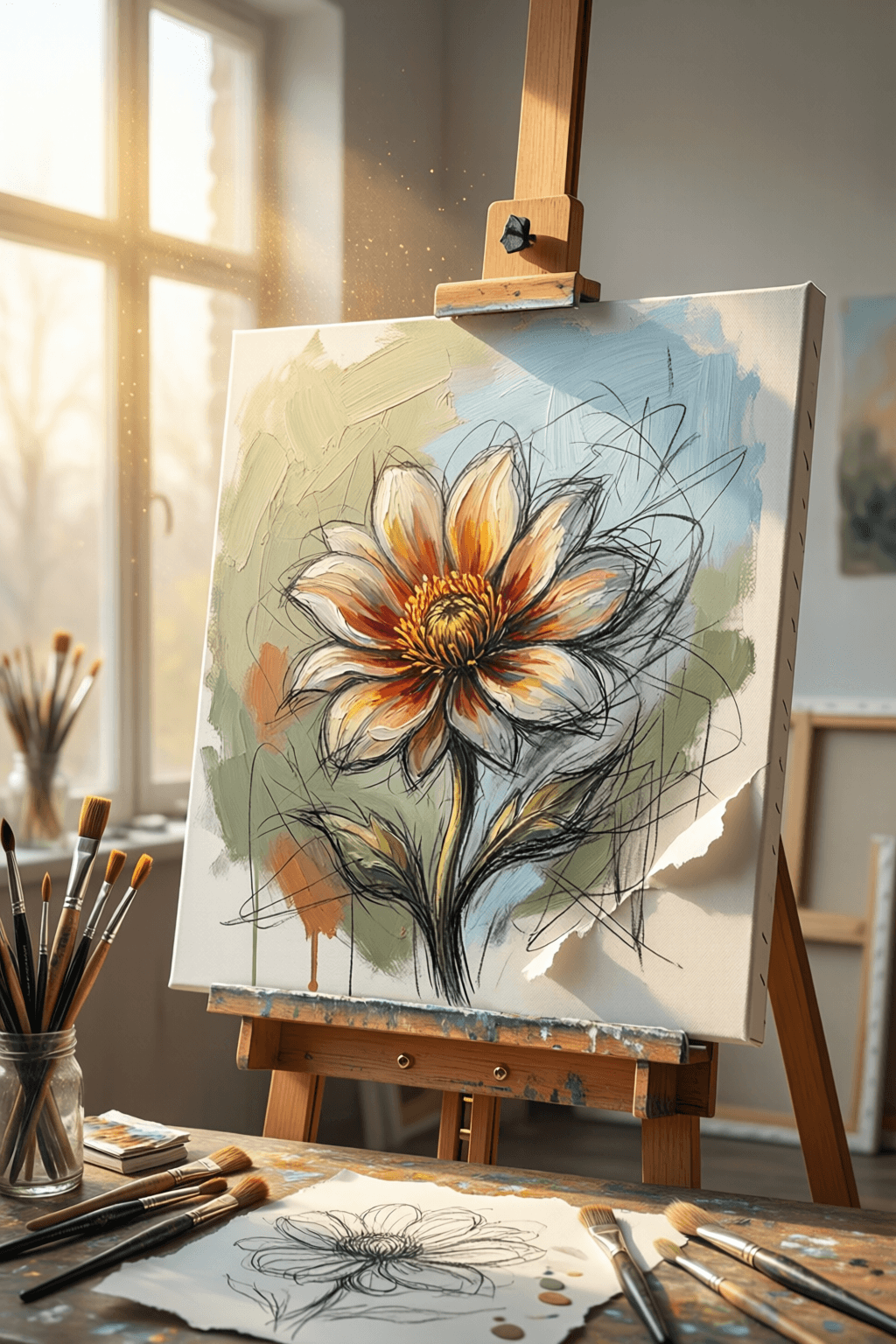
To be truly creative, you must be willing to let go of the need for perfection and embrace the beauty of the unfinished. — Austin Kleon
—What lingers after this line?
Letting Go of Perfection
At its core, Austin Kleon’s quote argues that creativity begins where perfectionism loosens its grip. The demand to make something flawless before it is even born can paralyze the imagination, whereas accepting roughness allows ideas to move from thought into form. In this sense, the unfinished is not a failure of craft but the natural starting point of any original work. This shift matters because perfection often disguises fear: fear of judgment, waste, or inadequacy. Once that fear is named, however, the artist can proceed more freely, trusting that a draft, sketch, or fragment is not a final verdict but an opening gesture.
The Unfinished as Creative Space
From there, the unfinished becomes more than a temporary stage—it becomes a fertile space for discovery. A painting half-resolved, a paragraph still searching for its shape, or a melody without a final cadence invites experimentation. Because it is incomplete, it remains alive to possibility. Leonardo da Vinci’s many unfinished works, including the Adoration of the Magi (begun 1481), reveal this vividly. Even in their incompletion, they expose the restless intelligence of a mind still exploring. Rather than diminishing the work, the unfinished can preserve the very energy of invention.
Why Perfectionism Restricts Originality
Moreover, perfectionism often leads creators toward safety rather than surprise. If every move must be justified in advance, then risk begins to feel intolerable, and truly new ideas rarely emerge under such conditions. Originality depends on trial, error, revision, and the occasional beautiful mistake. Psychologist Donald Winnicott’s idea of the “good enough” environment, developed in works like Playing and Reality (1971), offers a useful parallel: growth does not require ideal conditions, only sufficient freedom to experiment. Likewise, creative work matures not through sterile control but through room to wander and revise.
Process Over Polished Outcome
As this perspective deepens, Kleon’s quote also reframes what counts as success. Instead of treating the finished product as the sole measure of worth, it honors the process itself—the hesitations, failed attempts, and unexpected detours that shape meaningful work. Many artists and writers keep notebooks precisely because fragments often contain the seeds of later breakthroughs. Ernest Hemingway reportedly advised writers to “write drunk, edit sober,” a phrase often repeated whether or not perfectly sourced, because it captures a larger truth: creation and correction are different acts. First one must generate freely; only afterward can refinement do its proper work.
The Courage to Be Seen Midway
Consequently, embracing the unfinished also requires vulnerability. To share work before it is perfected—or even to admit to oneself that it may never become flawless—is to accept being seen in progress. Yet this exposure is often what makes creative communities possible, since dialogue, feedback, and collaboration thrive around works still taking shape. Austin Kleon’s own books, including Steal Like an Artist (2012), encourage artists to show their process and remain open to influence. That advice reinforces the quote’s deeper message: creativity is not a performance of mastery from the outset, but a visible journey through uncertainty.
Imperfection as a Path to Authentic Work
Ultimately, the beauty of the unfinished lies in its honesty. Perfect surfaces can impress, but incomplete work often reveals intention, struggle, and personality more clearly. It shows the hand of the maker still at work, still questioning, still alive to change. For that reason, Kleon’s insight is less about lowering standards than about timing one’s standards wisely. Perfection may have a place in revision, but it cannot be allowed to dominate inception. True creativity asks for something braver first: the willingness to begin imperfectly and trust that authenticity can emerge from what remains unfinished.
One-minute reflection
What feeling does this quote bring up for you?
Related Quotes
6 selectedWe don't create to be perfect; we create to be present. The imperfections are not errors, but the fingerprints of our humanity. — Wabi-sabi philosophy, via Leonard Koren
sabi philosophy, via Leonard Koren
At its core, this reflection shifts the purpose of creation away from flawless results and toward lived attention. To create ‘to be present’ means engaging fully with the moment, allowing the act itself to matter as much...
Read full interpretation →To live a creative life, we must lose our fear of being wrong. — Joseph Chilton Pearce
Joseph Chilton Pearce
This quote emphasizes the importance of embracing uncertainty and the unknown. Creativity often involves exploring uncharted territories, and fearing mistakes can stifle that exploration.
Read full interpretation →Creativity takes courage. — Henri Matisse
Henri Matisse
This quote highlights that being creative often involves exposing one's inner thoughts and feelings, which requires a significant amount of courage as it makes one vulnerable to criticism and judgment.
Read full interpretation →Embrace the glorious mess that you are. — Elizabeth Gilbert
Elizabeth Gilbert
This quote encourages individuals to accept themselves with all their flaws, imperfections, and unique traits. Embracing one's true self is a step towards genuine self-love.
Read full interpretation →Imperfections are not inadequacies; they are reminders that we're all in this together. — Brené Brown, United States.
Brené Brown, United States.
Brené Brown emphasizes the idea that imperfections should not be viewed as shortcomings. Instead, they serve as reminders of our shared humanity and the collective experience of being imperfect.
Read full interpretation →Find the beauty in imperfection and let it guide you. — Pema Chödrön
Pema Chödrön
This quote encourages us to accept and appreciate flaws rather than striving for unattainable perfection. Imperfection is a natural part of life and holds its own beauty.
Read full interpretation →More From Author
More from Austin Kleon →