
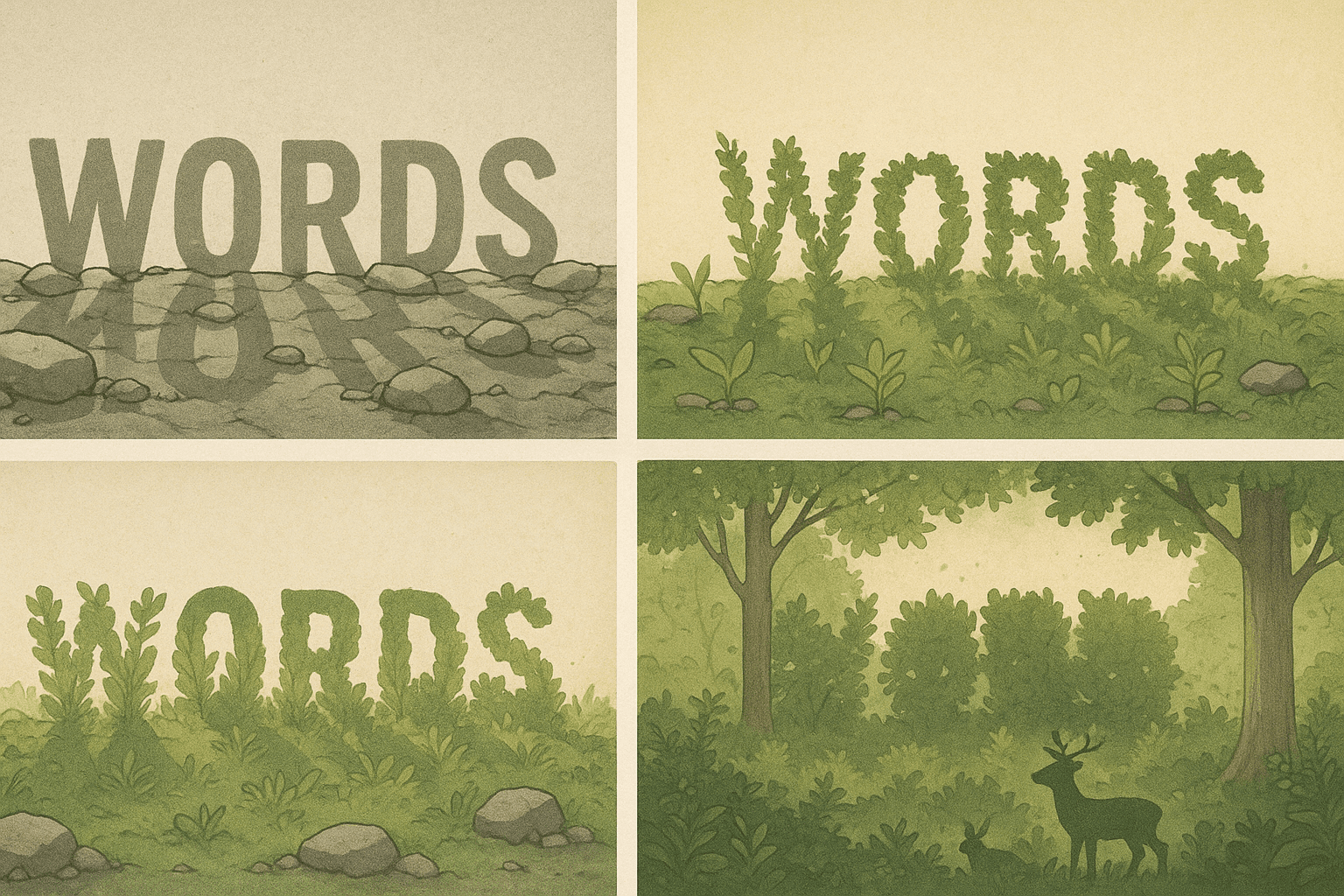
Words are but the shadows of actions. — Democritus
—What lingers after this line?
The Essence of Democritus’s Wisdom
Democritus, an ancient Greek philosopher, profoundly suggests that words alone are mere reflections or shadows of genuine deeds. His statement invites us to look past language and to recognize that true value and intent lie in actions themselves. Just as a shadow cannot exist without an object, conversation and promises mean little without real follow-through.
From Philosophy to Practice in Ancient Greece
Delving deeper, the ancient Greeks often distinguished between theory and practice. For instance, in Plato's *Meno* (c. 380 BC), Socrates probes whether virtue can be taught or is shown through behavior. Democritus’s remark aligns with this tradition, warning against relying on rhetoric and urging listeners to seek substance in what people do, not just what they say.
Literary Echoes: Actions Speaking Louder
The idea that deeds surpass words is a literary motif found throughout history. Shakespeare, for example, captured a similar sentiment in *King Lear*: ‘Nothing will come of nothing.’ Here, mere intentions or proclamations without subsequent action yield no results. Like the ephemeral nature of a shadow, words alone cannot build trust or legacy.
Psychological Perspectives on Integrity
Transitioning into psychology, the discrepancy between words and actions is a central issue in understanding trust and credibility. Cognitive dissonance theory, introduced by Leon Festinger (1957), suggests that individuals experience discomfort when their actions do not align with their declared beliefs. This internal conflict often drives people to change either their behavior or their language to achieve alignment, reinforcing the importance of actions as the anchor of authenticity.
Modern Applications: The Power of Doing
Finally, in contemporary life—whether in leadership, relationships, or social change—the weight of action over speech is increasingly recognized. Social movements, for example, often falter when statements are not paired with meaningful efforts. Democritus’s lesson endures: to effect genuine change or earn respect, we must ensure our deeds cast a shadow deeper and more lasting than any words we utter.
One-minute reflection
What feeling does this quote bring up for you?
Related Quotes
6 selectedWhen deeds speak, words are nothing. - African Proverb
African Proverb
This proverb emphasizes the importance of actions over words. It suggests that what we do holds more value and truth than what we say.
Read full interpretation →There is a quiet power in the ability to simply be, to exist without the need for constant performance. — Eileen Caddy
Eileen Caddy
Eileen Caddy’s words begin with a gentle challenge to modern restlessness: we often feel compelled to prove our worth through productivity, charm, achievement, or constant visibility. Yet her phrase “quiet power” suggest...
Read full interpretation →Be who you are and say what you feel, because those who mind don't matter, and those who matter don't mind. — Bernard M. Baruch
Bernard M. Baruch
Baruch’s quote begins with a simple but demanding instruction: be yourself and speak honestly. At its core, the line argues that authenticity is not merely a personality trait but an act of courage, especially in a world...
Read full interpretation →You're born an original—don't die a copy. — John Mason
John Mason
At its core, John Mason’s line is a sharp reminder that every person begins life with a distinct combination of temperament, talent, and perspective. To be “born an original” suggests that individuality is not something...
Read full interpretation →Authenticity is a habit. It is a road we are comfortable with. — Ai Weiwei
Ai Weiwei
At first glance, Ai Weiwei’s statement shifts authenticity away from dramatic self-revelation and toward repetition. By calling it a habit, he suggests that being genuine is not an occasional act of courage but a pattern...
Read full interpretation →Quietly persist. The world is loud, but your work only needs to be true. — Anne Lamott
Anne Lamott
Anne Lamott’s line begins with a simple imperative: “Quietly persist.” At once, it rejects the idea that meaningful work must announce itself to be real. Instead, she points toward a steadier form of effort, one rooted i...
Read full interpretation →More From Author
More from Democritus →Happiness resides not in possessions, and not in gold, happiness dwells in the soul. — Democritus
Democritus suggests that true happiness comes from within oneself and the state of one's soul rather than external possessions or wealth. Material goods alone cannot provide lasting satisfaction.
Read full interpretation →By desiring little, a poor man makes himself rich. — Democritus
Democritus, an ancient Greek philosopher, is renowned for his emphasis on inner riches over material wealth. By proposing that 'desiring little' enables a poor person to feel rich, he subverts conventional definitions of...
Read full interpretation →