
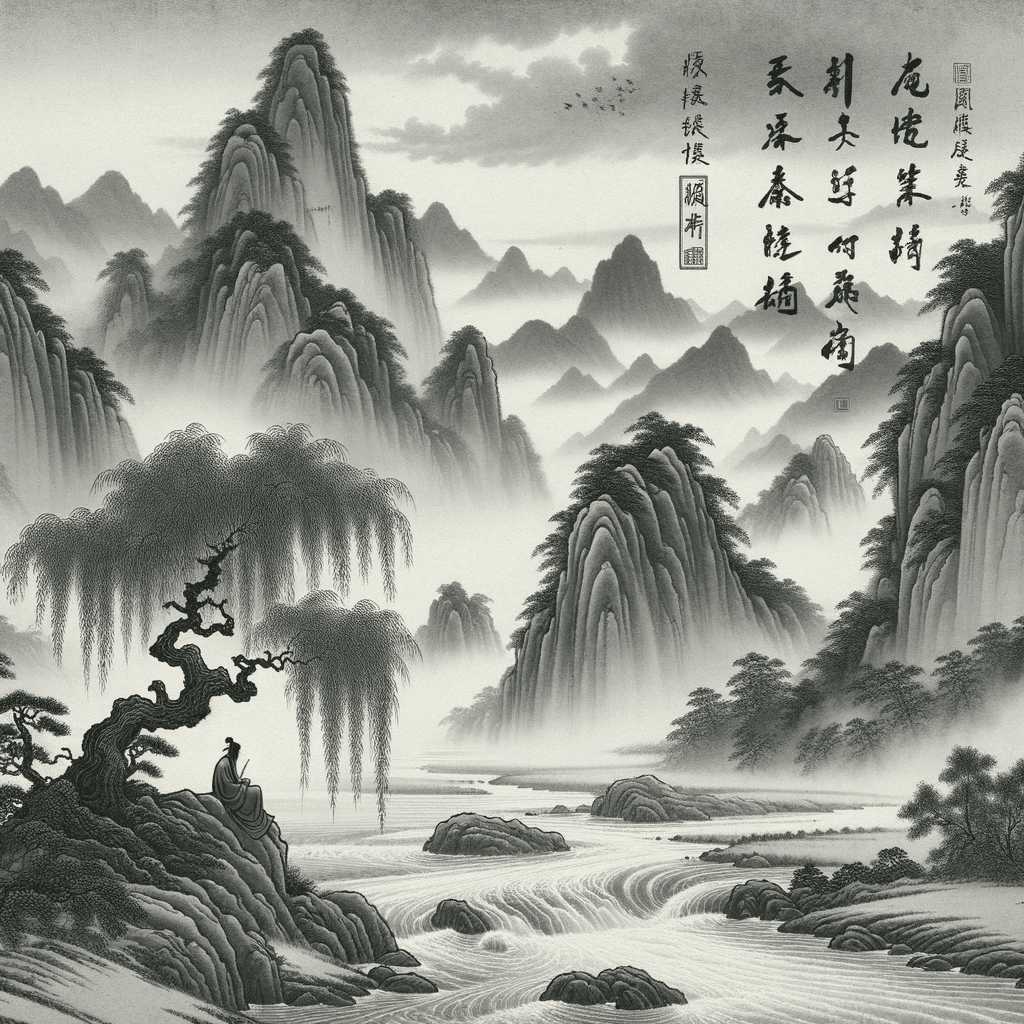
Alone in a foreign land, I am a lonely stranger; every time during the festive season, my longing for my loved ones doubles. - Wang Wei
—What lingers after this line?
Alienation
The quote encapsulates the sense of alienation and loneliness one feels when they are away from their homeland, especially in a foreign environment where they might feel out of place.
Festive Isolation
Wang Wei highlights how festive seasons, which are often characterized by togetherness and celebration with loved ones, exacerbate feelings of loneliness and longing when one is separated from family and friends.
Emotional Intensity
He conveys the emotional intensity of longing and homesickness through the imagery of the festive season, suggesting that the joy others feel during these times starkly contrasts with his own sorrow and yearning.
Cultural Significance
In traditional Chinese culture, festivals are times for family reunions and celebrations. Being away from family during such times intensifies the feelings of isolation and underscores the importance of familial bonds.
Historical Context
Wang Wei was a Chinese poet during the Tang Dynasty, a period renowned for its cultural and artistic achievements. His poetry often reflects personal emotions and the natural landscape, intertwining personal experience with broader cultural sentiments.
One-minute reflection
What's one small action this suggests?
Related Quotes
4 selected"I lift my head to gaze at the bright moon; I lower it, thinking of my home." — Li Bai
Li Bai
To begin, the couplet captures a miniature drama of attention: first the head lifts toward the bright moon, then drops as the mind returns home. With two plain gestures, Li Bai maps an outward gaze to the cosmos and an i...
Read full interpretation →The first step toward light is choosing to rise. — Wang Wei
Wang Wei
Wang Wei’s statement deftly employs light as a symbol for enlightenment, growth, or hope, while remaining in darkness signifies inertia or despair. By asserting that the journey toward light begins with a choice, he high...
Read full interpretation →Practice patience as a form of active hope. — Wang Wei
Wang Wei
At first glance, patience sounds passive, yet the injunction to practice it recasts waiting as work. To wait well is to align one’s actions with a horizon that has not arrived, refusing both panic and paralysis.
Read full interpretation →“At leisure I hear osmanthus falling; In still night, the spring mountain lies silent.” — Wang Wei
Wang Wei
Wang Wei opens with a paradox: at leisure, he hears osmanthus falling. Petals do not normally make a sound; therefore, the line does not magnify noise so much as heighten quiet.
Read full interpretation →More From Author
More from Wang Wei →The first step toward light is choosing to rise. — Wang Wei
Wang Wei’s statement deftly employs light as a symbol for enlightenment, growth, or hope, while remaining in darkness signifies inertia or despair. By asserting that the journey toward light begins with a choice, he high...
Read full interpretation →Practice patience as a form of active hope. — Wang Wei
At first glance, patience sounds passive, yet the injunction to practice it recasts waiting as work. To wait well is to align one’s actions with a horizon that has not arrived, refusing both panic and paralysis.
Read full interpretation →“At leisure I hear osmanthus falling; In still night, the spring mountain lies silent.” — Wang Wei
Wang Wei opens with a paradox: at leisure, he hears osmanthus falling. Petals do not normally make a sound; therefore, the line does not magnify noise so much as heighten quiet.
Read full interpretation →