
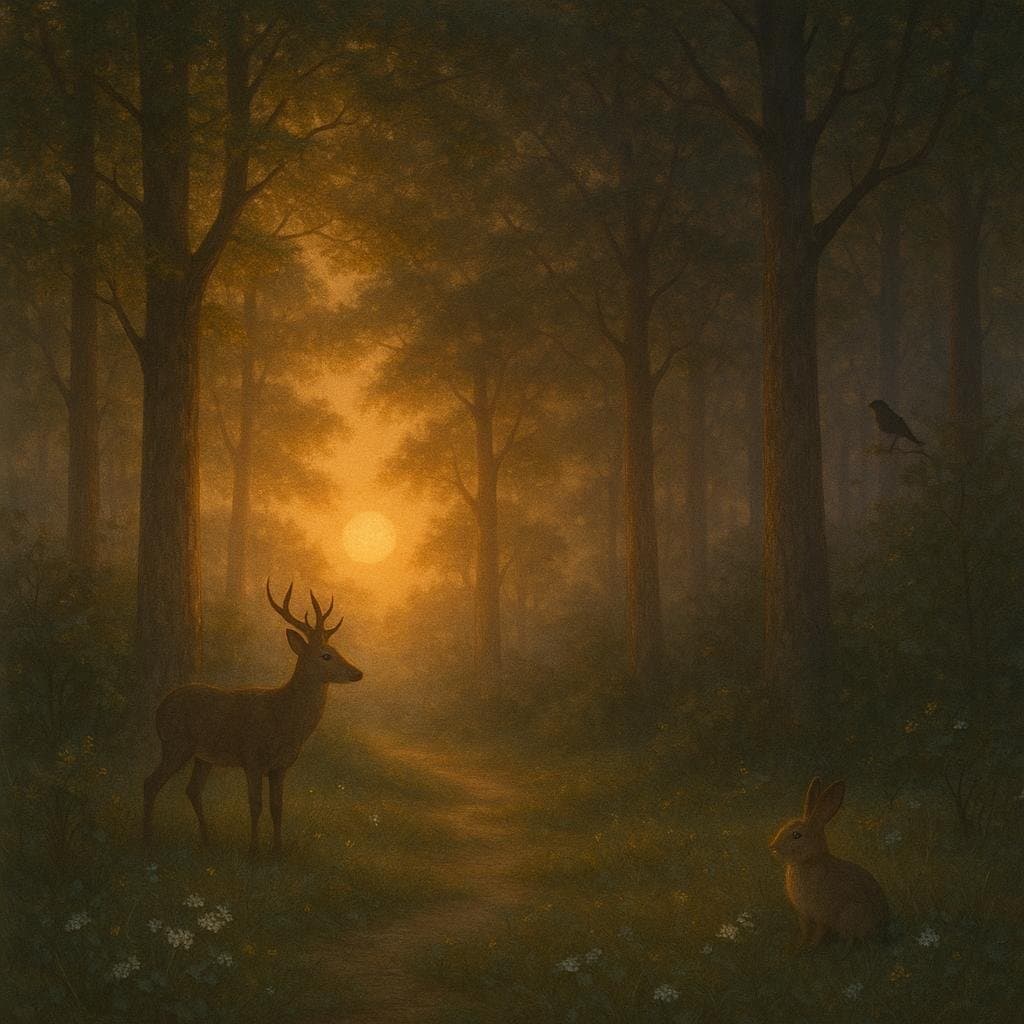
To realize the value of a moment, look around you when you lose it. — Paulo Coelho
—What lingers after this line?
Appreciation of the Present
The quote highlights the importance of cherishing the present instead of taking it for granted.
Awareness Through Loss
It suggests that people often truly understand the value of a moment only after it has passed.
Reflection on Experiences
Losing a moment encourages reflection on what was meaningful and significant about it.
Mindfulness
The quote promotes mindfulness and being attentive to current experiences and surroundings.
Universal Human Tendency
It acknowledges a common human tendency to overlook the importance of now until it becomes a memory.
One-minute reflection
What feeling does this quote bring up for you?
Related Quotes
6 selectedThe way to capture the moment is to slow down and look within, to simplify and celebrate the everyday. — Carl Honoré
Carl Honoré
Carl Honoré’s quote begins with a gentle but radical suggestion: if we want to truly capture a moment, we must first stop rushing through it. Rather than treating life as a sequence of tasks to be completed, he asks us t...
Read full interpretation →Sometimes you will never know the value of a moment, until it becomes a memory. — Dr. Seuss
Dr. Seuss
This quote highlights the idea that the true importance of certain moments in our lives is often only understood in hindsight. When we look back, we can better appreciate their significance.
Read full interpretation →Don’t just climb the mountain, find the strength to enjoy the view. — Paulo Coelho
Paulo Coelho
Paulo Coelho’s words emphasize more than the struggle required to reach our goals; he invites us to reflect on the importance of pausing to appreciate what we accomplish. The mountain becomes a metaphor for life’s challe...
Read full interpretation →Let your thoughts pass like clouds, and remember — you are the sky, not the storm. — Keshava Francis
Keshava Francis
At its core, Keshava Francis’s line invites a gentle shift in identity: instead of treating every thought or emotion as the whole self, it asks us to see consciousness as something larger and steadier. Thoughts may darke...
Read full interpretation →The little things? The little moments? They aren't little. — Jon Kabat-Zinn
Zinn
At first glance, Jon Kabat-Zinn’s line overturns an ordinary habit of thought: we tend to rank experiences by size, drama, or public importance. Yet his point is that what we casually call “little” often carries the true...
Read full interpretation →Mindfulness is a way of befriending ourselves and our experience. — Jon Kabat-Zinn
Zinn
At its core, Jon Kabat-Zinn’s statement reframes mindfulness as an act of friendship rather than self-improvement. To be mindful is not merely to pay attention, but to meet our thoughts, feelings, and bodily sensations w...
Read full interpretation →More From Author
More from Paulo Coelho →One doesn't get to be a master of one's own life by rushing. You have to learn the patience of a gardener who knows the harvest cannot be hurried. — Paulo Coelho
At its core, Paulo Coelho’s reflection challenges a modern obsession with speed. He argues that mastery over one’s life does not come from frantic action or constant acceleration, but from learning when to wait, observe,...
Read full interpretation →It is a good idea always to do something relaxing prior to making an important decision in your life. — Paulo Coelho
Paulo Coelho’s remark begins with a simple but powerful premise: important decisions are rarely improved by agitation. When the mind is tense, it tends to confuse urgency with clarity, pushing us toward choices made out...
Read full interpretation →Your 'yes' has no value until you learn to say 'no'. — Paulo Coelho
Paulo Coelho’s line hinges on a simple contrast: a “yes” only carries weight when an alternative is genuinely available. If you can’t—or won’t—say “no,” agreement becomes automatic rather than chosen, and it starts to re...
Read full interpretation →Dare to begin where fear says to stop; the first step redraws the map — Paulo Coelho
Paulo Coelho’s line treats fear less as a warning and more as a border we mistakenly accept as permanent. When fear says “stop,” it often isn’t pointing to actual danger; it’s signaling uncertainty, inexperience, or the...
Read full interpretation →