
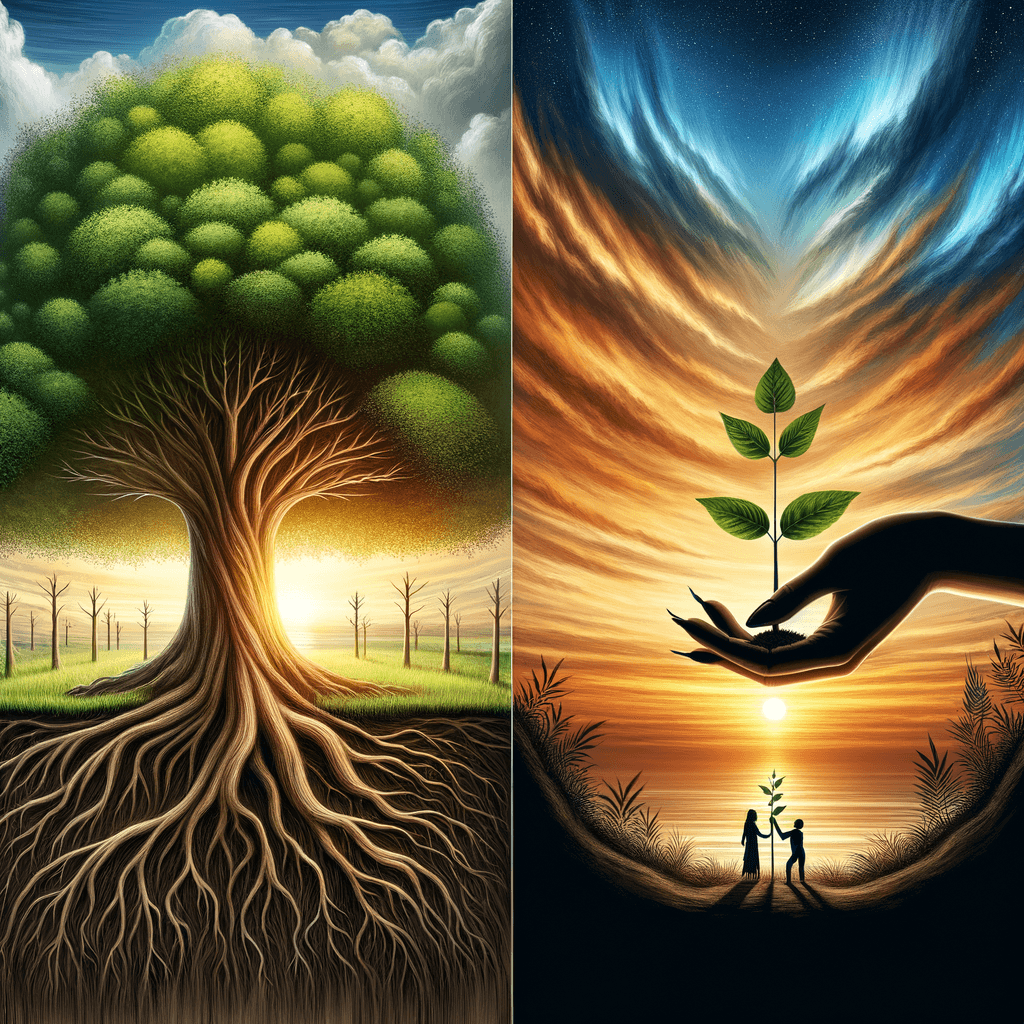
The best time to plant a tree was 20 years ago. The second best time is now. - Chinese Proverb
—What lingers after this line?
Importance of Timeliness
This proverb emphasizes the value of acting early. Planting a tree long ago would have allowed it to grow and provide benefits over many years.
Taking Immediate Action
It highlights the importance of taking action now if the ideal time has already passed. Instead of regretting missed opportunities, one should focus on what can be done in the present.
Long-term Benefits
The metaphor of planting a tree suggests that many worthwhile activities, like saving money, learning new skills, or forming relationships, have long-term benefits that accumulate over time.
Overcoming Procrastination
The proverb encourages people to overcome procrastination and start their goals immediately. Delaying further will only postpone the benefits more.
Cultural Context
Rooted in Chinese philosophy, the proverb reflects values such as wisdom, patience, and the foresight to invest in the future. These virtues are central to many Chinese traditional teachings.
One-minute reflection
What's one small action this suggests?
Related Quotes
6 selectedWhatever challenge you might find yourself in has a solution. It is very much possible that it is not an obvious one, but it is an opportunity—to grow, to create, to transform. — Dalai Lama
Dalai Lama
At its core, this reflection insists that no challenge is entirely closed off from resolution. The Dalai Lama does not promise that every answer will be easy or immediate; instead, he shifts attention toward possibility...
Read full interpretation →The sun will rise and set regardless. What we choose to do with the light while it's here is up to us. — Alexandra Elle
Alexandra Elle
Alexandra Elle begins with a simple, grounding truth: the sun “will rise and set regardless.” In other words, time keeps moving with or without our cooperation, and the world’s basic cycles don’t pause for our moods, del...
Read full interpretation →Use the weight of every no as a lever to reach toward a new yes. — Frederick Douglass
Frederick Douglass
Frederick Douglass frames rejection not as a dead end but as potential energy. A “no” carries weight—social pressure, disappointment, fatigue—and he suggests that this heaviness can be redirected rather than merely endur...
Read full interpretation →A steady mind shapes storms into weather and keeps the horizon in sight. — Seneca
Seneca
Seneca’s image begins by shrinking the drama of hardship: what feels like a storm becomes, through steadiness, simply “weather.” The shift is not denial but reclassification—painful events remain real, yet they stop ruli...
Read full interpretation →Turn obstacles into maps that point toward your next horizon. — Paulo Coelho
Paulo Coelho
Paulo Coelho’s line invites a fundamental shift in perspective: what blocks our way can also show us where to go next. Rather than treating difficulties as final verdicts, he suggests reading them as signposts.
Read full interpretation →Begin with a steady breath; movement will reveal new doors — Jane Austen
Jane Austen
“Begin with a steady breath” suggests that calm is not a luxury but the starting point of meaningful action. Before any choice, conflict, or adventure, there is an inward pause—a moment where we gather ourselves.
Read full interpretation →More From Author
More from Chinese Proverb →Tension is who you think you should be. Relaxation is who you are. — Chinese Proverb
The proverb draws a clean line between two inner experiences: tension and relaxation. Tension arises when a person is braced against themselves, trying to meet an imagined standard—what you think you should be—rather tha...
Read full interpretation →One joy scatters a hundred griefs. - Chinese Proverb
This proverb suggests that a single moment of joy or happiness has the power to diminish or overshadow numerous moments of sadness or grief. It emphasizes the impact of positive emotions on our overall well-being.
Read full interpretation →He who has never been to the Great Wall is not a true man. - Chinese Proverb
The quote reflects the immense pride that Chinese culture holds for the Great Wall. It represents the idea that experiencing this monumental structure is crucial to truly understanding and appreciating Chinese heritage a...
Read full interpretation →Keep a green tree in your heart and perhaps a singing bird will come. - Chinese Proverb
This proverb suggests that maintaining hope and positivity within oneself can attract joy and good fortune.
Read full interpretation →