
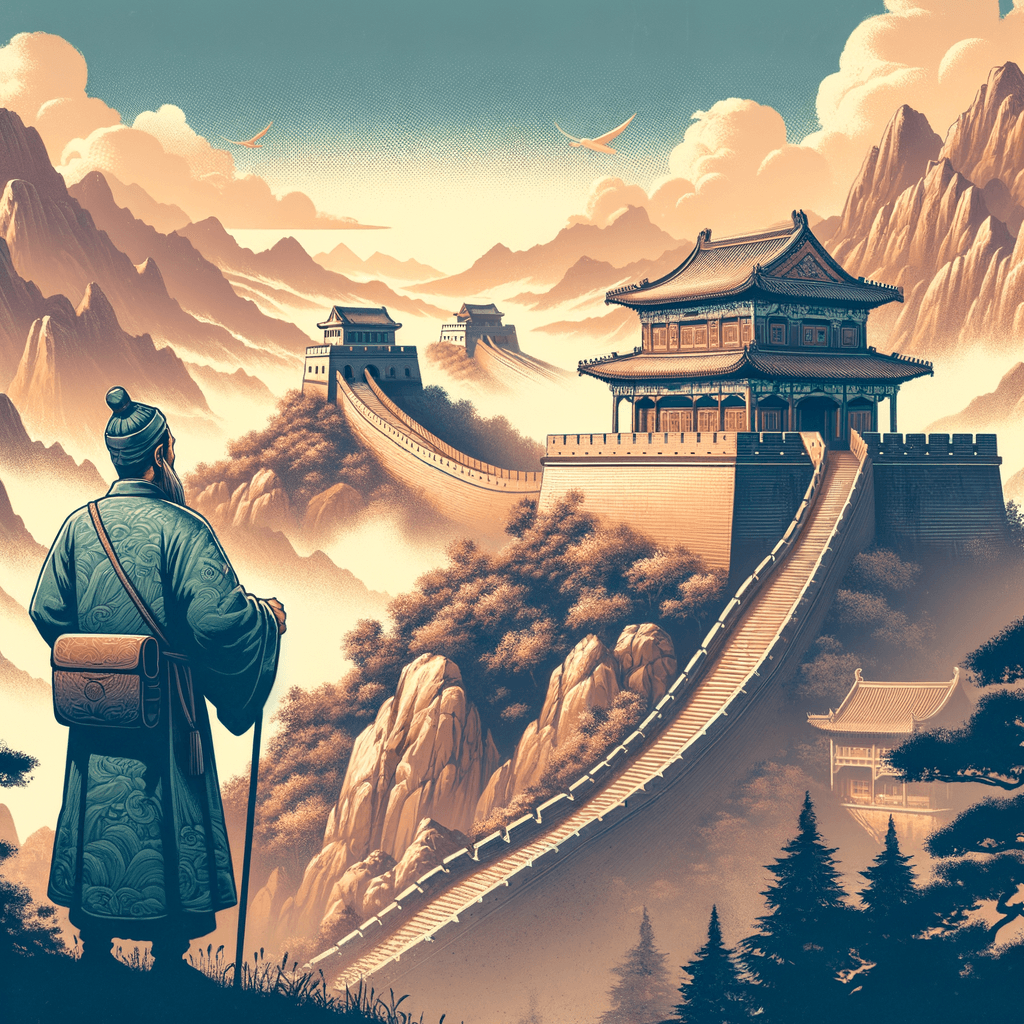
He who has never been to the Great Wall is not a true man. - Chinese Proverb
—What lingers after this line?
Cultural Significance
The quote reflects the immense pride that Chinese culture holds for the Great Wall. It represents the idea that experiencing this monumental structure is crucial to truly understanding and appreciating Chinese heritage and history.
Personal Achievement
Visiting the Great Wall is seen as a significant personal accomplishment. The phrase implies that those who take on the challenge and experience the Great Wall have proven their determination and strength.
Symbol of Strength and Endurance
The Great Wall is often seen as a symbol of perseverance, human ingenuity, and resilience. To have visited it is akin to embracing these values and characteristics.
Metaphorical Interpretation
Metaphorically, the quote suggests that to be considered a 'true' person, one must step out of their comfort zone and face significant challenges. Visiting the Great Wall represents any form of personal journey or endeavor that tests one's limits.
Historical Context
The Great Wall of China is one of the most iconic landmarks in the world, built to protect Chinese states and empires from invasions. Its construction spans multiple dynasties, reflecting the collective effort and determination across centuries of Chinese history.
One-minute reflection
What feeling does this quote bring up for you?
Related Quotes
6 selectedA people without the knowledge of their past history, origin and culture is like a tree without roots. — Marcus Garvey
Marcus Garvey
Marcus Garvey’s famous comparison draws a vivid parallel between a rootless tree and a people cut off from their collective memory. Without roots, trees lack the nourishment and stability necessary for growth—similarly,...
Read full interpretation →Tension is who you think you should be. Relaxation is who you are. — Chinese Proverb
Chinese Proverb
The proverb draws a clean line between two inner experiences: tension and relaxation. Tension arises when a person is braced against themselves, trying to meet an imagined standard—what you think you should be—rather tha...
Read full interpretation →One joy scatters a hundred griefs. - Chinese Proverb
Chinese Proverb
This proverb suggests that a single moment of joy or happiness has the power to diminish or overshadow numerous moments of sadness or grief. It emphasizes the impact of positive emotions on our overall well-being.
Read full interpretation →Keep a green tree in your heart and perhaps a singing bird will come. - Chinese Proverb
Chinese Proverb
This proverb suggests that maintaining hope and positivity within oneself can attract joy and good fortune.
Read full interpretation →The flower that blooms in adversity is the most rare and beautiful of all. - Chinese Proverb
Chinese Proverb
This proverb highlights the concept of resilience, suggesting that individuals who thrive despite facing difficult circumstances are particularly extraordinary.
Read full interpretation →The best time to plant a tree was 20 years ago. The second best time is now. - Chinese Proverb
Chinese Proverb
This proverb emphasizes the value of acting early. Planting a tree long ago would have allowed it to grow and provide benefits over many years.
Read full interpretation →More From Author
More from Chinese Proverb →Tension is who you think you should be. Relaxation is who you are. — Chinese Proverb
The proverb draws a clean line between two inner experiences: tension and relaxation. Tension arises when a person is braced against themselves, trying to meet an imagined standard—what you think you should be—rather tha...
Read full interpretation →One joy scatters a hundred griefs. - Chinese Proverb
This proverb suggests that a single moment of joy or happiness has the power to diminish or overshadow numerous moments of sadness or grief. It emphasizes the impact of positive emotions on our overall well-being.
Read full interpretation →Keep a green tree in your heart and perhaps a singing bird will come. - Chinese Proverb
This proverb suggests that maintaining hope and positivity within oneself can attract joy and good fortune.
Read full interpretation →The flower that blooms in adversity is the most rare and beautiful of all. - Chinese Proverb
This proverb highlights the concept of resilience, suggesting that individuals who thrive despite facing difficult circumstances are particularly extraordinary.
Read full interpretation →