
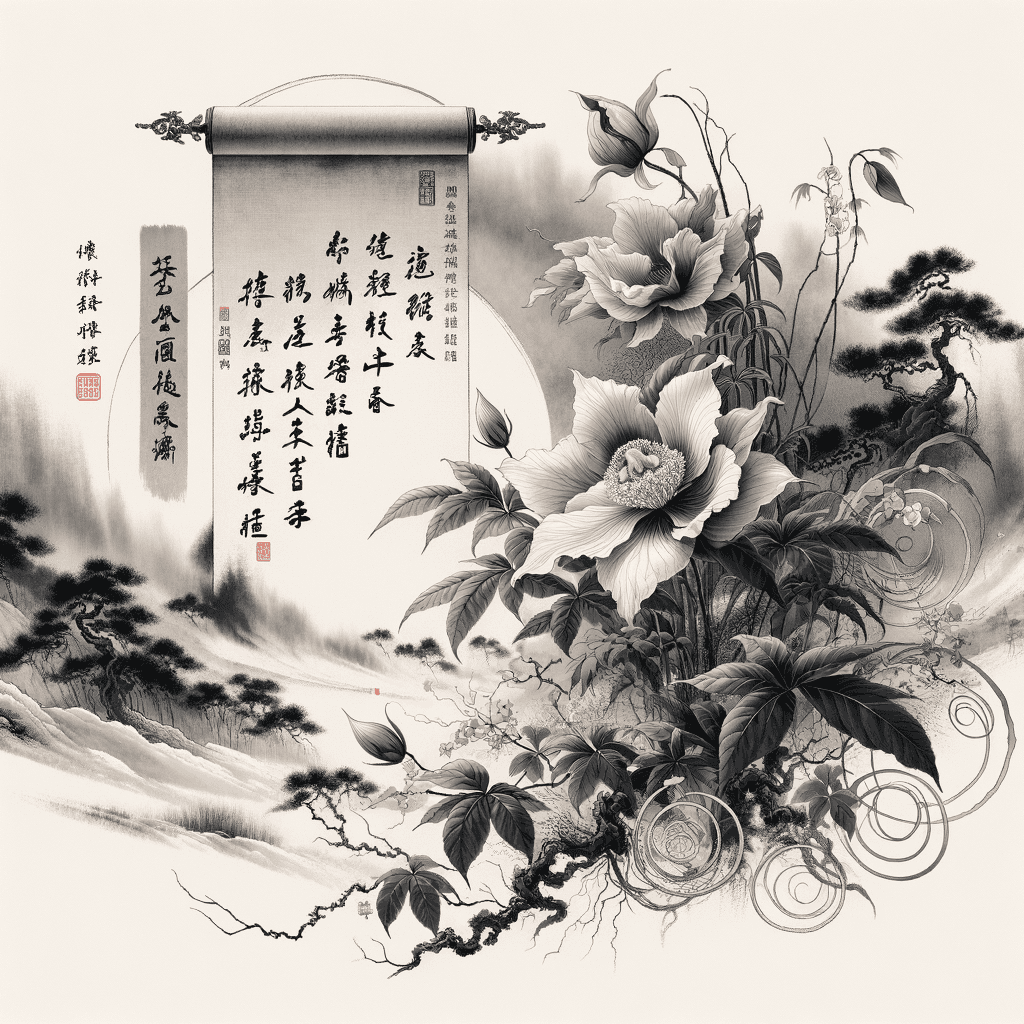
The flower that blooms in adversity is the most rare and beautiful of all. - Chinese Proverb
—What lingers after this line?
Resilience
This proverb highlights the concept of resilience, suggesting that individuals who thrive despite facing difficult circumstances are particularly extraordinary.
Inner Strength
It emphasizes the inner strength required to succeed in adverse conditions. Those who can grow and develop in challenging situations demonstrate a unique and remarkable form of beauty.
Personal Growth
The proverb underscores the idea that adversity can be a catalyst for personal growth and development, resulting in individuals who are more refined and distinguished.
Valuing Overcoming Hardships
It suggests that overcoming hardships enhances one's value and beauty, both in character and in achievements. People who face and conquer difficulties are seen as more admirable.
Cultural Significance
This saying reflects traditional Chinese values that honor perseverance, courage, and beauty that emerges from struggle, resonating deeply within Chinese culture and philosophy.
One-minute reflection
What does this quote ask you to notice today?
Related Quotes
6 selectedDon't fight the challenges. Just find a new way to stand. — Germany Kent
Germany Kent
Germany Kent’s words begin with a quiet reversal of instinct: instead of treating every challenge as an enemy to defeat, she invites us to reconsider our posture toward difficulty. The emphasis is not on surrender, but o...
Read full interpretation →Optimist: someone who figures that taking a step backward after taking a step forward is not a disaster, it's more like a cha-cha. — Robert Brault
Robert Brault
Robert Brault’s line begins with a witty redefinition: an optimist is not someone who denies backward motion, but someone who interprets it differently. Instead of treating a setback as proof of failure, the optimist see...
Read full interpretation →A mind grows by staying with difficulty long enough for the experience to change it. — Mary Catherine Bateson
Mary Catherine Bateson
Mary Catherine Bateson’s observation begins with a quiet but demanding truth: the mind does not grow merely by encountering difficulty, but by remaining with it. Challenge becomes transformative only when we resist the u...
Read full interpretation →When you are friends with your storm, you dance, instead of getting blown away. — Michael Bassey Johnson
Michael Bassey Johnson
Michael Bassey Johnson’s line begins with a striking reversal: the storm is not merely an enemy to survive, but a force one can learn to understand. In this sense, the storm may represent grief, fear, conflict, uncertain...
Read full interpretation →Just because your light flickers does not mean it is about to go out. — Yohancé Salimu
Yohancé Salimu
At first glance, Yohancé Salimu’s line separates appearance from reality. A flicker suggests instability, fatigue, or interruption, yet it does not automatically signal extinction.
Read full interpretation →When something in your life dies—whether it be a job, a hobby, or a dream—I encourage you not to focus on what could have been but instead to look for the new life and the new opportunities that result. — Ryan Hall
Ryan Hall
Ryan Hall frames loss as a kind of death, and that metaphor immediately broadens the quote beyond grief in the literal sense. A job can end, a cherished hobby can fade, and a long-held dream can collapse; yet in each cas...
Read full interpretation →More From Author
More from Chinese Proverb →Tension is who you think you should be. Relaxation is who you are. — Chinese Proverb
The proverb draws a clean line between two inner experiences: tension and relaxation. Tension arises when a person is braced against themselves, trying to meet an imagined standard—what you think you should be—rather tha...
Read full interpretation →One joy scatters a hundred griefs. - Chinese Proverb
This proverb suggests that a single moment of joy or happiness has the power to diminish or overshadow numerous moments of sadness or grief. It emphasizes the impact of positive emotions on our overall well-being.
Read full interpretation →He who has never been to the Great Wall is not a true man. - Chinese Proverb
The quote reflects the immense pride that Chinese culture holds for the Great Wall. It represents the idea that experiencing this monumental structure is crucial to truly understanding and appreciating Chinese heritage a...
Read full interpretation →Keep a green tree in your heart and perhaps a singing bird will come. - Chinese Proverb
This proverb suggests that maintaining hope and positivity within oneself can attract joy and good fortune.
Read full interpretation →