
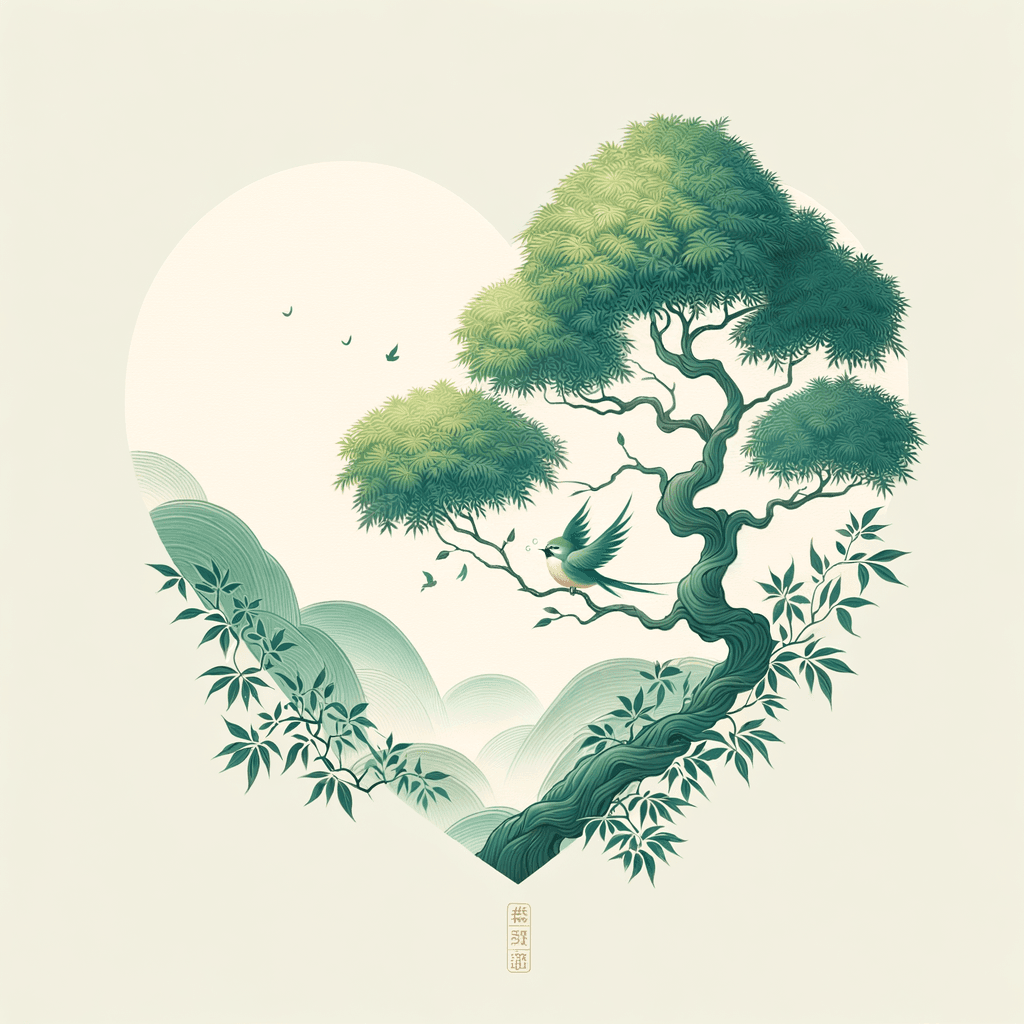
Keep a green tree in your heart and perhaps a singing bird will come. - Chinese Proverb
—What lingers after this line?
Hope and Positivity
This proverb suggests that maintaining hope and positivity within oneself can attract joy and good fortune.
Inner Peace and Contentment
A 'green tree' symbolizes inner peace and contentment. By nurturing positivity within, one creates an environment ripe for happiness and good things to flourish.
Preparation and Opportunity
The proverb implies that being prepared and maintaining a positive mindset increases the chances of encountering opportunities and success, symbolized by the 'singing bird.'
Resilience and Calm
Keeping a green tree in one's heart can also signify resilience and a calm demeanor in the face of challenges, helping attract positive outcomes.
Metaphorical Wisdom
The use of metaphor, with the 'green tree' representing a nurturing and life-sustaining attitude, and the 'singing bird' as a symbol of happiness and fulfillment, reflects the wisdom often found in Chinese proverbs.
Cultural Context
Chinese culture has a rich tradition of using nature in metaphors to convey life's truths and wisdom, showcasing respect for nature's harmony and its relation to human life.
One-minute reflection
What's one small action this suggests?
Related Quotes
6 selectedKeep a green tree in your heart and perhaps a singing bird will come.
Unknown
This quote emphasizes maintaining hope and a positive outlook. By keeping 'a green tree in your heart,' you create a nurturing environment within yourself that can attract joy and positivity, represented by 'a singing bi...
Read full interpretation →He who plants a tree, plants a hope. - Lucy Larcom
Lucy Larcom
Trees symbolize life, growth, and the future. Planting a tree represents the planting of hope for future generations and the well-being of the planet.
Read full interpretation →Just because your light flickers does not mean it is about to go out. — Yohancé Salimu
Yohancé Salimu
At first glance, Yohancé Salimu’s line separates appearance from reality. A flicker suggests instability, fatigue, or interruption, yet it does not automatically signal extinction.
Read full interpretation →Today's tears water tomorrow's gardens. — Matshona Dhliwayo
Matshona Dhliwayo
At first glance, Matshona Dhliwayo’s line transforms grief into something unexpectedly fertile. Tears, usually seen as signs of pain or loss, become water for a future garden, suggesting that suffering is not merely endu...
Read full interpretation →Hope is passion for the possible. — Søren Kierkegaard
Søren Kierkegaard
At first glance, Kierkegaard’s line transforms hope from a passive feeling into an active force. To call hope “passion for the possible” means that hope is not mere daydreaming; rather, it is an inward energy that leans...
Read full interpretation →A ship should not ride on a single anchor, nor life on a single hope. — Epictetus
Epictetus
At first glance, Epictetus turns a practical image into a moral lesson: a ship secured by only one anchor is vulnerable to shifting winds, rough tides, and hidden strain. In the same way, a life fastened to a single hope...
Read full interpretation →More From Author
More from Chinese Proverb →Tension is who you think you should be. Relaxation is who you are. — Chinese Proverb
The proverb draws a clean line between two inner experiences: tension and relaxation. Tension arises when a person is braced against themselves, trying to meet an imagined standard—what you think you should be—rather tha...
Read full interpretation →One joy scatters a hundred griefs. - Chinese Proverb
This proverb suggests that a single moment of joy or happiness has the power to diminish or overshadow numerous moments of sadness or grief. It emphasizes the impact of positive emotions on our overall well-being.
Read full interpretation →He who has never been to the Great Wall is not a true man. - Chinese Proverb
The quote reflects the immense pride that Chinese culture holds for the Great Wall. It represents the idea that experiencing this monumental structure is crucial to truly understanding and appreciating Chinese heritage a...
Read full interpretation →The flower that blooms in adversity is the most rare and beautiful of all. - Chinese Proverb
This proverb highlights the concept of resilience, suggesting that individuals who thrive despite facing difficult circumstances are particularly extraordinary.
Read full interpretation →