
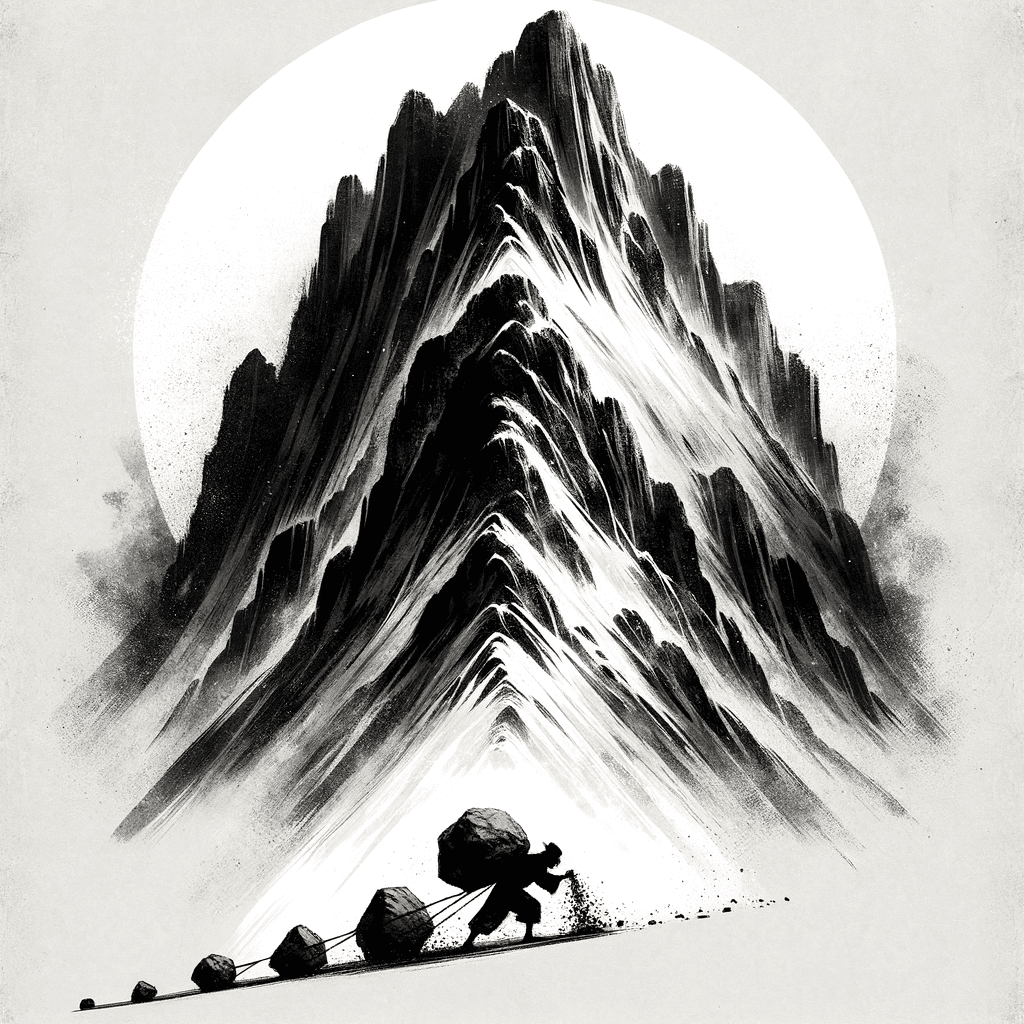
The one who moves a mountain begins by carrying away small stones. — Chinese Proverb
—What lingers after this line?
Patience and Persistence
This proverb highlights the importance of patience and persistence. It suggests that even the most daunting tasks can be accomplished through steady and continuous effort.
Step-by-Step Progress
It underscores the value of making incremental progress. Large goals can seem unreachable, but breaking them down into smaller tasks can make them more manageable.
Breaking Down Large Goals
By advising to 'carry away small stones', the proverb encourages individuals to break down their larger objectives into smaller, attainable tasks, making the overall goal less intimidating.
Consistent Effort
The idea is that consistent small efforts can lead to significant results over time, encouraging individuals to stay committed to their goals even when the progress appears slow.
Cultural Context
This Chinese proverb reflects the value placed on perseverance and hard work in Chinese culture. It teaches that great achievements are the accumulation of many small efforts.
One-minute reflection
Why might this line matter today, not tomorrow?
Related Quotes
6 selectedDo not be afraid of growing slowly, be afraid only of standing still. — Chinese Proverb
Chinese Proverb
This proverb emphasizes the importance of continuous progress, no matter how slow it might be. The key is to keep moving forward rather than becoming stagnant.
Read full interpretation →Keep your spirits up, and spare no effort. — Chinese Proverb
Chinese Proverb
This proverb highlights the importance of maintaining a positive attitude. Keeping one's spirits up helps to face challenges with resilience and optimism.
Read full interpretation →If we are facing in the right direction, all we have to do is keep walking. — Thích Nhất Hạnh
Thich Nhat Hanh
Thích Nhất Hạnh’s words begin with a simple but profound premise: progress depends first on direction, not speed. If a person is turned toward compassion, clarity, healing, or truth, then each modest step becomes meaning...
Read full interpretation →Do the best one can. Do it over again. Then still improve, even if ever so slightly, those retouches. — Marguerite Yourcenar
Marguerite Yourcenar
Yourcenar’s words begin with a simple demand: do the best one can. Yet she immediately refuses to let effort become an excuse for stopping.
Read full interpretation →A good-enough novel violently written now is better than a perfect novel meticulously written never. — Elizabeth Gilbert
Elizabeth Gilbert
Elizabeth Gilbert’s line immediately shifts the argument from artistic purity to artistic existence. A “good-enough” novel, even one “violently written,” has entered the world and can move, provoke, or comfort someone; b...
Read full interpretation →There is no road too long to the man who advances deliberately and without undue haste; there are no honors too distant to the man who prepares himself for them with patience. — Jean de La Bruyère
Jean de La Bruyère
At its core, La Bruyère’s line praises steady movement over restless speed. A long road feels intimidating only when seen all at once; once it is broken into deliberate steps, distance loses much of its power.
Read full interpretation →More From Author
More from Chinese Proverb →Tension is who you think you should be. Relaxation is who you are. — Chinese Proverb
The proverb draws a clean line between two inner experiences: tension and relaxation. Tension arises when a person is braced against themselves, trying to meet an imagined standard—what you think you should be—rather tha...
Read full interpretation →One joy scatters a hundred griefs. - Chinese Proverb
This proverb suggests that a single moment of joy or happiness has the power to diminish or overshadow numerous moments of sadness or grief. It emphasizes the impact of positive emotions on our overall well-being.
Read full interpretation →He who has never been to the Great Wall is not a true man. - Chinese Proverb
The quote reflects the immense pride that Chinese culture holds for the Great Wall. It represents the idea that experiencing this monumental structure is crucial to truly understanding and appreciating Chinese heritage a...
Read full interpretation →Keep a green tree in your heart and perhaps a singing bird will come. - Chinese Proverb
This proverb suggests that maintaining hope and positivity within oneself can attract joy and good fortune.
Read full interpretation →