
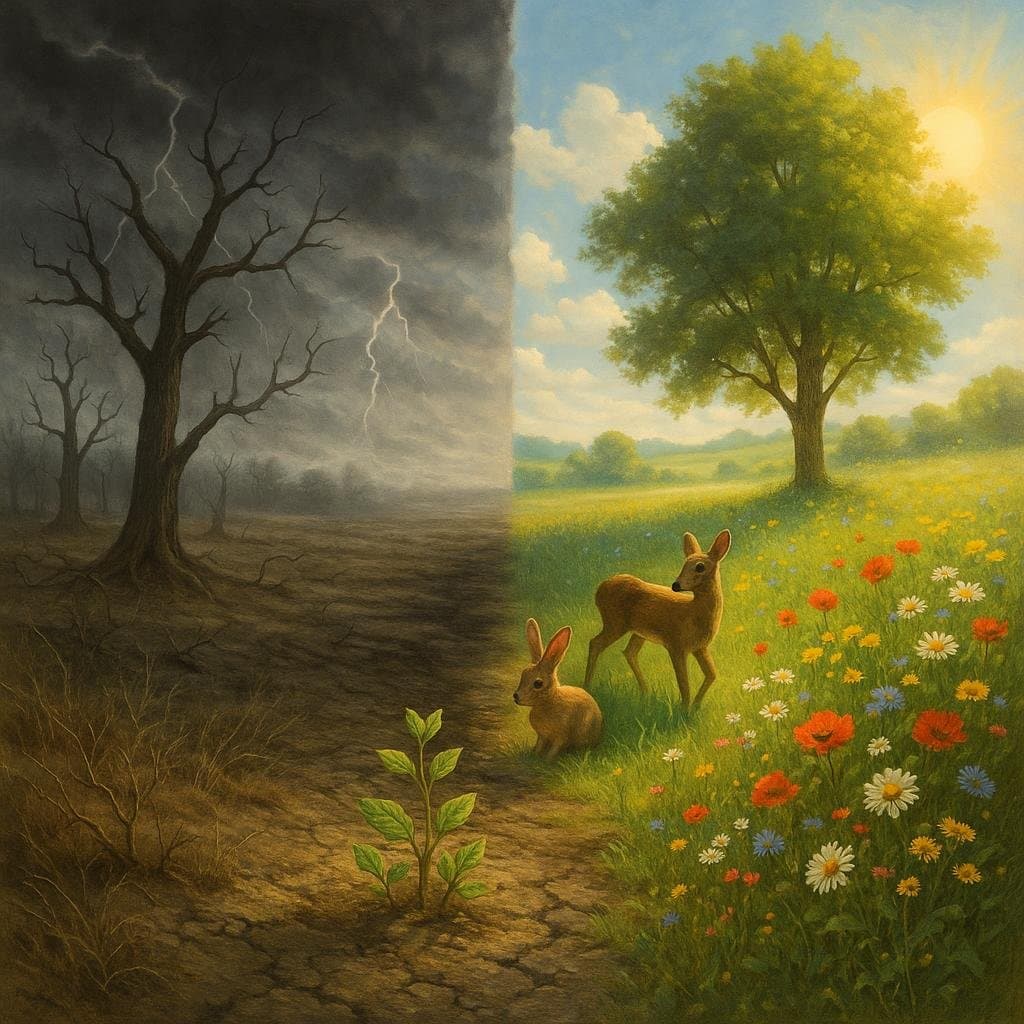
Optimism is the madness of insisting that all is well when we are miserable. — Voltaire
—What lingers after this line?
Voltaire’s Critique of Blind Optimism
Voltaire’s wry observation highlights the perils of unfounded positivity. By labeling optimism as ‘madness’ when it denies lived misery, he draws attention to the disconnect between outward attitudes and internal realities. This critique emerged prominently in his seminal satire, Candide (1759), where characters stubbornly uphold ‘all is for the best’ despite relentless disasters, questioning the value of unwavering cheerfulness in the face of real suffering.
Philosophical Roots: Leibniz and Pangloss
Voltaire’s notion is partly a rebuttal to the philosophical optimism of Gottfried Wilhelm Leibniz, who argued that ours is ‘the best of all possible worlds.’ In Candide, the philosopher Pangloss personifies this mindset, offering glib reassurances while enduring misfortune. Through satire, Voltaire exposes the absurdity of maintaining forced optimism, thereby encouraging honest appraisal over willful denial.
Psychology of Denial and Emotional Health
Moving beyond philosophy, modern psychology underscores the dangers of denying negative emotions. Compulsive optimism can mask problems, leading to greater distress. Studies, such as those published in the Journal of Personality and Social Psychology (Scheier & Carver, 1985), find that while hope has benefits, ignoring pain can prevent genuine healing. Voltaire’s insight foreshadows this wisdom: emotional well-being starts with acknowledging discomfort rather than glossing over it.
Cultural Pressures for Positivity
Today’s culture often equates happiness with virtue, pressuring individuals to ‘look on the bright side’ even during hardship. This inclination, sometimes called ‘toxic positivity,’ prioritizes outward composure over authentic experience. By tracing its roots to Voltaire’s critique, we see that this pattern is not new; society repeatedly struggles to strike a balance between healthy optimism and honest self-reflection.
Toward Authentic Optimism
Ultimately, Voltaire’s skepticism invites us to embrace a mature form of optimism: one that coexists with discomfort and acknowledges struggle. Rather than insisting ‘all is well’ amid misery, authentic optimism seeks silver linings while validating pain. By doing so, individuals and communities cultivate resilience—not by denying darkness, but by shining a light within it.
One-minute reflection
What's one small action this suggests?
Related Quotes
6 selectedLife is a shipwreck but we must not forget to sing in the lifeboats. — Voltaire
Voltaire
Voltaire likens life to a shipwreck, suggesting it’s filled with hardships and unexpected challenges.
Read full interpretation →Choose to be optimistic, it feels better. — Dalai Lama
Dalai Lama
This quote emphasizes the benefits of adopting a positive mindset. Being optimistic can lead to a happier and more fulfilling life, as it shapes our perception and responses to situations.
Read full interpretation →Optimism is the faith that leads to achievement. Nothing can be done without hope and confidence. — Helen Keller
Helen Keller
This quote highlights the crucial role that optimism plays in achieving success. It suggests that a positive mindset is essential for driving efforts and overcoming challenges.
Read full interpretation →Optimism is the faith that leads to achievement. Nothing can be done without hope and confidence. — Helen Keller
Helen Keller
This quote highlights the crucial role optimism plays in achieving one's goals. It suggests that a positive outlook is the foundation upon which all achievements are built.
Read full interpretation →The place where optimism most flourishes is the lunatic asylum. — Victor Hugo
Victor Hugo
Hugo employs irony by suggesting that the most extreme forms of optimism are found in places where reality is disconnected, such as a lunatic asylum. This indicates that blind optimism may sometimes border on irrationali...
Read full interpretation →An optimist sees an opportunity in every calamity; a pessimist sees a calamity in every opportunity. — Winston Churchill
Winston Churchill
The quote highlights how one’s mindset (optimist vs. pessimist) shapes their interpretation of circumstances.
Read full interpretation →More From Author
More from Voltaire →The most original writers borrowed one from another. — Voltaire
At first glance, Voltaire’s remark seems to undermine originality by tying it to borrowing. Yet that tension is precisely his point: great writing rarely appears from a vacuum.
Read full interpretation →Perfection is attained by slow degrees; it requires the hand of time. — Voltaire
Voltaire’s remark begins with a quiet correction to human impatience: perfection is not seized in a moment but approached step by step. By saying it is attained “by slow degrees,” he frames excellence as a process of acc...
Read full interpretation →Appreciation is a wonderful thing. It makes what is excellent in others belong to us as well. — Voltaire
At first glance, Voltaire’s remark seems simple, yet it contains a generous idea: when we truly appreciate another person’s excellence, we do not merely observe it from a distance—we participate in it. Admiration becomes...
Read full interpretation →To my wonderful family, I'm so grateful for every moment we share. — Voltaire
At first glance, this line reads like a brief note of thanks, yet its emotional power comes from how directly it ties gratitude to shared life. By addressing ‘my wonderful family,’ the speaker does more than praise relat...
Read full interpretation →