
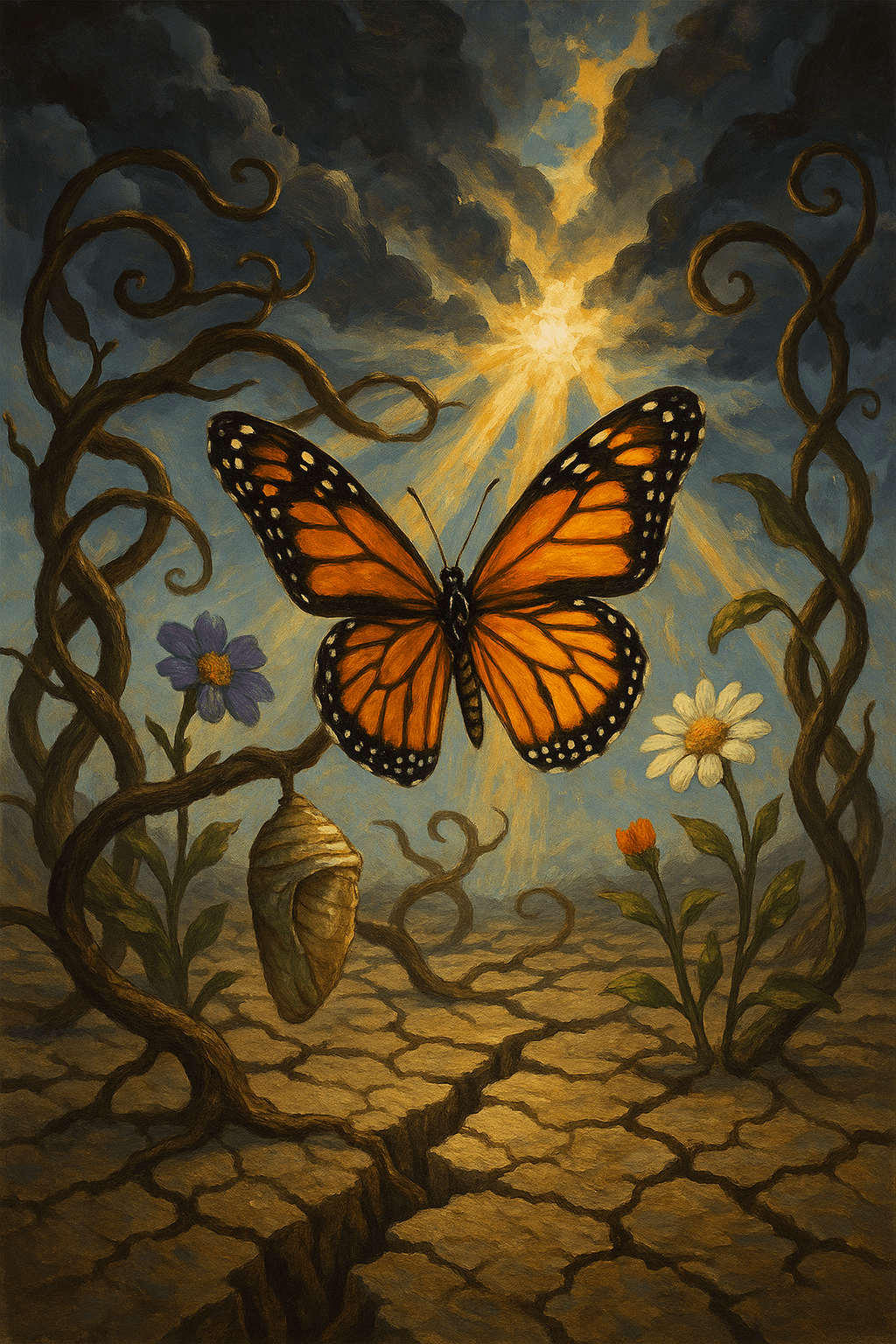
To struggle is to live. — Victor Hugo
—What lingers after this line?
The Fundamental Role of Struggle
Victor Hugo’s succinct proclamation, 'To struggle is to live,' immediately situates adversity at the heart of the human experience. He argues that struggle is not simply an unpleasant byproduct of living, but rather its beating heart. Life, by Hugo’s definition, is animated and sustained by the continual challenges we face and overcome. This recognition turns adversity from something merely to be endured into a necessary and even defining component of existence.
Philosophical Roots in Human Resilience
Building on Hugo’s idea, philosophers throughout history have embraced struggle as the crucible of growth. Nietzsche, for instance, famously declared, 'That which does not kill us makes us stronger' (*Twilight of the Idols*, 1889). Both thinkers highlight our capacity for resilience and transformation in the face of hardship. This perspective encourages us to see difficulty not as an aberration but as the very process by which we develop character, wisdom, and empathy.
Literary Reflections in Hugo’s Works
The theme of struggle permeates Hugo’s own novels, such as *Les Misérables* (1862), where characters like Jean Valjean and Fantine endure suffering yet find redemption and meaning through their trials. This narrative emphasis illustrates how, for both individuals and societies, it is the act of wrestling with hardship that propels stories—and lives—forward. The narrative arc of his characters embodies Hugo’s conviction that to avoid struggle is to forsake the richness of genuine existence.
Modern Interpretations: Growth Through Adversity
Contemporary psychology echoes Hugo’s sentiment: the concept of 'post-traumatic growth' describes how individuals often emerge from crises with new strengths and insights. Studies by psychologists like Richard Tedeschi and Lawrence Calhoun (1996) demonstrate that meaning and purpose are frequently forged in struggle’s furnace. Thus, Hugo’s insight anticipates scientific understanding, affirming that our most difficult experiences can drive profound transformation.
Choosing Engagement Over Ease
Ultimately, Hugo’s words invite a reevaluation of our pursuit of comfort and ease. In a culture that often equates happiness with the absence of struggle, his message urges us to embrace challenge as both inevitable and vital. By actively engaging with life’s obstacles, rather than retreating from them, we fulfill our potential and find deeper meaning. In this way, struggle becomes not a detour, but the very path by which we live most fully.
One-minute reflection
Where does this idea show up in your life right now?
Related Quotes
6 selectedWhen doubt knocks, invite it to see what you're building — Victor Hugo
Victor Hugo
Victor Hugo’s image of doubt knocking at the door immediately turns an internal feeling into an external visitor. Rather than picturing doubt as a storm that breaks in, he imagines it as something that politely announces...
Read full interpretation →Don't fight the challenges. Just find a new way to stand. — Germany Kent
Germany Kent
Germany Kent’s words begin with a quiet reversal of instinct: instead of treating every challenge as an enemy to defeat, she invites us to reconsider our posture toward difficulty. The emphasis is not on surrender, but o...
Read full interpretation →Optimist: someone who figures that taking a step backward after taking a step forward is not a disaster, it's more like a cha-cha. — Robert Brault
Robert Brault
Robert Brault’s line begins with a witty redefinition: an optimist is not someone who denies backward motion, but someone who interprets it differently. Instead of treating a setback as proof of failure, the optimist see...
Read full interpretation →A mind grows by staying with difficulty long enough for the experience to change it. — Mary Catherine Bateson
Mary Catherine Bateson
Mary Catherine Bateson’s observation begins with a quiet but demanding truth: the mind does not grow merely by encountering difficulty, but by remaining with it. Challenge becomes transformative only when we resist the u...
Read full interpretation →When you are friends with your storm, you dance, instead of getting blown away. — Michael Bassey Johnson
Michael Bassey Johnson
Michael Bassey Johnson’s line begins with a striking reversal: the storm is not merely an enemy to survive, but a force one can learn to understand. In this sense, the storm may represent grief, fear, conflict, uncertain...
Read full interpretation →Just because your light flickers does not mean it is about to go out. — Yohancé Salimu
Yohancé Salimu
At first glance, Yohancé Salimu’s line separates appearance from reality. A flicker suggests instability, fatigue, or interruption, yet it does not automatically signal extinction.
Read full interpretation →More From Author
More from Victor Hugo →Build bridges with your will, and let hope walk across them. — Victor Hugo
Victor Hugo’s image begins with a practical insistence: the future doesn’t simply arrive; it is constructed. By saying “build bridges with your will,” he treats willpower as a kind of engineering—an intentional effort to...
Read full interpretation →Forge a path with words and work, and let beauty follow in your wake. — Victor Hugo
Victor Hugo’s line, “Forge a path with words and work, and let beauty follow in your wake,” begins by uniting two worlds often held apart: artistic expression and disciplined effort. Instead of treating beauty as somethi...
Read full interpretation →When doubt knocks, invite it to see what you're building — Victor Hugo
Victor Hugo’s image of doubt knocking at the door immediately turns an internal feeling into an external visitor. Rather than picturing doubt as a storm that breaks in, he imagines it as something that politely announces...
Read full interpretation →Hold fast to the idea that small acts of bravery stitch the fabric of a freer tomorrow. — Victor Hugo
Imagine freedom as a fabric: resilient yet always at risk of fraying. Small acts of bravery are the stitches that prevent it from unraveling, and holding fast to this idea keeps our hands steady at the needle.
Read full interpretation →