#Creative Agency
Quotes tagged #Creative Agency
Quotes: 26

Imagination Drafts Change, Steady Hands Shape Futures
Imagination functions as a rehearsal space where we test alternatives without paying the full cost of failure. Before a society changes its laws or a person changes their life, they often have to believe a different arrangement is even possible. This is why speculative fiction and political thought experiments can feel oddly practical: they widen the menu of options. Atwood’s own work demonstrates this generative role of imagining. The dystopian scaffolding of Atwood’s The Handmaid’s Tale (1985) doesn’t merely entertain; it offers a cautionary model that helps readers recognize patterns in the present. From that recognition, the “draft” can be revised into action—advocacy, vigilance, or cultural critique. [...]
Created on: 1/17/2026

Create the Future, Then Inhabit It First
However, the quote is not only about personal virtue; it also hints at how cultures form. A single person cannot “finish” a future, but they can create a prototype—an example others can join, copy, or improve. This is how movements and communities begin: someone behaves as though a better norm is possible, and then makes room for others to participate. In practical terms, this might look like starting a reading group when you long for deeper conversation, designing a fair policy in your workplace when you long for equity, or building a small mutual-aid network when you long for solidarity. Over time, these prototypes become traditions, and traditions become institutions. [...]
Created on: 12/29/2025

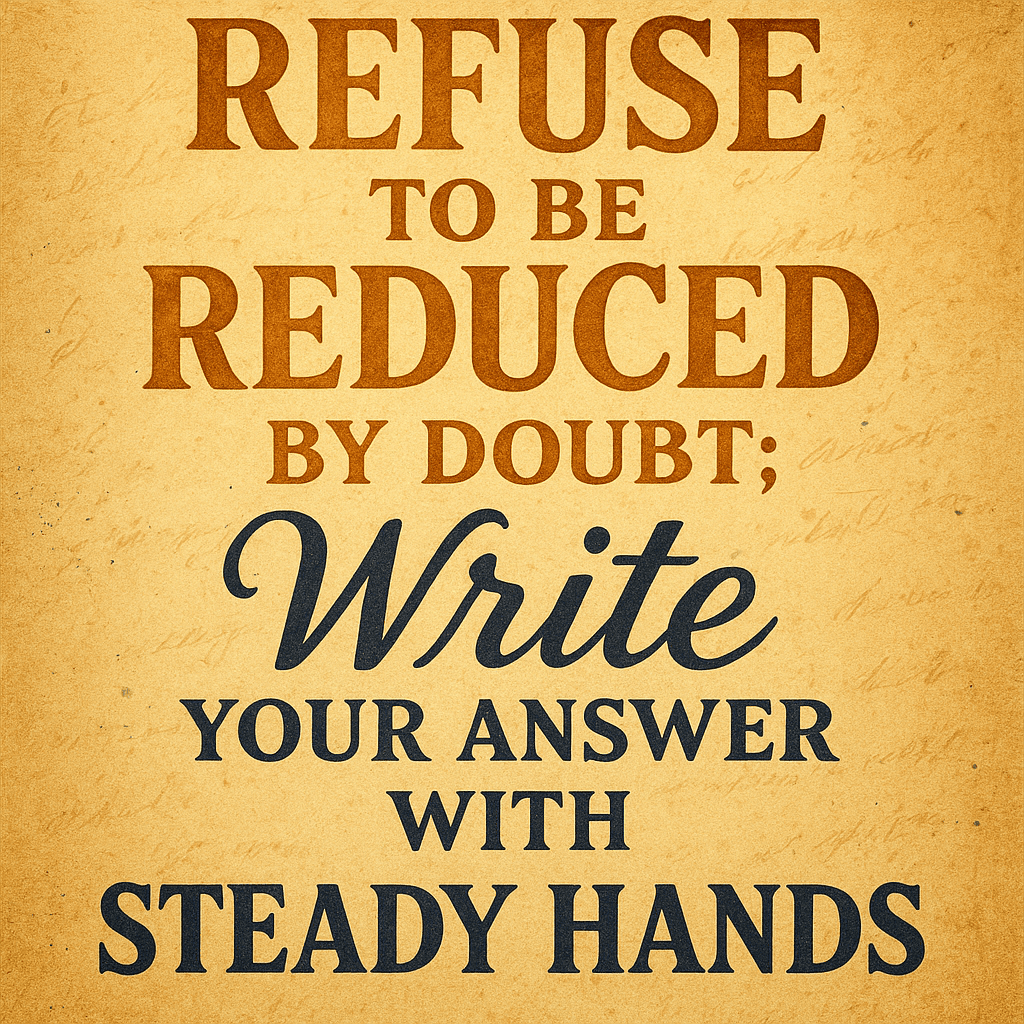
Refusing Reduction: Standing Steady Against Doubt
Moving deeper, Morrison’s phrasing acknowledges that doubt will always be present at critical moments—before a decision, a creation, or a confrontation. Philosophers from Descartes onward have used doubt as a tool to clarify truth, showing that uncertainty can illuminate what truly matters. Yet Morrison warns against allowing that tool to become a cage. Doubt can refine our choices, but it must not compress our identity or silence our voice. Thus, the challenge is to let doubt pose questions without letting it write the answers for us. [...]
Created on: 12/11/2025

Living Projects: How Action Shapes Our Identity
Following this logic, the projects we decide to live are the channels through which our values enter the world. Someone who claims to prize justice but never acts on behalf of the vulnerable remains internally divided, while a person who quietly but consistently serves their community gradually becomes just in a tangible sense. Therefore, Ortega y Gasset’s injunction is not a plea for mindless busyness; it is a call to select and pursue projects that express what we most deeply affirm, letting action and value reinforce each other. [...]
Created on: 12/2/2025

Creating Beauty Now With What You Have
At the same time, the quote widens the meaning of beauty beyond conventional art. Beauty becomes any act that brings coherence, care, or meaning into the world: arranging secondhand furniture into a welcoming room, cooking a modest meal with attention, or writing a few honest lines in a notebook. Murakami’s own fiction often finds wonder in the ordinary—cats, jazz records, simple running routines in *What I Talk About When I Talk About Running* (2007). In that spirit, beauty is no longer a grand, distant achievement; it is a pattern of small, deliberate gestures woven into daily life. [...]
Created on: 11/30/2025

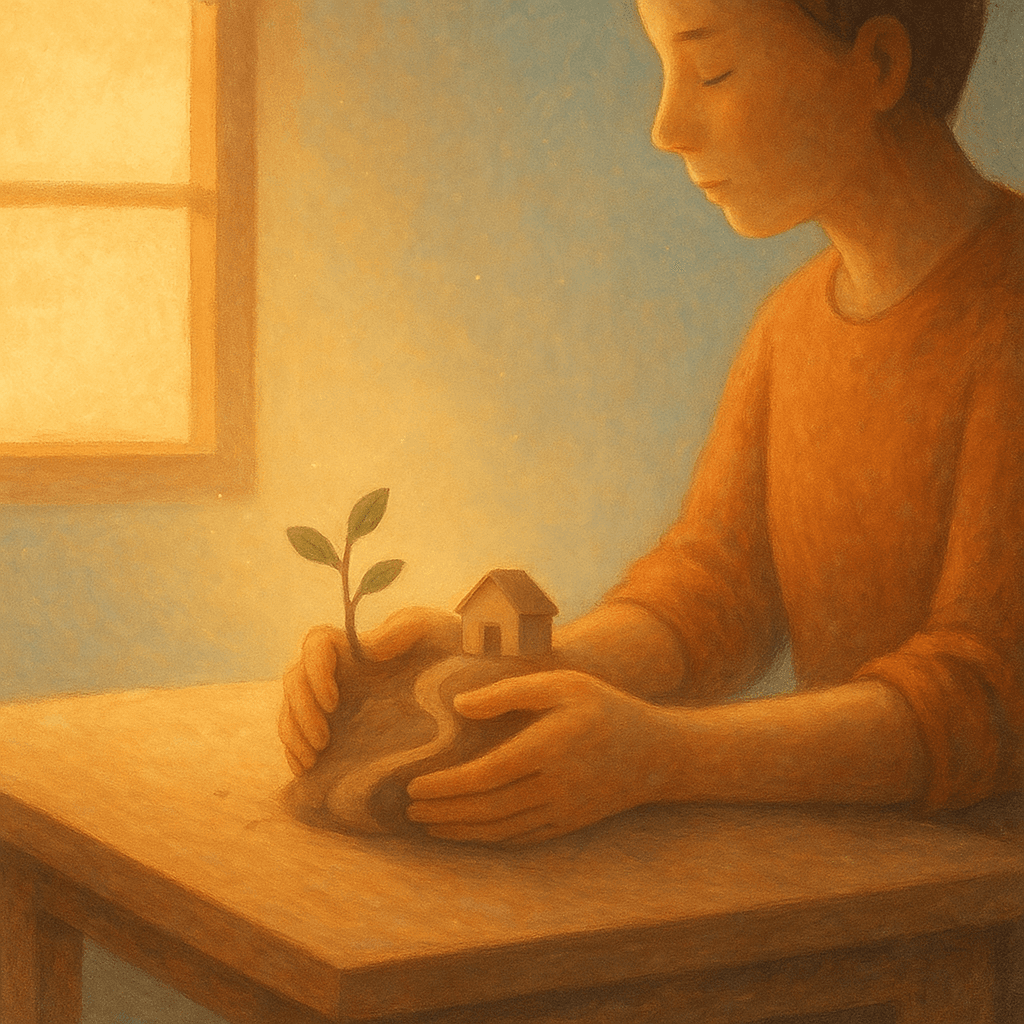
Shaping Tomorrow With the Clay of Now
When Rumi speaks of “the clay of this hour,” he turns the present into something tangible, pliable, and alive in our hands. Clay is ordinary earth, yet it becomes art when engaged by a patient craftsperson. In the same way, the circumstances of this hour—our limitations, chances, and even frustrations—are the raw material from which our future is formed. Rather than dismissing the present as incomplete or unworthy, Rumi invites us to recognize its potential as a workable, shapeable substance. [...]
Created on: 11/24/2025

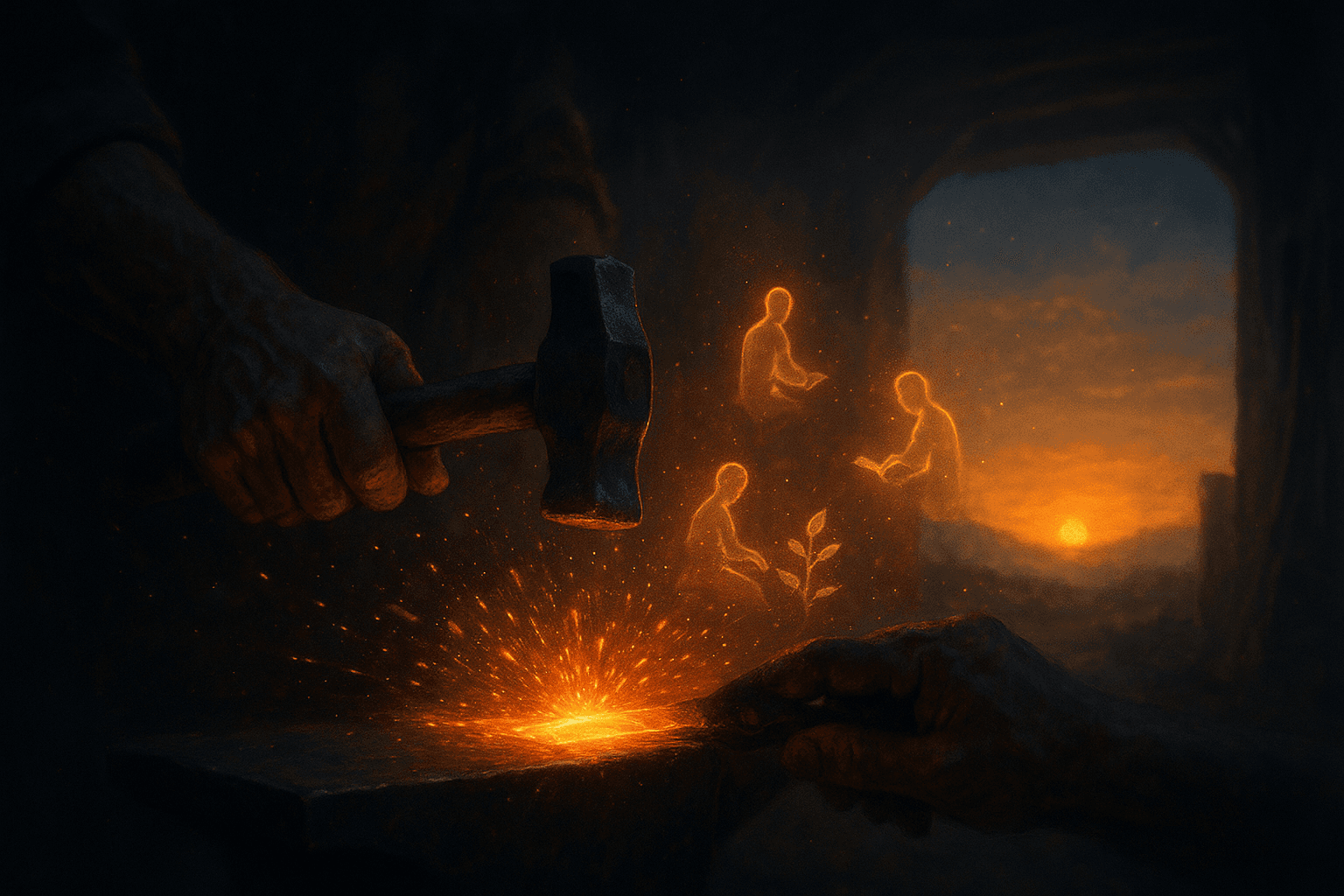
Forging Meaning from Life’s Raw Materials
Achebe’s own career illustrates how transformation happens above all through stories. By retelling colonial history from an African perspective, he reworked inherited circumstances into a new narrative frame. Likewise, when individuals interpret their hardships as lessons instead of final verdicts, they reshape circumstances without changing the facts themselves. Viktor Frankl’s “Man’s Search for Meaning” (1946) echoes this idea: even in extreme suffering, the interpretation we forge becomes the decisive act of making meaning. [...]
Created on: 11/24/2025