
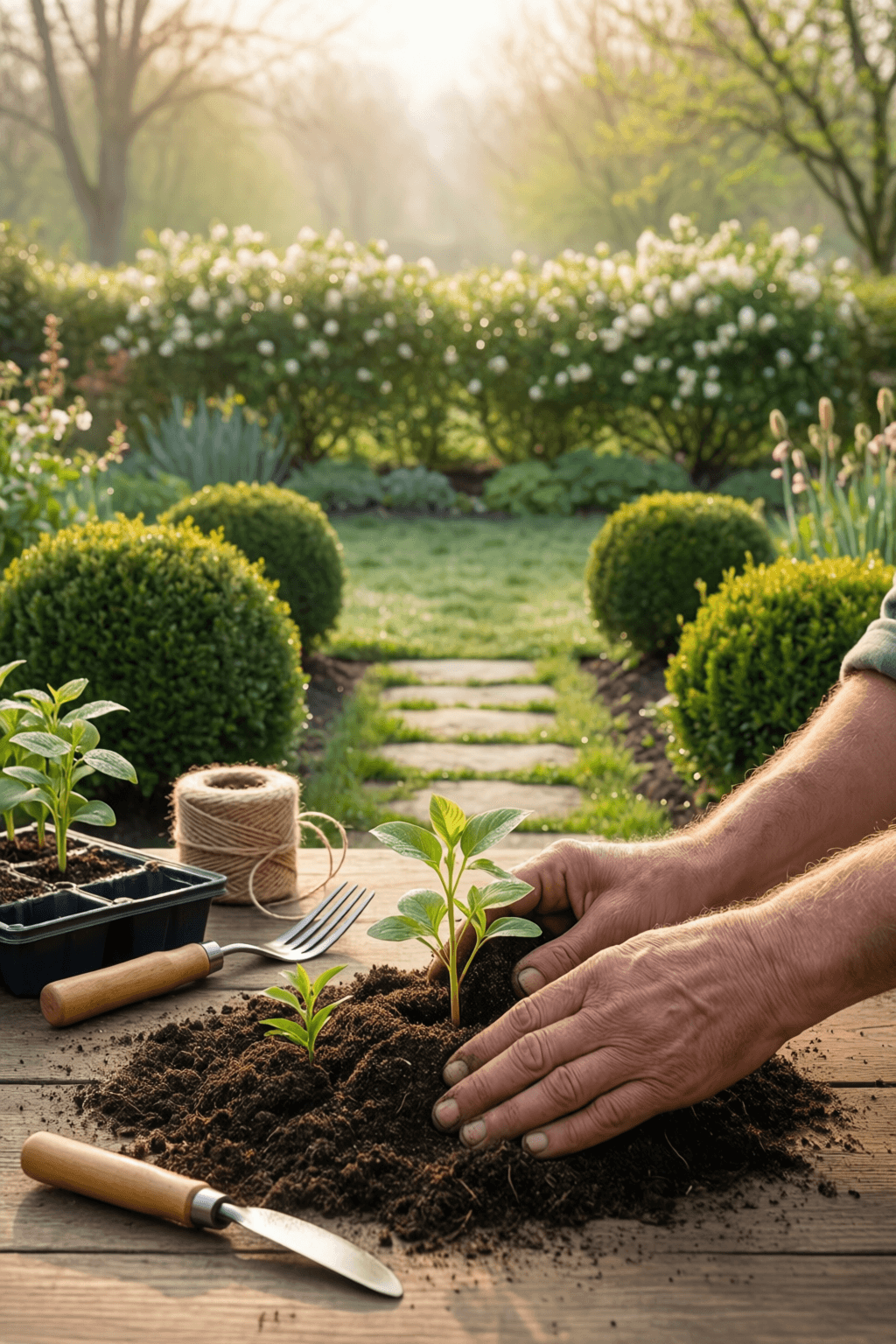
We have the power to craft our growth the way a landscaper crafts a majestic garden. — Chögyam Trungpa
—What lingers after this line?
Growth as Deliberate Creation
Chögyam Trungpa’s image immediately shifts growth from something accidental to something consciously shaped. Rather than imagining personal development as a wild process beyond our control, he suggests that we participate in it the way a landscaper shapes land, paths, and flowering spaces. In this sense, growth is not merely about waiting for change; it is about choosing direction, structure, and care. From the outset, the metaphor also emphasizes patience. A majestic garden does not appear overnight, and neither does a mature inner life. Each decision—what to plant, what to remove, where to make room—becomes part of a larger design, reminding us that meaningful transformation is both creative and gradual.
The Role of Intention and Design
Building on that idea, the quote highlights the importance of intention. A landscaper does not scatter seeds randomly and hope for beauty; instead, there is vision behind the arrangement. Likewise, personal growth often begins when we ask what qualities we want to cultivate—resilience, compassion, discipline, or clarity—and then organize our habits around those aims. This perspective echoes classical philosophy. Aristotle’s Nicomachean Ethics (4th century BC) argues that character is formed through repeated action, not wishful thinking. Trungpa’s garden image gives that abstract moral insight a living form: our routines are the soil, our choices are the tools, and our values become the design that gradually turns possibility into shape.
Pruning What No Longer Serves
Yet cultivation is not only about adding new virtues; it also requires removal. Every gardener knows that pruning dead branches and pulling weeds are essential if healthy plants are to thrive. In human terms, this may mean confronting habits, attachments, or fears that quietly consume energy needed for growth. Here the metaphor becomes especially honest, because pruning can feel like loss even when it is beneficial. Buddhist teaching, including themes central to Trungpa’s own work in books like Cutting Through Spiritual Materialism (1973), often returns to the need to let go of ego-driven clutter. Seen this way, growth is not endless accumulation but careful simplification, making space for stronger and more authentic life.
Discipline Joined With Care
At the same time, landscaping is not an act of force alone. Even the most skilled gardener cannot command a plant to bloom; they can only create conditions in which blooming becomes possible. This nuance matters, because it suggests that self-development requires both discipline and gentleness. We work steadily, but we also respect timing, limits, and natural rhythms. Modern psychology supports this balance. Research on habit formation, such as James Clear’s popular synthesis in Atomic Habits (2018), stresses the power of small, repeated actions over dramatic reinvention. In that light, Trungpa’s statement becomes practical advice: growth flourishes through sustained care, not self-punishment, and through daily tending rather than occasional bursts of ambition.
A Living Landscape, Not a Final Product
Finally, the garden metaphor reminds us that growth is never fully finished. Even a majestic landscape remains alive, changing with season, weather, and time. Similarly, personal development is not a fixed achievement after which nothing more is needed. It is an ongoing relationship with oneself, shaped by renewal, setback, and adaptation. This ending returns us to the quote’s quiet empowerment. We have the power to craft our growth, but not to freeze it into perfection. The real beauty lies in continuing to tend it. Like a garden that deepens in richness year after year, a well-lived life becomes meaningful not because it is flawless, but because it has been cultivated with awareness, intention, and care.
The Quiet Empowerment of Stewardship
Taken as a whole, Trungpa’s comparison offers a grounded form of hope. It does not promise instant transformation, nor does it deny the difficulty of change. Instead, it places us in the role of steward: someone responsible for attention, effort, and responsiveness. That role is humble, yet it is also powerful, because it means our future is shaped by what we repeatedly nurture. Therefore, the quote invites a mature understanding of freedom. We may not control every storm or season, but we can still prepare the soil and tend what matters. In that ongoing act of stewardship, growth becomes less a mystery to fear and more a landscape to cultivate with wisdom.
One-minute reflection
What feeling does this quote bring up for you?
Related Quotes
6 selectedHe who cultivates a garden and brings to perfection flowers and fruits, cultivates and advances at the same time his own nature. — Reginald Farrer
Reginald Farrer
At first glance, Reginald Farrer’s remark appears to praise horticulture alone, yet it quickly opens into a deeper claim: the garden reflects the gardener. To bring flowers and fruits to perfection requires patience, obs...
Read full interpretation →Confidence is silent. Insecurities are loud. — Unknown (Wait—skip/replace with: True nobility is being superior to your former self. — Ernest Hemingway)
Ernest Hemingway
At its core, Hemingway’s line redefines nobility as an inward achievement rather than a social rank. Instead of measuring worth by wealth, pedigree, or dominance over others, it points to a quieter standard: becoming bet...
Read full interpretation →You are under no obligation to be consistent with the person you were yesterday. — James McCrae
James McCrae
At its core, James McCrae’s line challenges the quiet pressure to remain legible to others. Many people feel bound to opinions, habits, or identities simply because they once claimed them, as though consistency were a mo...
Read full interpretation →Growth often looks like slowing down, reassessing, and rebuilding with intention. — Erin Gregory
Erin Gregory
At first glance, growth is often imagined as constant acceleration—more output, faster decisions, visible momentum. Erin Gregory’s quote gently overturns that assumption by suggesting that real development may appear qui...
Read full interpretation →The most important, difficult, and rewarding thing to work on is yourself. — Sven Schnieders
Sven Schnieders
At its heart, Sven Schnieders’ statement argues that self-development is the most valuable project a person can undertake. Unlike external goals—career success, status, or possessions—the work done on one’s character, ha...
Read full interpretation →Consistency is the sum that equals what we become. — Henri Matisse
Henri Matisse
At its core, Matisse’s remark suggests that identity is not formed in a single dramatic moment but accumulated through repeated actions. What we do regularly—how we think, practice, respond, and persist—gradually adds up...
Read full interpretation →More From Author
More from Chögyam Trungpa →We don't have to be ashamed of what we are. We have soil good enough to cultivate; we can plant anything in it. — Chögyam Trungpa
At its heart, Chögyam Trungpa’s line rejects the reflex of shame and replaces it with a more generous view of human nature. To say we need not be ashamed of what we are is not to deny weakness, confusion, or contradictio...
Read full interpretation →When the soul is at peace, the world is at peace. — Chögyam Trungpa
This quote highlights that peace in the world begins with inner peace. When individuals cultivate tranquility in their own soul, they contribute to a more harmonious and peaceful external environment.
Read full interpretation →The more you seek, the more you find, and the more you find, the more you realize you are seeking. — Chogyam Trungpa
Chogyam Trungpa’s words introduce a cyclical relationship between seeking and finding. Unlike a straightforward quest, each discovery doesn’t serve as a conclusion but rather as an invitation to delve deeper.
Read full interpretation →True strength lies in the balance of heart and mind. — Chögyam Trungpa
Chögyam Trungpa’s insight highlights the timeless pursuit of equilibrium within ourselves. By stating that true strength resides in the balance of heart and mind, he suggests that neither emotion nor intellect alone can...
Read full interpretation →