
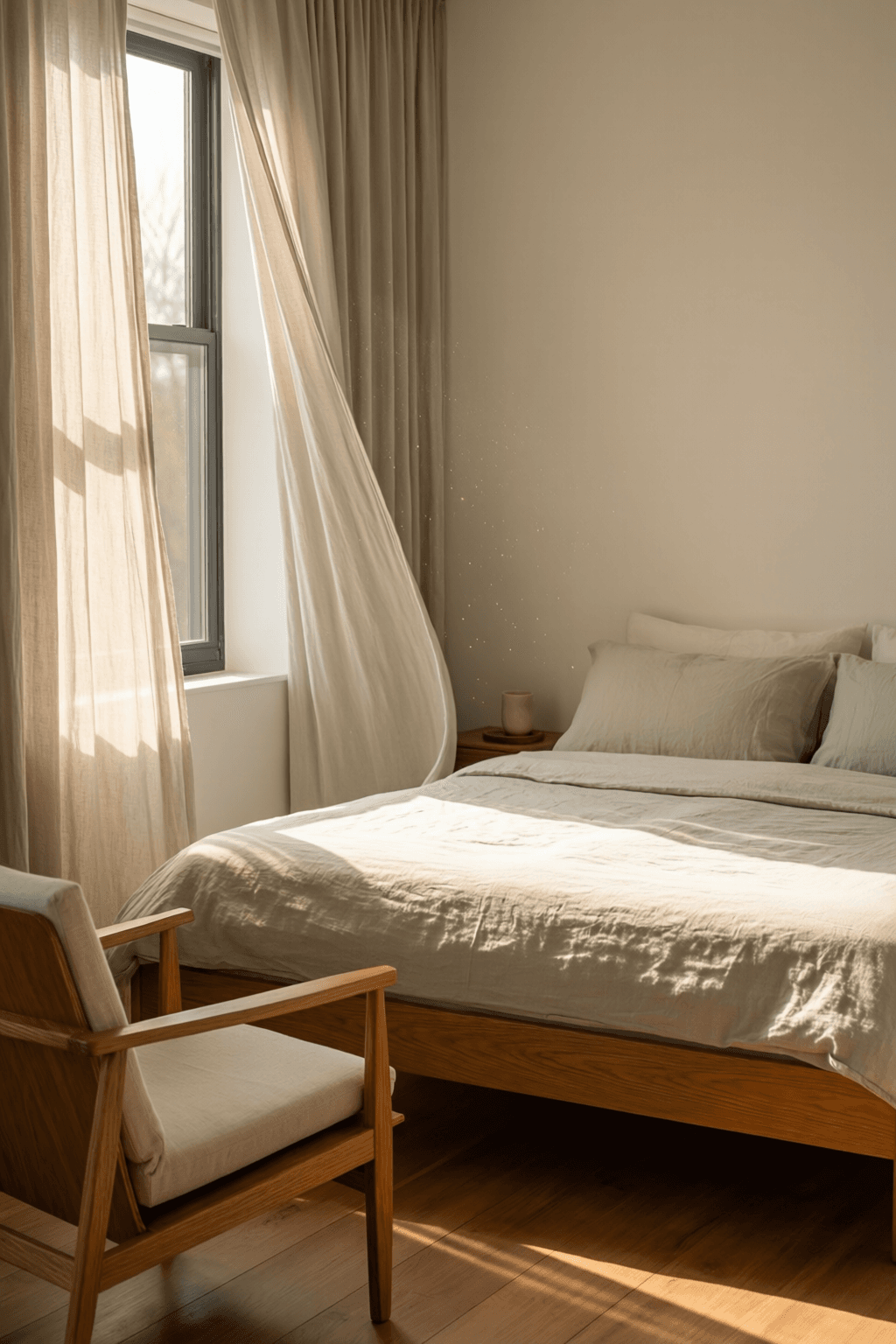
The most valuable thing we can do for the psyche, occasionally, is to let it rest, wander, live in the changing light of a room, not try to be or do anything whatever. — May Sarton
—What lingers after this line?
The Wisdom of Doing Nothing
At first glance, May Sarton’s reflection seems almost subversive in a culture that equates worth with productivity. Yet her point is gentle rather than defiant: the psyche, like the body, needs intervals of stillness. To ‘not try to be or do anything whatever’ is not failure, but a deliberate suspension of pressure that allows inner life to recover its balance. In this sense, rest becomes an act of care rather than avoidance. Sarton suggests that value can emerge precisely when striving stops, and the mind is permitted to loosen its grip. What appears empty from the outside may, inwardly, be a form of quiet restoration.
Wandering as Inner Renewal
From that stillness, Sarton moves naturally toward wandering, a word that implies freedom without aim. Unlike distraction, wandering is a soft attentiveness in which thought drifts, memory surfaces, and feeling rearranges itself without force. Virginia Woolf’s diaries and essays often praise such unstructured mental movement, treating it as a condition for deeper perception rather than a lapse in discipline. As a result, wandering becomes a way for the psyche to metabolize experience. Instead of demanding clarity on command, we allow the mind to roam until it discovers its own pathways. What seems idle may therefore be the beginning of insight.
The Changing Light of a Room
Sarton’s image of ‘the changing light of a room’ grounds her idea in ordinary physical reality. Rather than seeking dramatic revelation, she notices something modest: sunlight shifting across walls, furniture, and silence. This attention to subtle change recalls Gaston Bachelard’s The Poetics of Space (1958), which treats intimate rooms as places where inner life and outer atmosphere quietly meet. Consequently, the room becomes more than a backdrop; it becomes a companion to reflection. By simply living in that changing light, one participates in time without resisting it. The psyche rests not in abstraction, but in the humble shelter of the present moment.
A Gentle Critique of Constant Self-Making
At a deeper level, the quotation challenges the modern habit of perpetual self-construction. To always be improving, performing, and defining oneself can leave little room for simply existing. Sarton resists this demand by proposing a rare freedom: the permission not to become anything at all for a while. This idea aligns with contemplative traditions that value being over achievement. In Taoist thought, for example, the Tao Te Ching, traditionally attributed to Laozi, praises wu wei, or effortless action, suggesting that life often unfolds best when not overmanaged. Sarton’s insight echoes that wisdom in a psychological key, reminding us that identity also needs spaciousness.
Rest as Psychological Necessity
Seen this way, her words anticipate modern conversations about burnout, overstimulation, and mental fatigue. Psychologists studying rest and attention have noted that the mind benefits from periods of wakeful idleness; research on the brain’s default mode network, discussed widely in cognitive neuroscience since the early 2000s, suggests that inward, unfocused states can support memory, integration, and self-reflection. Therefore, Sarton’s claim is not merely poetic but practical. When we stop demanding output from ourselves, the psyche may resume subtler forms of work—repairing, connecting, and settling. Rest is not the opposite of inner life; it is often the condition that makes inner life possible.
An Ethics of Permission
Finally, the quotation offers something many people rarely grant themselves: permission. It tells us that there are moments when the most valuable act is neither ambition nor analysis, but simple allowance. To sit quietly, to watch light move, to let thought meander—these become dignified human activities rather than guilty indulgences. In the end, Sarton’s vision is both tender and radical. She invites us to trust that the psyche does not always need instruction; sometimes it needs hospitality. And in that hospitable pause, we may discover not emptiness, but a calmer and more truthful way of being alive.
Recommended Reading
As an Amazon Associate, we earn from qualifying purchases.
One-minute reflection
Why might this line matter today, not tomorrow?
Related Quotes
6 selectedRest is a fine medicine. Let your mind go into strange, untouched places. — May Sarton
May Sarton
May Sarton’s line begins with a deceptively simple claim: rest heals. Yet she isn’t praising laziness or escape so much as naming rest as a deliberate remedy, like something prescribed.
Read full interpretation →Rest is a fine medicine. Let your brain rest, you wearied and worried men of business. — Thomas Carlyle
Thomas Carlyle
Thomas Carlyle’s remark frames rest not as laziness, but as treatment. By calling it “a fine medicine,” he shifts the discussion from moral judgment to human necessity, especially for those worn down by constant demands.
Read full interpretation →We are so busy watching out for what's just ahead of us that we don't take the time to enjoy where we are. — Bill Watterson
Bill Watterson
Bill Watterson’s observation captures a familiar modern habit: we scan the road ahead so intensely that the ground beneath our feet becomes invisible. In this sense, the quote is not merely about time management but abou...
Read full interpretation →It is a beautiful thing to be able to pause, to breathe, and to remember who you are. — Haemin Sunim
Haemin Sunim
Haemin Sunim’s words begin with something deceptively simple: the ability to pause. In a culture that often rewards speed, reaction, and constant productivity, stopping can feel almost radical.
Read full interpretation →Don't believe every worried thought you have. Worried thoughts are notoriously inaccurate. — Renee Jain
Renee Jain
At its core, Renee Jain’s quote confronts a habit many people barely notice: treating every anxious thought as if it were reliable evidence. Worry often arrives with urgency, and because it feels protective, it can masqu...
Read full interpretation →Rest is not a retreat; it is a reset. It is the necessary pause that allows us to show up grounded rather than reactive. — Sophia A. Nelson
Sophia A. Nelson
At first glance, Sophia A. Nelson’s statement challenges a common assumption: that rest is somehow equivalent to stepping back, giving up, or retreating from responsibility.
Read full interpretation →More From Author
More from May Sarton →A garden is always a series of losses set against a few triumphs, like life itself. — May Sarton
May Sarton’s reflection turns the garden into more than a cultivated space; it becomes a compressed image of human life. At first glance, the statement seems gently pessimistic, yet its deeper balance is what gives it fo...
Read full interpretation →Everything that slows us down and forces patience, everything that sets us back into the slow circles of nature, is a help. Gardening is an instrument of grace. — May Sarton
May Sarton’s quote begins with a quiet reversal of modern values: what slows us down is not necessarily an obstacle, but often a gift. In a culture that prizes speed, efficiency, and constant motion, she suggests that de...
Read full interpretation →Solitude is the salt of personhood. It brings out the authentic flavor of every experience. — May Sarton
May Sarton’s metaphor begins with a domestic certainty: salt doesn’t replace food; it reveals what’s already there. In the same way, solitude is not presented as an escape from life but as a condition that clarifies it,...
Read full interpretation →Loneliness is the poverty of self; solitude is the richness of self. — May Sarton
May Sarton’s line turns two often-confused states into opposites: loneliness as lack, solitude as abundance. Although both may look like being “alone,” she suggests the inner experience is what matters—whether the self f...
Read full interpretation →