
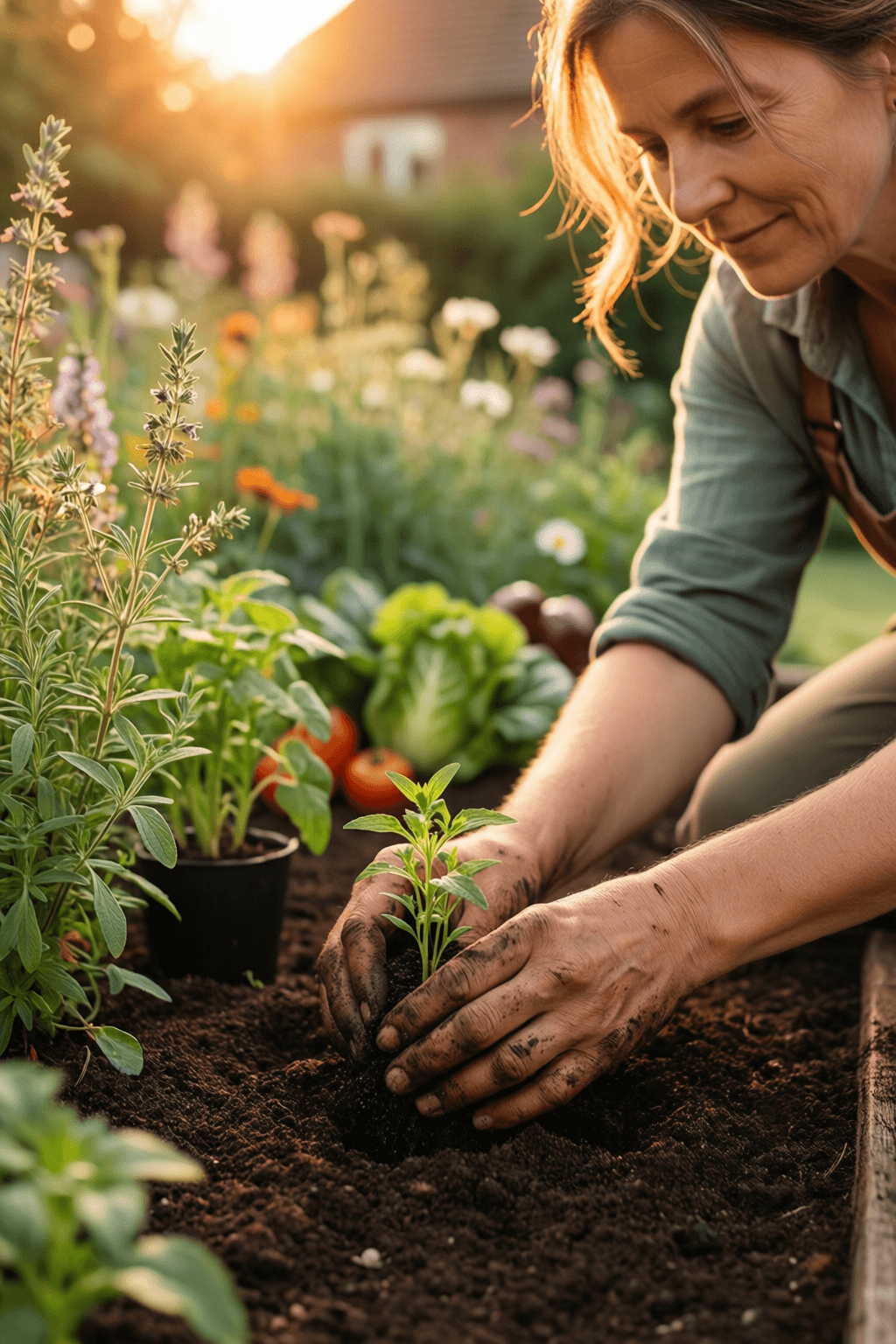
The glory of gardening: hands in the dirt, head in the sun, heart with nature. — Alfred Austin
—What lingers after this line?
A Simple Image of Fulfillment
Alfred Austin’s line condenses the appeal of gardening into one vivid scene: the body grounded in soil, the mind lifted by sunlight, and the emotions attuned to the natural world. At once physical and poetic, the quote suggests that gardening is not merely a hobby but a complete human experience, engaging hand, head, and heart together. From this starting point, Austin’s image invites us to see cultivation as a form of harmony. Rather than separating labor from pleasure, he presents them as intertwined, showing how ordinary work in a garden can become a source of dignity, joy, and inner balance.
Hands in the Dirt
First, “hands in the dirt” celebrates the tactile honesty of gardening. Soil on the skin symbolizes effort, patience, and a willingness to participate directly in life’s slow processes. Unlike many modern tasks that feel abstract or distant, gardening offers immediate contact with the material basis of growth: seed, root, water, and earth. In turn, this physical engagement can be deeply restorative. Writers from Virgil’s Georgics (29 BC) to contemporary garden memoirists have described cultivation as labor that clarifies rather than exhausts. By working with the ground itself, people often rediscover a satisfying sense of usefulness and connection.
Head in the Sun
Yet Austin does not leave us bent toward the earth; he raises the image upward with “head in the sun.” This shift introduces light, thought, and renewal. Sunshine here suggests more than weather: it evokes alertness, hope, and the quiet mental expansion that comes from time spent outdoors. Moreover, modern research often supports this intuition. Studies on exposure to green spaces and daylight, such as findings summarized by environmental psychologists like Rachel and Stephen Kaplan, have linked nature contact with improved attention and reduced stress. Austin’s phrase therefore captures a truth both poetic and practical: tending plants can also clear the mind.
Heart with Nature
As the image deepens, “heart with nature” becomes the emotional center of the quote. Gardening is not only about producing flowers or food; it is about entering a relationship with seasons, fragility, and renewal. To place one’s heart with nature is to accept dependence on rhythms larger than personal ambition. This feeling appears across literary traditions. Henry David Thoreau’s Walden (1854), for example, treats close attention to the natural world as a path toward moral and spiritual insight. In a similar way, Austin implies that gardens teach affection, humility, and gratitude precisely because they remind us that beauty cannot be forced—only fostered.
The Union of Labor and Delight
Taken together, the quote’s three images form a complete philosophy: gardening nourishes the body through work, the mind through light, and the spirit through belonging. This progression is what makes its “glory” so distinctive. The gardener does not escape life but enters it more fully, discovering pleasure in care, repetition, and waiting. Consequently, gardening becomes a quiet answer to modern restlessness. An anecdote often shared by lifelong growers is that even a failed season teaches something valuable—when tomatoes blight or frost arrives early, disappointment is tempered by renewed respect for the living world. In that way, the garden offers not perfection but participation.
Why the Quote Still Resonates
Finally, Austin’s words endure because they describe a longing many people still feel: to be physically grounded, mentally refreshed, and emotionally reconnected. In an age of screens and speed, the garden represents a rare space where effort produces visible, living results and where time moves according to natural rather than artificial demands. Thus the quote remains more than a charming reflection. It speaks to a timeless human need for contact with earth and sunlight, and for a sense of kinship with the world that sustains us. Austin calls this glory, and the term feels earned because gardening, at its best, lets a person feel wholly alive.
One-minute reflection
What does this quote ask you to notice today?
Related Quotes
6 selectedThere is nothing pleasanter than spading when the ground is soft and damp. — John Steinbeck
John Steinbeck
At first glance, Steinbeck’s line seems almost modest, yet its pleasure is precise and deeply felt. Spading soft, damp ground turns labor into something nearly sensual: the tool enters easily, the earth yields without re...
Read full interpretation →Nature is not only all that is visible to the eye, it also includes the inner pictures of the soul. — Edvard Munch
Edvard Munch
At first glance, Munch’s statement expands the ordinary idea of nature beyond forests, skies, and seas. He argues that nature is not limited to what the eye can measure; it also includes the emotional and imaginative ima...
Read full interpretation →Gardening is the slowest of the performing arts. — Mac Griswold
Mac Griswold
Mac Griswold’s remark transforms gardening from a practical chore into a form of performance, one staged not on a theater floor but in soil, weather, and seasons. At first glance, the comparison seems surprising; yet the...
Read full interpretation →It is not the language of painters but the language of nature which one should listen to. — Pablo Picasso
Pablo Picasso
At first glance, Picasso’s remark challenges the authority of artistic convention. By contrasting ‘the language of painters’ with ‘the language of nature,’ he suggests that art should not merely imitate established techn...
Read full interpretation →Great art picks up where nature ends. — Marc Chagall
Marc Chagall
At its core, Marc Chagall’s remark suggests that art does not compete with nature but continues its unfinished conversation. Nature gives us raw forms—color, light, movement, emotion—while art reshapes them into meaning.
Read full interpretation →Your home is your larger body. It grows in the sun and sleeps in the stillness of the night. — Kahlil Gibran
Kahlil Gibran
At first glance, Gibran transforms the idea of home from a mere structure into something intimate and organic: “your larger body.” In this image, a dwelling is not separate from the person who inhabits it, but an outward...
Read full interpretation →More From Author
More from Alfred Austin →