
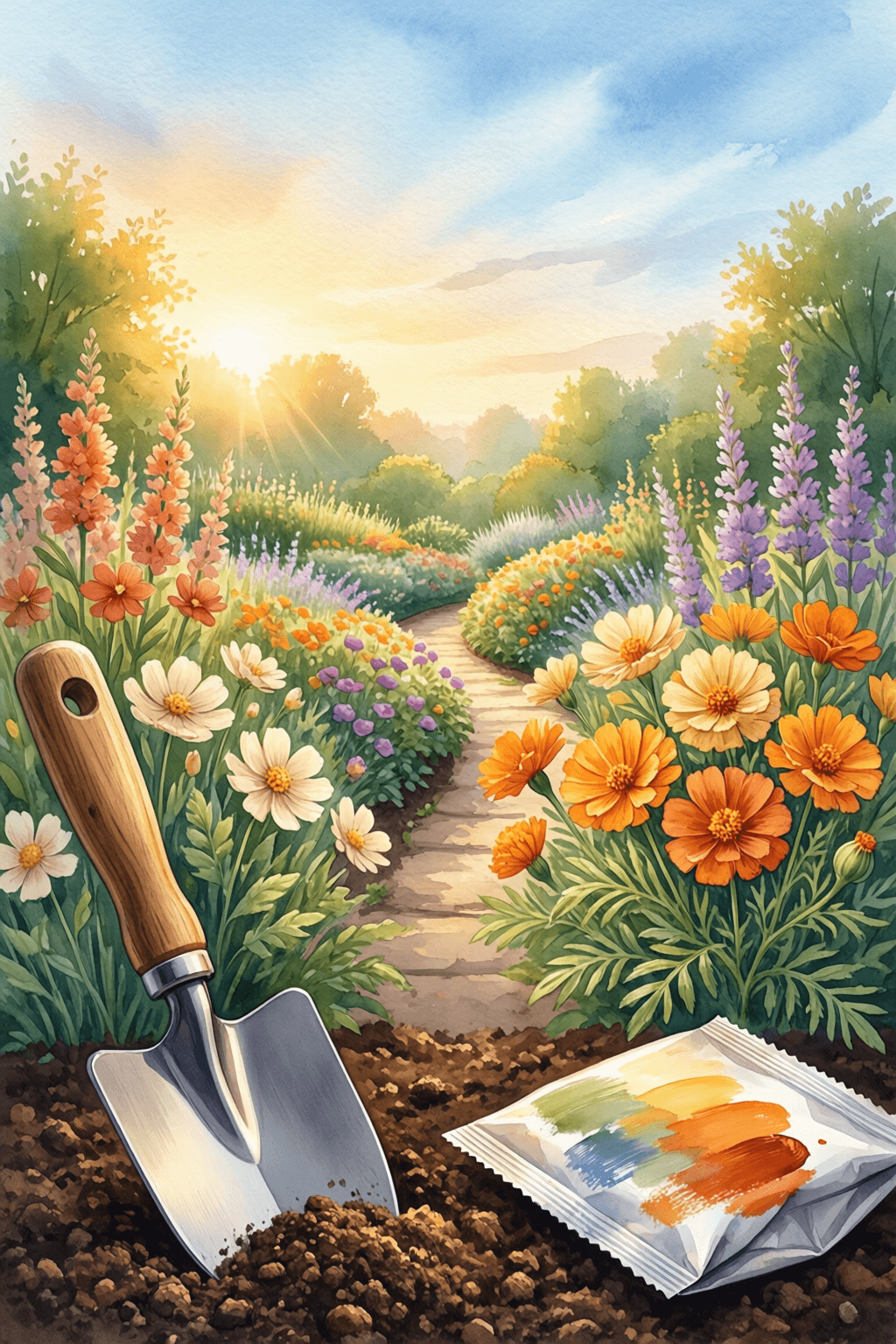
Gardening is the art that uses flowers and plants as paint, and the soil and sky as canvas. — Elizabeth Murray
—What lingers after this line?
A Living Palette
Elizabeth Murray’s quote begins by transforming the garden into a painter’s studio, where flowers and plants become pigments rather than mere materials. This comparison suggests that gardening is not simply a practical activity but a creative act shaped by color, texture, rhythm, and patience. Like a painter choosing shades for a canvas, the gardener selects blooms, foliage, and forms to create harmony.
The Canvas of Nature
From there, Murray expands the image by naming soil and sky as the garden’s canvas. This makes the artwork feel vast and alive, because it is never confined to a frame. The earth anchors the composition, while light, weather, and season continually alter it, reminding us that gardening is collaboration rather than control.
Art That Changes With Time
Unlike a finished painting, a garden is always becoming. Seeds sprout, flowers fade, vines wander, and trees slowly reshape the space around them. In this sense, Murray’s metaphor highlights gardening as a temporal art, one that depends on growth and decay as much as design. The gardener creates, but time completes the work.
The Gardener as Artist
This vision also elevates the role of the gardener. Rather than merely maintaining a yard, the gardener composes with living forms, balancing intention with surprise. Gertrude Jekyll’s influential garden designs in the late nineteenth and early twentieth centuries, for example, treated flower borders like painterly arrangements, blending colors and textures with remarkable sensitivity.
Beauty Rooted in Care
Yet Murray’s idea does not separate beauty from labor. The art of gardening requires digging, pruning, watering, and waiting, so its elegance is rooted in repeated acts of care. This connection between effort and beauty gives the garden emotional depth: every blossom carries traces of attention, patience, and hope.
A Shared Human Longing
Finally, the quote speaks to a broader human desire to shape the world gently. Gardens offer a place where imagination meets ecology, and where personal expression can nourish other forms of life. By seeing flowers as paint and the sky as canvas, Murray invites us to recognize gardening as one of the most generous arts: beautiful, fragile, and alive.
One-minute reflection
What's one small action this suggests?
Related Quotes
6 selectedThe glory of gardening: hands in the dirt, head in the sun, heart with nature. — Alfred Austin
Alfred Austin
Alfred Austin’s line condenses the appeal of gardening into one vivid scene: the body grounded in soil, the mind lifted by sunlight, and the emotions attuned to the natural world. At once physical and poetic, the quote s...
Read full interpretation →There is nothing pleasanter than spading when the ground is soft and damp. — John Steinbeck
John Steinbeck
At first glance, Steinbeck’s line seems almost modest, yet its pleasure is precise and deeply felt. Spading soft, damp ground turns labor into something nearly sensual: the tool enters easily, the earth yields without re...
Read full interpretation →Gardening is the slowest of the performing arts. — Mac Griswold
Mac Griswold
Mac Griswold’s remark transforms gardening from a practical chore into a form of performance, one staged not on a theater floor but in soil, weather, and seasons. At first glance, the comparison seems surprising; yet the...
Read full interpretation →He who cultivates a garden and brings to perfection flowers and fruits, cultivates and advances at the same time his own nature. — Reginald Farrer
Reginald Farrer
At first glance, Reginald Farrer’s remark appears to praise horticulture alone, yet it quickly opens into a deeper claim: the garden reflects the gardener. To bring flowers and fruits to perfection requires patience, obs...
Read full interpretation →A garden is always a series of losses set against a few triumphs, like life itself. — May Sarton
May Sarton
May Sarton’s reflection turns the garden into more than a cultivated space; it becomes a compressed image of human life. At first glance, the statement seems gently pessimistic, yet its deeper balance is what gives it fo...
Read full interpretation →We might think we are nurturing our garden, but of course it's our garden that is really nurturing us. — Jenny Uglow
Jenny Uglow
At first glance, Jenny Uglow’s remark seems to describe a simple exchange: we water, weed, and prune, and the garden flourishes. Yet her deeper point is a reversal of ownership and care.
Read full interpretation →More From Author
More from Elizabeth Murray →