
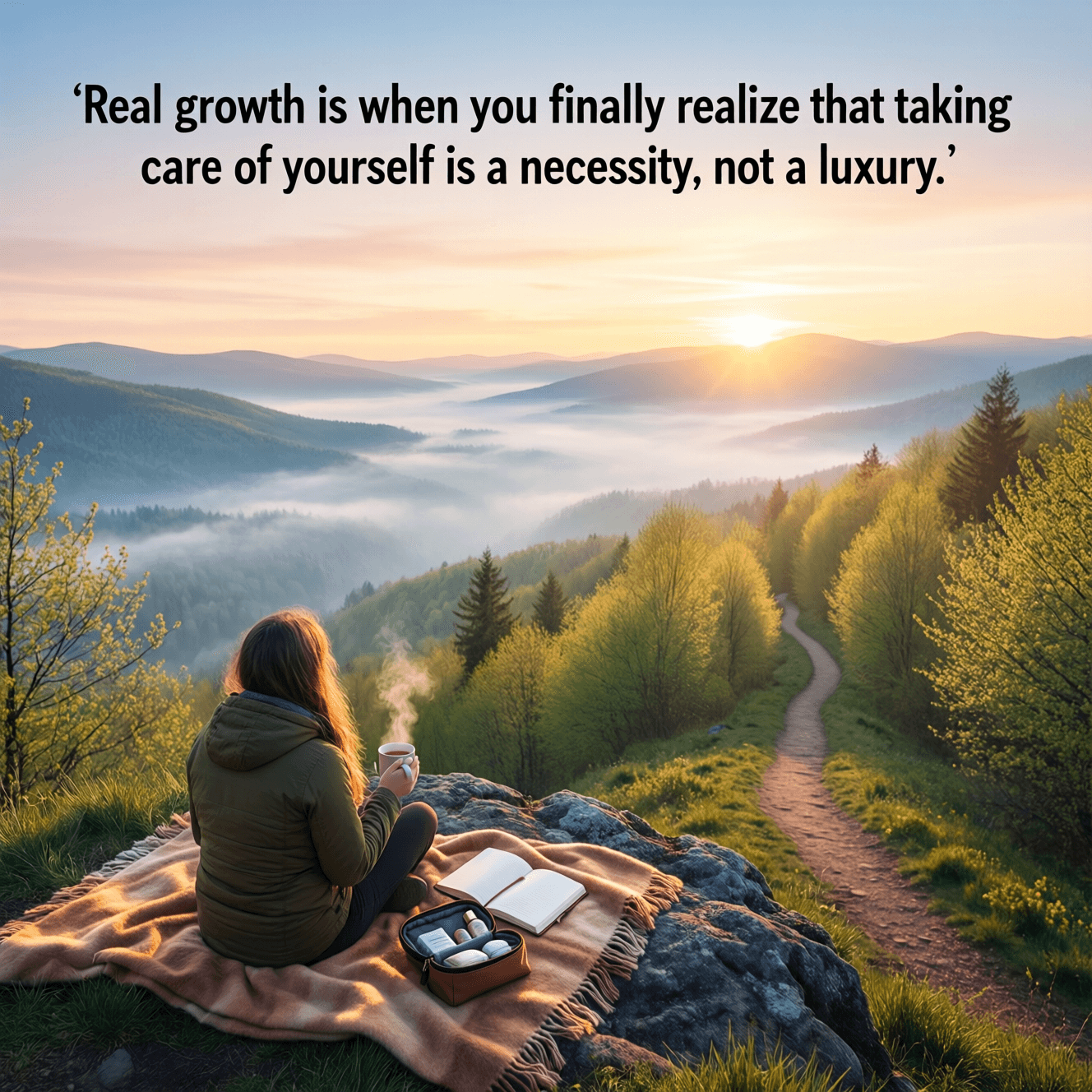
Real growth is when you finally realize that taking care of yourself is a necessity, not a luxury. — Yung Pueblo
—What lingers after this line?
Reframing Self-Care as Essential
Yung Pueblo’s line pivots on a simple but radical reframing: self-care isn’t a reward you earn after everything else is done; it’s the condition that makes everything else sustainable. In many lives, care for the self gets treated like an indulgence—something nice, optional, and slightly guilt-inducing. Yet the quote argues that real maturity begins when that story breaks. From there, growth becomes less about adding achievements and more about building inner infrastructure—sleep, nourishment, emotional regulation, boundaries—so your life can actually hold what you’re trying to create. What once looked like “extra” starts to look like oxygen: invisible when present, impossible to ignore when missing.
The Hidden Cost of Neglect
Once self-care is demoted to luxury, the bill still arrives—just later and with interest. Chronic stress, burnout, and resentment often come from repeatedly spending energy you haven’t replenished. You can see this in the familiar pattern of someone who is dependable for everyone else, but snaps at small inconveniences or can’t rest without anxiety. This is why the quote’s word “finally” matters: it implies a turning point after lived evidence. People often realize necessity only after their body or mind forces the lesson—through exhaustion, anxiety, illness, or emotional numbness. In that light, self-care isn’t self-centered; it’s preventive maintenance for a life you intend to keep living.
Growth as Responsibility, Not Indulgence
After that realization, self-care becomes an act of responsibility. It’s no longer a spa-day stereotype but the daily choice to treat your well-being as a non-negotiable part of your obligations. In other words, caring for yourself is not separate from caring for others; it supports it. Anecdotally, many people notice their relationships improve when they start meeting basic needs consistently—eating real meals, moving their body, taking breaks, seeking therapy. They become less reactive and more available. The shift is subtle but profound: instead of proving your worth by depletion, you practice worth by stewardship.
Boundaries as a Form of Self-Care
With responsibility comes the next practical implication: boundaries. If self-care is necessary, then protecting time, energy, and attention becomes necessary too. That means saying no, disappointing people occasionally, and letting some tasks remain undone. The quote quietly challenges the belief that being a good person requires constant self-sacrifice. As this boundary practice strengthens, you begin to distinguish between what is urgent and what is performative. You might stop answering messages immediately, decline commitments you can’t afford, or ask for help without apology. Each choice reinforces the new identity: a person who plans life around health rather than fitting health into leftover scraps.
What “Necessity” Looks Like Day to Day
Still, necessity doesn’t mean perfection; it means consistency. Self-care in this sense can be ordinary: regular sleep, hydration, movement, time outdoors, fewer numbing habits, and honest conversations. It can also be internal work—naming feelings, grieving, forgiving, and noticing when you’re pushing yourself to earn love. Over time, these small decisions compound. You become better at recognizing early signs of overwhelm and responding sooner, not later. That’s where the “real growth” becomes visible: you don’t just endure life; you participate in it with a nervous system that’s supported rather than constantly braced.
From Survival Mode to a Sustainable Life
Ultimately, the quote points toward a shift from survival mode to sustainability. Survival mode says, “I’ll take care of myself when I’m safe.” Growth says, “Taking care of myself is how I become safe.” This is a deeply empowering reversal, because it returns agency to everyday choices. And as that agency builds, self-care stops feeling like an isolated practice and becomes a philosophy of living. You begin to trust that rest is productive, that healing is strategic, and that your life is not meant to be a constant emergency. In that sense, Yung Pueblo frames self-care as the root system that makes every other form of growth possible.
One-minute reflection
Where does this idea show up in your life right now?
Related Quotes
6 selectedReal growth is when you no longer feel the need to explain your evolution to people who are committed to understanding you only from their old perspective. — Yung Pueblo
Yung Pueblo
Yung Pueblo frames “real growth” not as a visible milestone but as an internal shift: the moment you stop rehearsing your reasons for changing. At first, many people experience growth as something to justify—new boundari...
Read full interpretation →You do not need to be a finished product to be worthy of grace. You are allowed to be a work in progress. — Yung Pueblo
Yung Pueblo
At its heart, Yung Pueblo’s quote dismantles the harsh belief that value must be earned through perfection. It insists that grace is not a prize reserved for the polished or the fully healed; rather, it belongs equally t...
Read full interpretation →A person who is growing will never be able to fit back into their old life. — Yung Pueblo
Yung Pueblo
Yung Pueblo’s line frames personal development as a physical transformation: when you grow, you take up more inner space, and the old container can’t hold you. This isn’t arrogance or rejection for its own sake; it’s sim...
Read full interpretation →The growth you want is on the other side of the habit you're avoiding. — Yung Pueblo
Yung Pueblo
Yung Pueblo’s line frames personal development as a geographic truth: what we most want lies just past what we most resist. The “habit you’re avoiding” is rarely a random task; it is often the precise behavior that would...
Read full interpretation →Nervous system regulation is the new mental fitness. You cannot pour from an empty cup, nor can you build a sanctuary while the world is still burning. — April Koh
April Koh
April Koh’s quote reframes wellness by suggesting that mental fitness is no longer just about discipline, productivity, or positive thinking. Instead, it begins with the body’s capacity to return to steadiness after stre...
Read full interpretation →Learning to love yourself is like learning to walk – essential, life-changing, and the only way to stand tall. — Vironika Tugaleva
Vironika Tugaleva
Vironika Tugaleva’s comparison begins with a simple but powerful truth: self-love is not a luxury, but a basic human necessity. Just as walking allows a child to move through the world with growing independence, learning...
Read full interpretation →More From Author
More from Yung Pueblo →To move forward, you must first give yourself permission to be still. — Yung Pueblo
At first glance, Yung Pueblo’s line seems contradictory: how can stillness help us move forward? Yet that tension is precisely the point.
Read full interpretation →Your peace is louder than your defense. — Yung Pueblo
At first glance, Yung Pueblo’s line suggests a reversal of what many people assume about power. We often think strength appears in arguments, explanations, or swift rebuttals.
Read full interpretation →You do not need to earn the right to breathe, to rest, or to exist. — Yung Pueblo
At its core, Yung Pueblo’s line dismantles a belief many people quietly carry: that basic human needs must be earned through productivity, perfection, or approval. By saying we do not need to earn the right to breathe, r...
Read full interpretation →You do not need to be a finished product to be worthy of grace. You are allowed to be a work in progress. — Yung Pueblo
At its heart, Yung Pueblo’s quote dismantles the harsh belief that value must be earned through perfection. It insists that grace is not a prize reserved for the polished or the fully healed; rather, it belongs equally t...
Read full interpretation →