
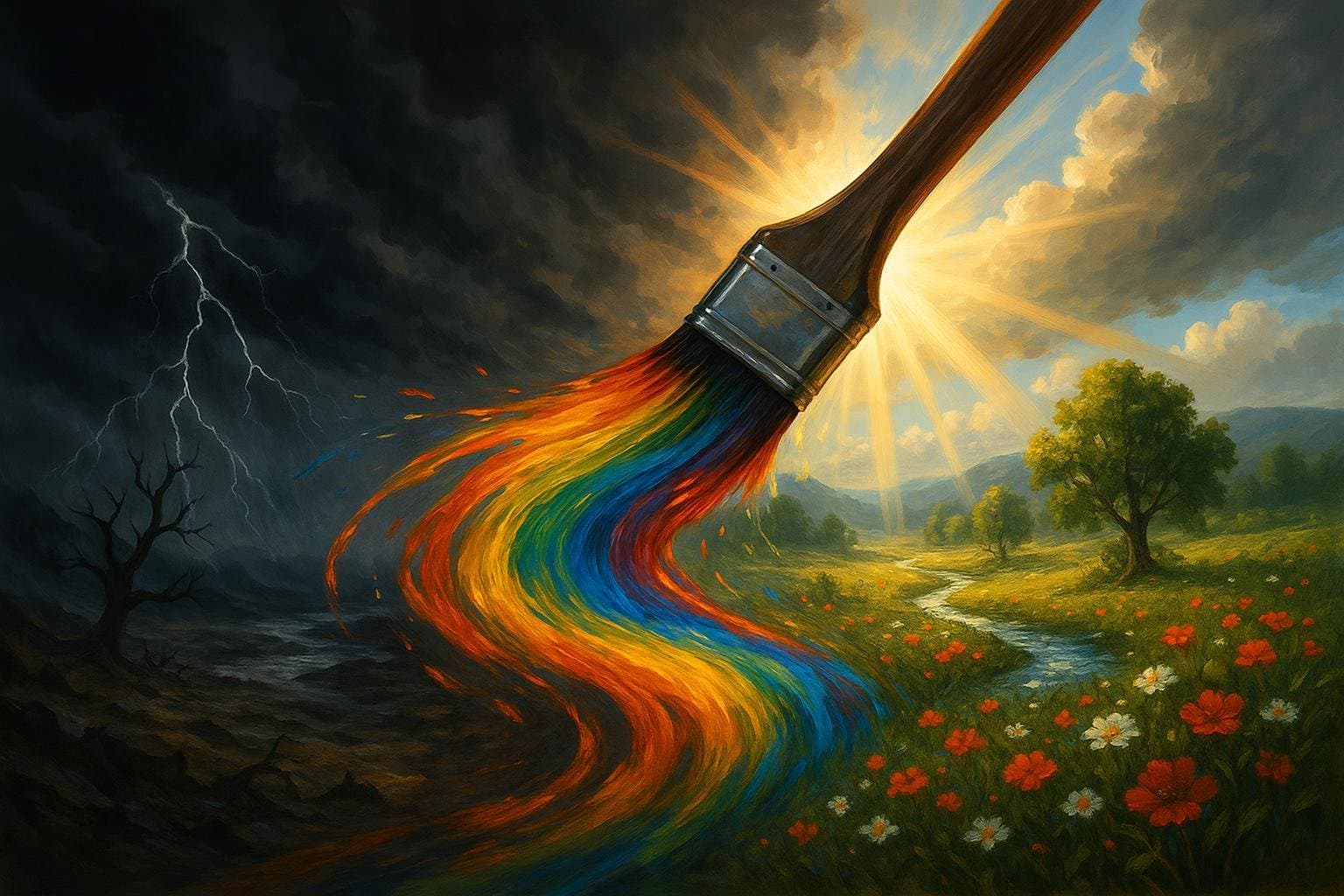
The artist’s brush is a sword that fights the battle for tomorrow’s vision. — Ai Weiwei
—What lingers after this line?
The Brush as a Symbol of Resistance
Ai Weiwei’s metaphor draws a deliberate comparison between the artist’s brush and a sword, suggesting that creative expression is fundamentally combative. Art, in this view, is not merely decorative or passive—it stands as a tool for challenging the status quo. From Francisco Goya’s harrowing war etchings to the satirical cartoons censored by autocrats, artists have long wielded their craft in defense of ideas, ideals, and vulnerable communities.
Battling for Future Visions
Building from this, the notion of fighting for ‘tomorrow’s vision’ frames art as essential in imagining—and constructing—a better future. Instead of accepting the present reality, artists push societal boundaries, giving visual form to alternative possibilities. For instance, Picasso’s ‘Guernica’ (1937) not only mourns past atrocities but also implores viewers to envisage a world without such violence, evidencing how art engages with the future as much as the present.
Historical Echoes of Artistic Struggle
This vision is hardly new. Throughout history, art has served as both shield and spear for transformative movements. The Dadaists in post-WWI Europe, for example, used collage, absurdity, and performance to protest the horrors of war and inspire new modes of civic engagement. In the same spirit, Ai Weiwei’s own installations critique censorship and authoritarianism, actively participating in global dialogues about human rights.
Cultural Dialogues and the Power of Provocation
Naturally, the sword-like quality of the artist’s brush also lies in its ability to provoke dialogue. Some works shock or disturb, compelling audiences to re-examine assumptions. Take the Berlin Wall’s graffiti: each spray-painted image confronted the world with the divide’s inhumanity, urging action and empathy from a global public. Art, then, can act as a clarion call, mobilizing individuals toward common causes and reevaluations.
The Enduring Legacy of Artistic Valor
Ultimately, by likening the brush to a sword, Ai Weiwei reminds us of the courage required to create meaningfully. While swords may rust or break, the influence of art persists, guiding societies toward new horizons long after battles are fought. In this way, artists not only defend tomorrow’s vision but also lay the path for future generations to follow, making creativity itself a lasting act of defiance and hope.
One-minute reflection
What does this quote ask you to notice today?
Related Quotes
6 selectedCarve out a tomorrow that makes your heart sing. — Unknown
Unknown
This quote encourages proactive efforts to shape a future that brings joy and satisfaction. It highlights the importance of planning and taking steps today to ensure happiness and fulfillment in the days to come.
Read full interpretation →Transform your life. Create your tomorrow. — Reza Aslan
Reza Aslan
This quote emphasizes the power of personal change. It suggests that individuals have the ability to transform their lives through conscious choices and actions.
Read full interpretation →Speak to the future as if it already listens to your conviction. — Pablo Neruda
Pablo Neruda
At the outset, the line urges a daring rhetorical posture: speak to what has not yet arrived as though it already lends an ear. This “as if” stance is not mere optimism; it is a discipline of attention that personifies t...
Read full interpretation →The artist's job is not to succumb to despair, but to find the light in the cracks. Art is the act of bringing your internal world into the light for others to share. — Ai Weiwei
Ai Weiwei
At its core, Ai Weiwei’s statement defines art not as surrender, but as resistance. Despair may be an honest response to injustice, loss, or confusion; however, the artist’s task is to move beyond mere collapse and searc...
Read full interpretation →Raise your voice for the future you want to build today — Michelle Obama
Michelle Obama
Michelle Obama’s exhortation links voice to construction: the future is not discovered; it is built. By urging us to speak now, she insists that aspirations must be translated into present-tense action.
Read full interpretation →Speak your work into being and then make it true with your hands — Ai Weiwei
Ai Weiwei
Ai Weiwei’s imperative begins with a vow: say what you will make. Speech, in this view, is not mere description but orientation—a compass that points the body toward work.
Read full interpretation →More From Author
More from Ai Weiwei →Authenticity is a habit. It is a road we are comfortable with. — Ai Weiwei
At first glance, Ai Weiwei’s statement shifts authenticity away from dramatic self-revelation and toward repetition. By calling it a habit, he suggests that being genuine is not an occasional act of courage but a pattern...
Read full interpretation →You don't need a formal license to be an artist; you only need the courage to claim your own perspective. — Ai Weiwei
Ai Weiwei’s statement immediately dismantles the idea that artistic legitimacy must be granted by institutions, critics, or official credentials. Instead, he shifts the center of gravity inward: what makes someone an art...
Read full interpretation →If you want to be free, be as you are. Authenticity is the only currency that doesn't lose value. — Ai Weiwei
Ai Weiwei’s statement opens with a striking condition: freedom is not merely granted by laws or institutions, but discovered in the courage to remain fully oneself. In this sense, “be as you are” is less a passive descri...
Read full interpretation →The artist's job is not to succumb to despair, but to find the light in the cracks. Art is the act of bringing your internal world into the light for others to share. — Ai Weiwei
At its core, Ai Weiwei’s statement defines art not as surrender, but as resistance. Despair may be an honest response to injustice, loss, or confusion; however, the artist’s task is to move beyond mere collapse and searc...
Read full interpretation →