
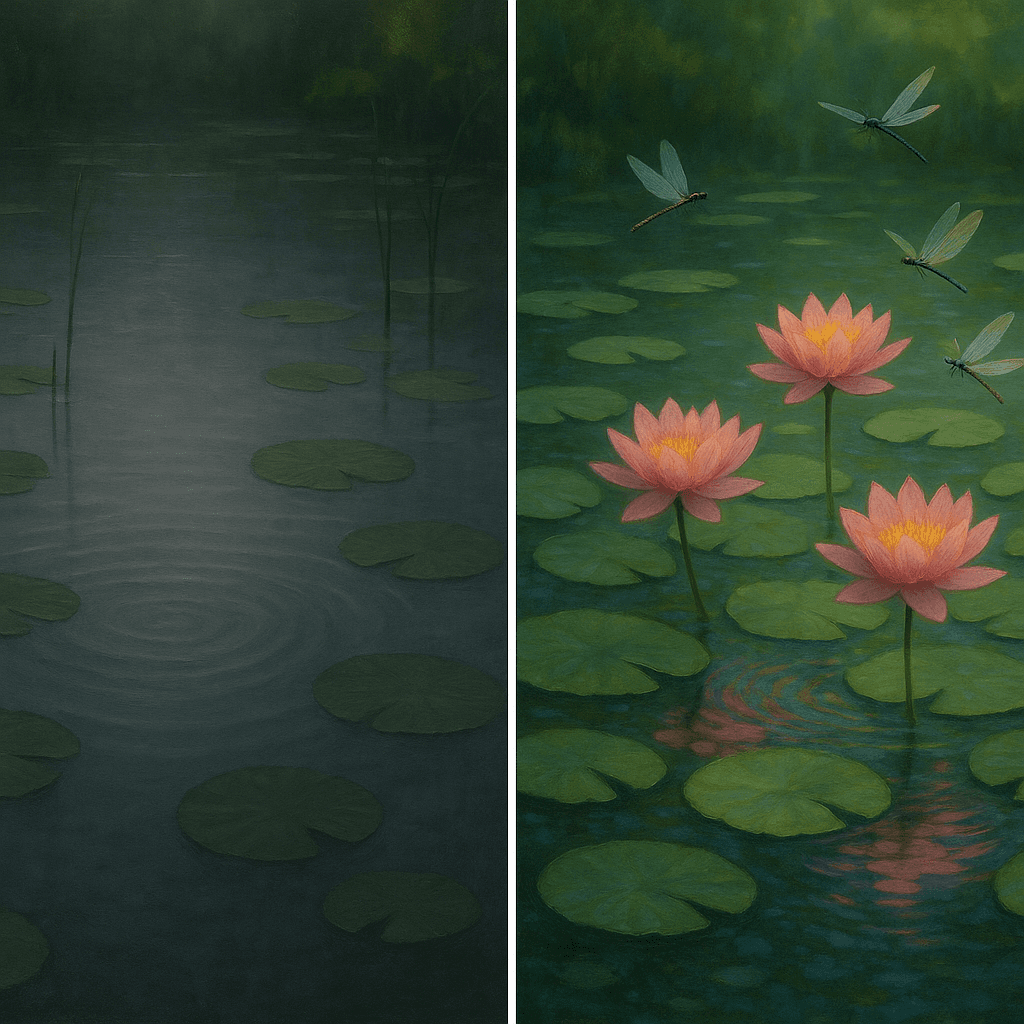
To nourish creativity, one must cultivate stillness. — Thich Nhat Hanh
—What lingers after this line?
The Power of Inner Quiet
At its core, Thich Nhat Hanh’s insight posits that creativity does not spring from chaos, but from moments of profound stillness. This serenity, rather than being a void, becomes fertile soil wherein original ideas take root. In contrast to the relentless pace of modern life, cultivating inner quiet provides the mental space necessary for inspiration to emerge, echoing the Buddhist emphasis on mindfulness as a source of insight.
Historical Roots of Stillness and Creativity
Throughout history, thinkers and artists have recognized the interplay between solitude and invention. For example, Leonardo da Vinci withdrew from courtly turmoil to sketch inventions in quietude, while Henry David Thoreau’s solitary retreat at Walden Pond fueled literary innovation. Thus, as Thich Nhat Hanh suggests, deliberate disengagement from noise often precedes creative epiphanies—a pattern woven through the fabric of artistic achievement.
Mindfulness as a Creative Catalyst
Moving further, modern psychology supports the idea that mindfulness practices enhance creative thinking. Research published in *Frontiers in Psychology* (Colzato et al., 2012) found that meditation participants generated more novel ideas than non-meditators. These findings underscore Thich Nhat Hanh’s wisdom: deliberate stillness helps quiet internal chatter, making room for new perspectives and imaginative leaps.
Balancing Action and Reflection
Nevertheless, it is not enough to merely pause; one must intentionally cultivate reflective moments within the flow of daily activity. As creative minds like Maya Angelou kept ritualistic writing spaces free from distractions, so too can anyone reap the rewards of conscious stillness. By alternating between purposeful activity and restful contemplation, individuals foster a rhythm that sustains ongoing innovation.
Stillness in a Distracted World
Finally, in an age of constant connectivity, practices of stillness become all the more vital. Techniques such as mindful breathing or silent walks, championed by Thich Nhat Hanh, offer accessible antidotes to digital overload. Embracing these moments of quiet not only rekindles creative energy but also nurtures the clarity and presence essential for original thought to flourish.
One-minute reflection
Why might this line matter today, not tomorrow?
Related Quotes
6 selectedTo nourish creativity, one must cultivate stillness. — Thich Nhat Hanh
Thich Nhat Hanh
Thich Nhat Hanh’s insight highlights the often-overlooked role of quiet in creative growth. In our frenetic world, creativity is usually equated with bursts of productivity or moments of sudden brilliance.
Read full interpretation →Many of us have been running all our lives. Practice stopping. — Thich Nhat Hanh
Thich Nhat Hanh
Thich Nhat Hanh’s line begins by naming a shared condition: many people live as if propelled forward by invisible pressure. “Running” is more than physical hurry; it describes the inner velocity of worry, planning, self-...
Read full interpretation →The moment a man begins to talk about technique, that's proof that he is fresh out of ideas. — Dylan Thomas
Dylan Thomas
Dylan Thomas’s remark begins with a sharp suspicion: when an artist talks too much about technique, the living impulse behind the work may already be gone. Technique, in this sense, becomes a substitute language, a way o...
Read full interpretation →Imperfection inspires invention, imagination, and creativity. — Mary Sharratt
Mary Sharratt
Mary Sharratt’s insight begins with a reversal of ordinary expectations: imperfection is not merely something to fix, but something that awakens possibility. When a plan fails, a surface cracks, or an idea refuses to fit...
Read full interpretation →Stillness is where creativity and solutions are found. — Eckhart Tolle
Eckhart Tolle
This quote highlights the importance of stillness and inner peace in generating creative ideas and finding solutions to problems. When the mind is quiet, new insights can emerge.
Read full interpretation →Don't think. Thinking is the enemy of creativity. It's self-conscious, and anything self-conscious is lousy. — Ray Bradbury
Ray Bradbury
At first glance, Ray Bradbury’s line sounds almost rebellious: “Don’t think. Thinking is the enemy of creativity.” Yet his target is not intelligence itself, but the paralyzing kind of self-awareness that makes an artist...
Read full interpretation →More From Author
More from Thich Nhat Hanh →If we are facing in the right direction, all we have to do is keep walking. — Thích Nhất Hạnh
Thích Nhất Hạnh’s words begin with a simple but profound premise: progress depends first on direction, not speed. If a person is turned toward compassion, clarity, healing, or truth, then each modest step becomes meaning...
Read full interpretation →You must love in such a way that the person you love feels free. — Thich Nhat Hanh
At its core, Thich Nhat Hanh’s statement redefines love as an act of care that does not confine. To love someone so that they feel free means offering affection without turning it into control, guilt, or dependence.
Read full interpretation →We are not islands; we are threads in a tapestry. To pull away from the weave is to lose the very texture that makes life hold together. — Thich Nhat Hanh
At its core, Thich Nhat Hanh’s image of threads in a tapestry rejects the fantasy of total self-sufficiency. A single thread may exist on its own, yet it gains meaning, strength, and beauty only through its relation to o...
Read full interpretation →When you learn how to suffer, you suffer far less. Resilience is not about avoiding the fire; it is about becoming fireproof. — Thich Nhat Hanh
At first glance, Thich Nhat Hanh’s quote appears paradoxical: how could learning to suffer make suffering lighter? Yet his point is that pain intensifies when we resist it, fear it, or treat it as a personal failure.
Read full interpretation →