
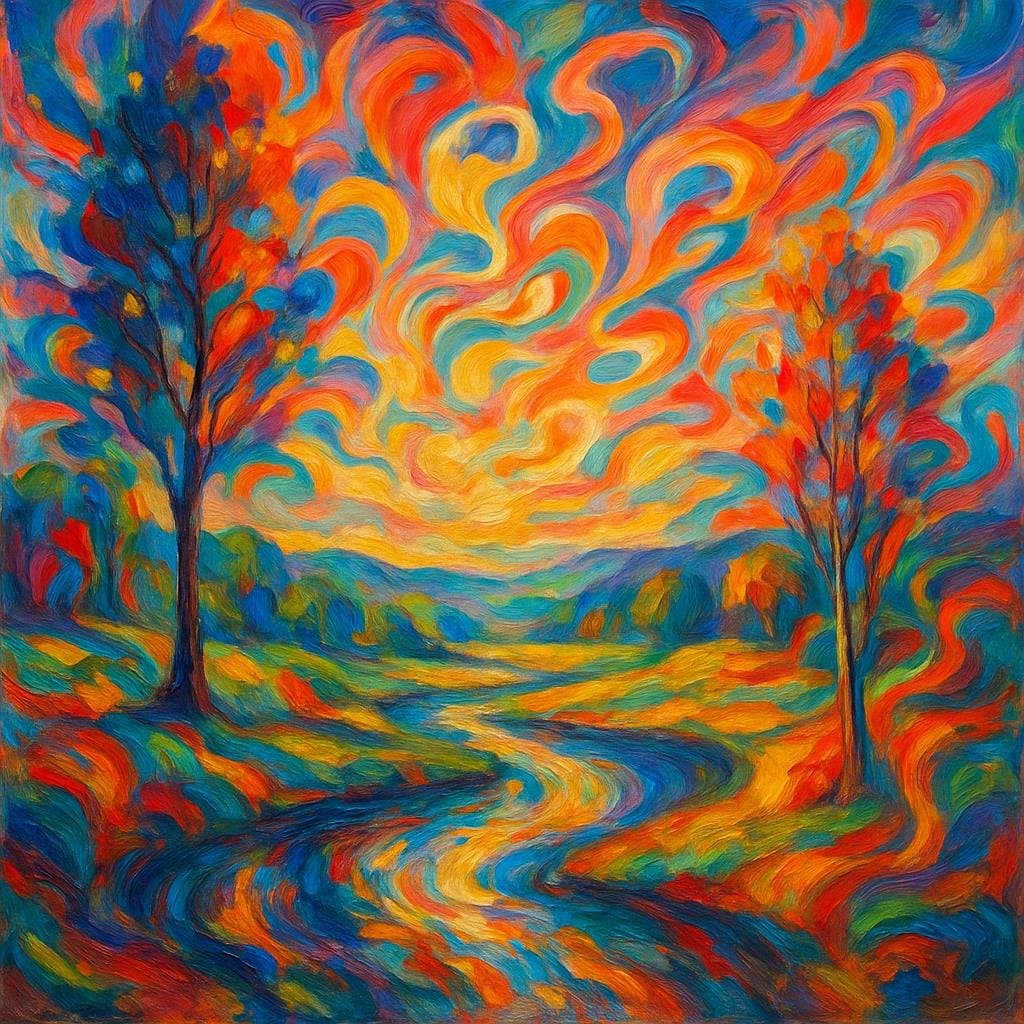
Every artist dips his brush in his own soul, and paints his own nature into his pictures. — Henry Ward Beecher
—What lingers after this line?
The Soul as an Artistic Palette
Beecher’s observation introduces the idea that an artist’s work is shaped not merely by skill or technique but by the very fabric of their soul. In this view, every stroke of the brush becomes an act of self-expression, a transfer of one’s deepest emotions, thoughts, and experiences onto canvas. The creative process, thus, moves beyond replication of external reality and becomes a revelation of internal truth.
Historical Examples of Inner Expression
Building on this, art history is replete with examples where an artist’s inner life transforms the outward appearance of their work. Vincent van Gogh’s turbulent emotions, for instance, radiate from each swirl in ‘The Starry Night’ (1889), infusing landscape with the energy of his personal struggles. Through such cases, it becomes clear that the most memorable works often carry the soul’s signature in every visible detail.
Nature and Individual Perspective
Transitioning from history, Beecher’s words also highlight how each artist’s unique nature filters their perception of the world. Claude Monet’s impressionistic renderings emerged from his fascination with light and fleeting moments, while Frida Kahlo’s portraits drew from her pain and identity. In this sense, no two painters can depict a subject identically, as each filters reality through the lens of their singular experience and personality.
The Psychological Impulse to Create
Moreover, contemporary psychology echoes Beecher’s insight, suggesting that artistic creation is a form of self-actualization. Studies on creativity, such as those by Mihaly Csikszentmihalyi, emphasize the flow state in which artists lose themselves, merging personal memories and subconscious drives into their art. This intrinsic motivation confirms that an artist’s work inevitably bears the imprint of their nature.
Connecting Viewers to Authentic Expression
Ultimately, the interplay between soul and creation is what allows art to move its audience. When viewers encounter a painting imbued with authentic emotion, they are drawn into the artist’s inner world and invited to share in that experience. Beecher’s insight, therefore, not only celebrates the individuality of the artist but also underscores the transformative power that heartfelt art bestows upon both creator and observer.
One-minute reflection
Why might this line matter today, not tomorrow?
Related Quotes
6 selectedArt is what we call it when the human soul shows up. — Seth Godin
Seth Godin
Seth Godin’s line reframes art as a moment of arrival: art happens when something distinctly human becomes visible through what we make. In this view, technique and output matter, but they are secondary to presence—the f...
Read full interpretation →Rest is a healing portal to our deepest selves. — Tricia Hersey
Tricia Hersey
Tricia Hersey’s line reframes rest as more than a break from productivity: it becomes an entryway, a “portal” that changes what we can access inside ourselves. Instead of treating rest as the absence of action, she sugge...
Read full interpretation →You are the sky. Everything else—it’s just the weather. — Pema Chödrön
Pema Chödrön
Pema Chödrön’s line offers a simple but radical reframe: who you are is not the passing content of experience, but the spacious awareness in which experience appears. If the mind is “the sky,” then thoughts, moods, and e...
Read full interpretation →You are the sky. Everything else—it’s just the weather. — Pema Chödrön
Pema Chödrön
Pema Chödrön’s line draws a clean distinction between what we are and what we experience. If you are the sky, then thoughts, emotions, and external events are like weather systems—temporary patterns moving through a much...
Read full interpretation →You are the sky. Everything else—it’s just the weather. — Pema Chödrön
Pema Chödrön
Pema Chödrön’s line begins with a simple but radical reframing: what we most fundamentally are is not the swirl of thoughts and feelings, but the open awareness in which they appear. By calling you “the sky,” she points...
Read full interpretation →You are the sky. Everything else—it’s just the weather. — Pema Chödrön
Pema Chödrön
Pema Chödrön’s line opens with an arresting reversal: you are not the shifting content of experience, but the vast capacity in which experience appears. By naming you “the sky,” she points to a stable, open awareness tha...
Read full interpretation →More From Author
More from Henry Ward Beecher →Be a hard master to yourself and be lenient to everybody else. — Henry Ward Beecher
Henry Ward Beecher’s advice turns ordinary judgment upside down. Instead of demanding much from other people and excusing our own flaws, he urges the reverse: strictness inward, gentleness outward.
Read full interpretation →It is the heart that makes a man rich. He is rich according to what he is, not according to what he has. — Henry Ward Beecher
At first glance, Henry Ward Beecher’s statement overturns the usual measure of success. Instead of tying wealth to possessions, status, or financial accumulation, he locates it in the heart—in character, generosity, comp...
Read full interpretation →Gratitude is the fairest blossom which springs from the soul. — Henry Ward Beecher
At first glance, Henry Ward Beecher’s metaphor turns gratitude into something living and visible: a blossom emerging from the hidden depths of the soul. By choosing the image of a flower, he suggests that thankfulness is...
Read full interpretation →Hold yourself responsible for a higher standard than anybody else expects of you. Never excuse yourself. — Henry Ward Beecher
Henry Ward Beecher’s line begins by relocating the source of standards: instead of waiting for society, supervisors, or peers to demand excellence, he urges you to demand it of yourself first. The point is not perfection...
Read full interpretation →