
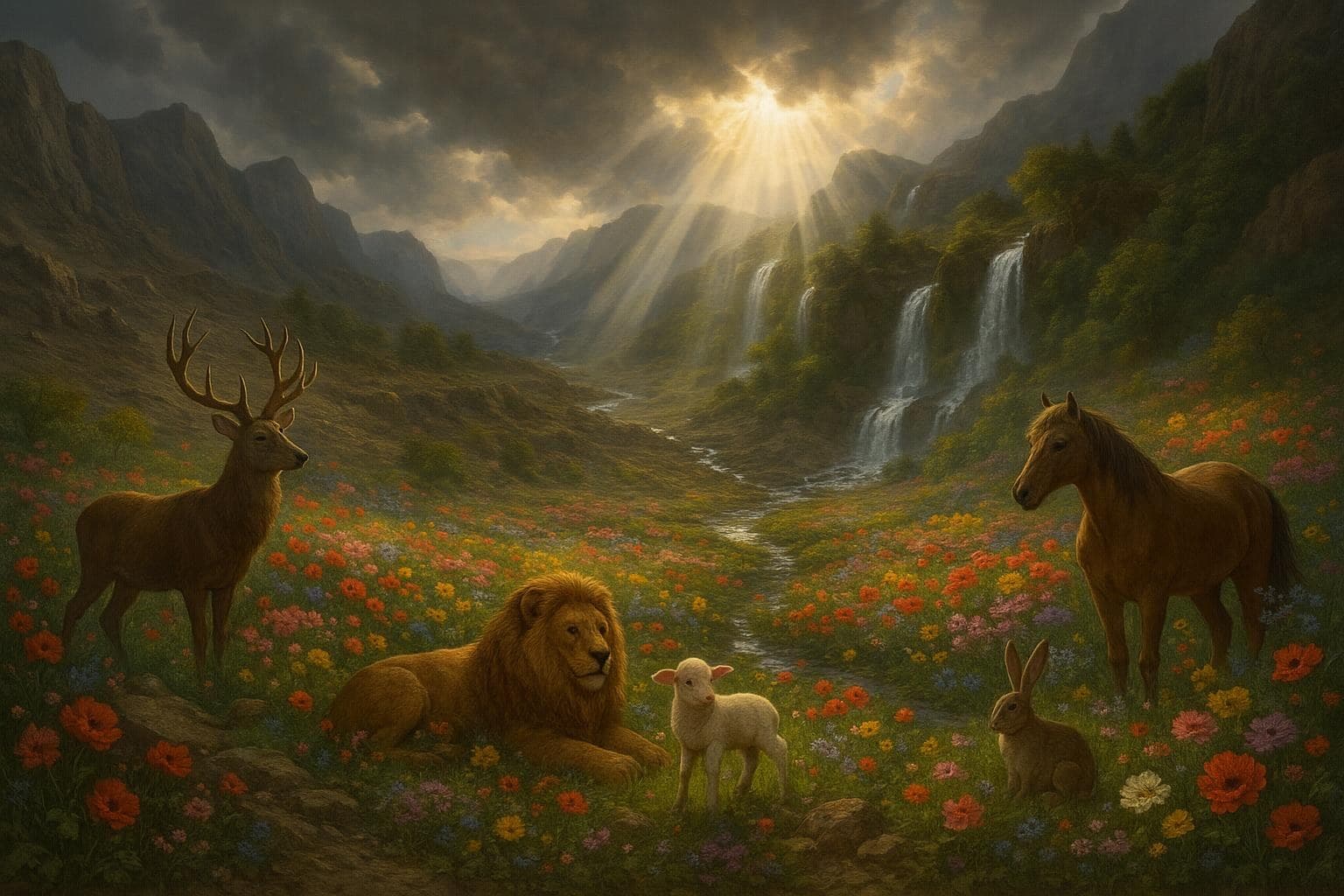
Beauty will save the world. — Fyodor Dostoevsky
—What lingers after this line?
Dostoevsky’s Vision of Redemptive Beauty
Fyodor Dostoevsky’s declaration, 'Beauty will save the world,' encapsulates his belief in the moral and spiritual potency of beauty. Within novels like The Idiot (1869), the phrase surfaces as both a philosophical assertion and a challenge: can the world’s redemption arise from anything so elusive as beauty? Dostoevsky’s characters, often tested by suffering and moral ambiguity, glimpse hope and healing in moments of genuine beauty—be it through nature, art, or acts of selfless love.
Philosophical Interpretations Across Centuries
Building on Dostoevsky’s insight, philosophers have long wrestled with the role of beauty in shaping moral consciousness. Plato, for example, argued in his Symposium (c. 385–370 BC) that the contemplation of true beauty elevates the soul toward virtue. Similarly, Schiller’s Letters on the Aesthetic Education of Man (1795) contends that beauty bridges sense and reason, nurturing empathy and ethical growth. In this lineage, Dostoevsky’s notion blends aesthetics with ethics, suggesting that beauty has the power to awaken goodness within individuals.
Art as a Catalyst for Social Change
History demonstrates that art and beauty can spur transformative movements. From the music of Beethoven inspiring unity during times of political upheaval to Picasso’s Guernica (1937) invoking outrage against war’s horrors, beauty becomes a rallying force for collective action. Dostoevsky believed that, by exposing cruelty and injustice through compelling imagery and narrative, art has the ability to awaken compassion and a desire for justice on a societal scale.
Personal Encounters with Beauty and Meaning
Transitioning from the societal to the personal, encounters with beauty—whether in literature, nature, or human relationships—frequently offer individuals solace and insight. Viktor Frankl’s Man’s Search for Meaning (1946) speaks of how glimpses of natural beauty sustained prisoners in concentration camps, offering moments of transcendence amid suffering. Following Dostoevsky’s thinking, these experiences are not mere luxuries but essential sustenance for the human spirit.
Challenges and Responsibilities in Pursuing Beauty
Yet Dostoevsky’s aphorism also carries a challenge: the search for beauty should not be shallow or escapist. In a world beset by violence and alienation, discerning true beauty—especially in acts of kindness and moments of grace—demands both courage and discernment. Drawing these threads together, the call to let beauty 'save the world' asks each of us to foster attentiveness and to use beauty’s transformative potential in service of healing, justice, and hope.
One-minute reflection
Where does this idea show up in your life right now?
Related Quotes
6 selectedBeauty will save the world. — Fyodor Dostoevsky
Fyodor Dostoevsky
Dostoevsky’s famous proclamation, 'Beauty will save the world,' emerges from his novel 'The Idiot' (1869), where the character Prince Myshkin embodies innocence, compassion, and spiritual beauty. Dostoevsky utilizes Mysh...
Read full interpretation →Beauty awakens the soul to act. — Dante Alighieri
Dante Alighieri
In this evocative statement, Dante Alighieri asserts that beauty is more than an object of admiration—it possesses the power to awaken and motivate the spirit. Within Dante’s *Divine Comedy,* especially in *Paradiso,* be...
Read full interpretation →To love beauty is to see light. — Victor Hugo
Victor Hugo
Victor Hugo’s line suggests that beauty is not merely something pleasing to the eye; it is a way of perceiving the world more clearly. To love beauty is to become receptive to illumination, as if the soul gains a new sou...
Read full interpretation →The beauty of a finely worked object points to the beauty of the craftsmanship. — Paul Klee
Paul Klee
Paul Klee’s statement begins with a simple but powerful observation: a beautiful object does not merely please the eye; it points beyond itself to the intelligence, patience, and skill that shaped it. The object becomes...
Read full interpretation →Roses do not bloom hurriedly; for beauty, like any masterpiece, takes time to blossom. — Matshona Dhliwayo
Matshona Dhliwayo
At its heart, Matshona Dhliwayo’s quote reminds us that true beauty cannot be forced. A rose does not rush toward bloom, nor does it apologize for the time required to unfold.
Read full interpretation →Gratitude is the closest thing to beauty manifested in an emotion. — Mindy Kaling
Mindy Kaling
At first glance, Mindy Kaling’s line suggests that beauty is not only something we see but something we feel. Gratitude becomes a kind of inward radiance, transforming an ordinary emotional response into something almost...
Read full interpretation →More From Author
More from Fyodor Dostoevsky →If you want to overcome the whole world, overcome yourself. — Fyodor Dostoevsky
Dostoevsky’s line reframes ambition by shifting the arena of struggle from the public world to the private self. Instead of measuring strength by dominance over others, he implies that the most consequential victories ha...
Read full interpretation →You will burn and you will burn out; you will be healed and come back again. — Fyodor Dostoevsky
Dostoevsky’s line treats suffering not as a single dramatic episode but as a recurring rhythm: intensity, collapse, recovery, and return. Instead of promising a smooth ascent toward improvement, he describes a life that...
Read full interpretation →You will burn and you will burn out; you will be healed and come back again. — Fyodor Dostoevsky
Dostoevsky’s line frames suffering as rhythmic rather than final: first the blaze of effort or emotion, then the collapse, then the slow work of recovery, and finally the return. Instead of treating burnout as a personal...
Read full interpretation →You will burn and you will burn out; you will be healed and come back again. — Fyodor Dostoevsky
Dostoevsky’s line frames suffering as rhythmic: first the blaze of intensity, then the inevitability of burnout, and finally the possibility of renewal. Instead of treating exhaustion as a final verdict, he suggests it i...
Read full interpretation →