
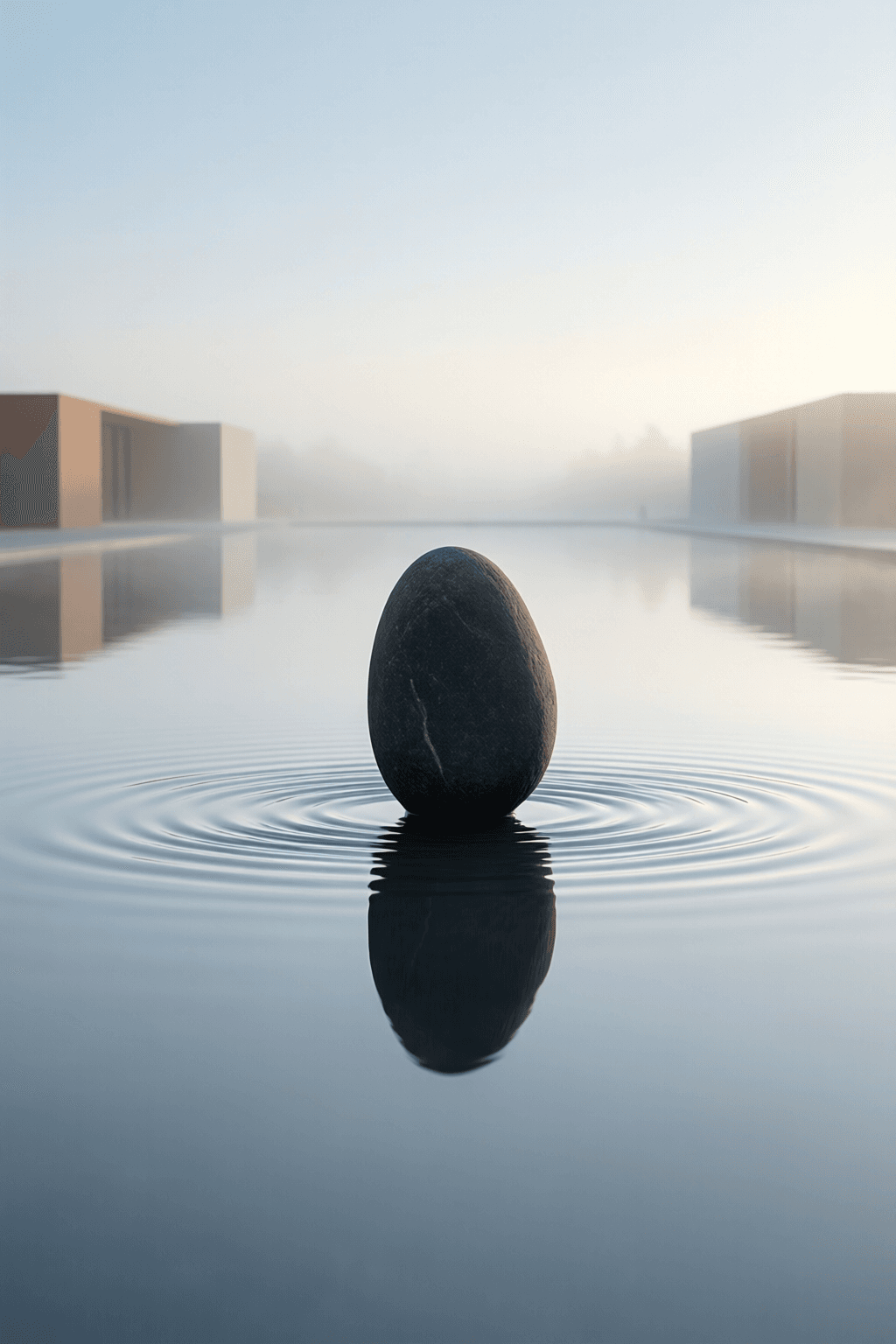
Stillness is not the absence of energy. It is the consolidation of it. — Seneca
—What lingers after this line?
Redefining Quiet Strength
At first glance, Seneca’s line challenges a common assumption: that stillness means passivity, emptiness, or retreat from life. Instead, he reframes it as a disciplined state in which energy is not scattered but drawn inward, collected, and made available for purposeful action. In this view, quiet is not weakness; it is stored force. This Stoic reversal matters because modern life often celebrates constant motion as proof of vitality. Seneca, however, suggests the opposite can be true. A person who appears calm may in fact be concentrating thought, emotion, and will more effectively than someone consumed by restless activity.
The Stoic Art of Self-Mastery
Seen in the wider context of Stoic philosophy, the quote reflects Seneca’s lifelong concern with governing the self rather than being governed by impulse. In Letters to Lucilius (c. AD 65), he repeatedly argues that inner steadiness allows reason to direct one’s energies instead of letting anger, fear, or desire disperse them. Stillness, then, becomes a form of mastery. From this angle, composure is not inactivity but control. Just as a skilled archer holds the bow steady before release, the Stoic mind gathers itself before acting. The pause is not a delay in strength but the condition that makes strength accurate.
Nature’s Lesson in Concentration
Moreover, Seneca’s insight becomes clearer when viewed through images from nature. A river spread thin across a flat plain may seem broad yet weak, while the same water, narrowed and directed, can carve stone. Likewise, wind can feel diffuse in open air but become powerful when funneled through a narrow pass. Stillness works in a similar way: it channels force instead of wasting it. Because of this, what looks externally quiet may conceal intense internal organization. Energy that is consolidated does not disappear; it becomes more coherent. Seneca’s phrase therefore invites us to value depth over display, and concentration over noise.
A Psychological Truth
That ancient insight also aligns with modern psychology. Research on attention and self-regulation, such as Daniel Goleman’s Focus (2013), emphasizes that mental energy is finite and easily fragmented by distraction. Constant stimulation can leave people exhausted without making them effective. By contrast, moments of deliberate calm help restore clarity and unify effort. In everyday terms, this explains why a person who pauses before responding often speaks more wisely than one who reacts instantly. The still moment gathers emotion, thought, and intention into a single line of action. What Seneca expresses aphoristically, psychology often confirms in practice: centered minds waste less energy.
Stillness Before Action
Furthermore, the quote does not praise stillness as an end in itself but as preparation. Consider the brief silence before a musician begins, or the poised crouch of a runner before the race. In both cases, immobility heightens readiness. The body and mind are not dormant; they are concentrated. This makes Seneca’s observation especially practical. He suggests that effective action often begins in restraint rather than haste. By consolidating energy first, a person acts with greater precision, endurance, and purpose. Stillness is thus not the opposite of movement, but its hidden foundation.
An Ethical Practice for Daily Life
Finally, Seneca’s words offer more than a philosophical insight; they propose a daily discipline. In a culture that rewards immediate reaction, choosing stillness can be a moral act of refusing confusion, vanity, and needless agitation. It allows one to preserve energy for what truly deserves attention. For that reason, the quote remains enduringly relevant. It teaches that the strongest presence in a room may be the least frantic one—the person whose calm is not emptiness but contained power. Seneca leaves us with a demanding but liberating idea: to become effective, we do not always need more energy; often, we need to gather the energy we already have.
Recommended Reading
As an Amazon Associate, we earn from qualifying purchases.
One-minute reflection
Where does this idea show up in your life right now?
Related Quotes
6 selectedStillness isn't the absence of movement, but the presence of awareness. — Naomi Shihab Nye
Naomi Shihab Nye
At first glance, stillness seems to imply silence, immobility, or retreat from the world. Naomi Shihab Nye overturns that assumption by suggesting that true stillness is not about stopping movement but about deepening at...
Read full interpretation →Stillness is the birthplace of strength. — Epictetus
Epictetus
At first glance, Epictetus turns a common assumption upside down: strength does not begin in noise, force, or visible struggle, but in stillness. The Stoic philosopher suggests that real power is born when the mind becom...
Read full interpretation →You do not need to leave your room. Remain sitting at your table and listen. Do not even listen, simply wait, be quiet, still and solitary. The world will freely offer itself to you to be unmasked. — Franz Kafka
Franz Kafka
Kafka begins with a striking command: do not chase the world, but remain in place. At first, this seems to reject ordinary habits of ambition and movement, yet that reversal is precisely his point.
Read full interpretation →To move forward, you must first give yourself permission to be still. — Yung Pueblo
Yung Pueblo
At first glance, Yung Pueblo’s line seems contradictory: how can stillness help us move forward? Yet that tension is precisely the point.
Read full interpretation →The world belongs to the energetic. — Ralph Waldo Emerson
Ralph Waldo Emerson
Emerson’s line condenses an entire philosophy into a few words: the world tends to yield itself to those who move with vigor, initiative, and persistence. At first glance, “the energetic” may sound like people blessed wi...
Read full interpretation →Stillness reveals what noise hides. — Marcus Aurelius
Marcus Aurelius
At its core, Marcus Aurelius’ line suggests that silence is not emptiness but a way of seeing. In the rush of constant chatter, distraction, and reaction, important truths are often drowned out.
Read full interpretation →More From Author
More from Seneca →Authentic power is not about controlling the world around you, but governing the inner landscape of your own reactions. — Seneca
At first glance, Seneca overturns the usual definition of power. Rather than equating strength with influence, status, or command over others, he locates true authority within the self.
Read full interpretation →A man's peace of mind does not depend upon Fortune. — Seneca
At its core, Seneca’s line argues that inner peace is an achievement of character, not a gift handed out by circumstance. Writing in the *Letters to Lucilius* (c.
Read full interpretation →Do not mistake my calm for passivity. True power is often the most still thing in the room. — Seneca
At first glance, Seneca’s statement separates outward quiet from inward weakness. A calm person may appear passive to those who equate strength with volume, speed, or visible force, yet the quote insists that composure c...
Read full interpretation →Associate with those who will make a better person of you. — Seneca
At its core, Seneca’s advice is remarkably practical: the people around us quietly shape who we become. In his moral letters, especially the spirit of the *Letters to Lucilius* (c.
Read full interpretation →